Quick Answer:
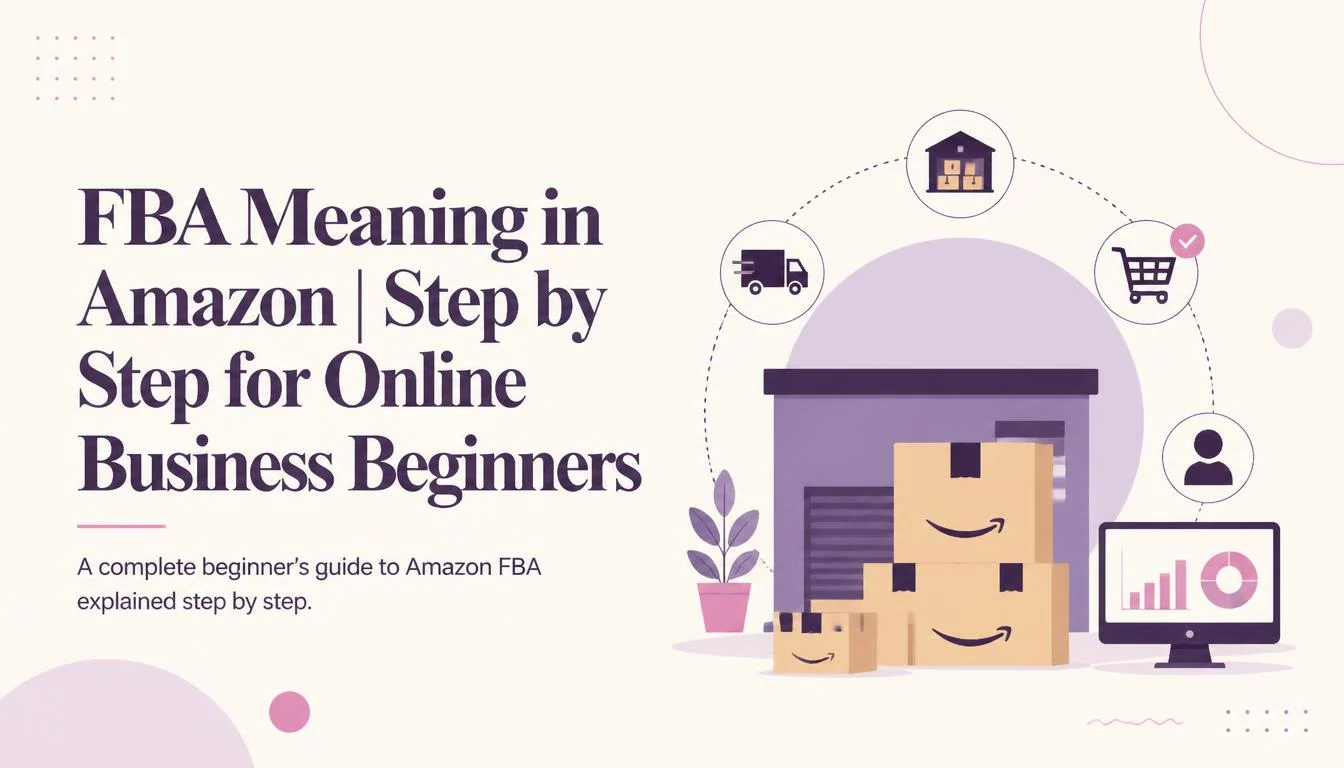
FBA Meaning in Amazon stands for Fulfillment by Amazon. It is a service where Amazon stores, packs, and ships products on behalf of sellers. It also handles customer service and returns for those orders.
In simple terms, sellers send their products to Amazon’s warehouses, and Amazon takes care of the rest of the selling process.
FBA Meaning in Amazon refers to a system designed to help online sellers scale their business easily. Instead of managing storage and shipping on their own, sellers use Amazon’s fulfillment centers to handle logistics. This makes selling faster, more efficient, and accessible to beginners as well as experienced entrepreneurs.
With FBA Meaning in Amazon, sellers can focus more on product sourcing and marketing while Amazon manages delivery and customer support. This service also helps products qualify for Prime shipping, which can increase visibility and sales on the platform.
What Does FBA Stand For? Full Definition
Fulfillment by Amazon (FBA) is a service that allows third-party sellers to outsource order fulfillment to Amazon. Rather than storing products in your own garage or warehouse and shipping each order yourself, you send your inventory to Amazon’s global network of fulfillment centers. When a customer places an order, Amazon picks, packs, and ships the item directly to the buyer. Amazon also manages customer service inquiries and processes returns for FBA orders.
In practical terms, FBA meaning in business boils down to this: you focus on sourcing products and marketing, while Amazon handles the physical logistics and post-purchase support. Once your products are enrolled in FBA, they become eligible for Amazon Prime’s free two-day shipping, which significantly boosts visibility and conversion rates.
How Does FBA Work? Step by Step
Understanding the FBA process helps clarify why so many sellers rely on it.
Step 1: Register and List Your Product. You begin by creating an Amazon seller account and listing your product. Amazon recommends the Professional plan at $39.99 per month, which unlocks access to over $50,000 in New Seller Incentives.
Step 2: Prepare and Ship to Amazon. You prepare your products according to Amazon’s packaging and labeling requirements, then use the “Send to Amazon” workflow in Seller Central to create a shipment plan. Amazon then distributes your inventory across fulfillment centers for faster delivery.
Step 3: Amazon Stores and Fulfills Orders. Once your inventory arrives, Amazon stores it. When a customer orders, Amazon picks, packs, and ships the product typically within the same day or up to three days after receiving your shipment. Your listing displays the Prime badge and qualifies for free two-day shipping.
Step 4: Amazon Handles Customer Service and Returns. For FBA orders, Amazon manages customer inquiries, refunds, and returns. This removes a significant daily workload from sellers, allowing them to focus on product research and brand building.
FBA vs. FBM: What’s the Difference?
FBA vs FBM is one of the most common comparisons for new sellers. FBM stands for Fulfillment by Merchant, where you store inventory and ship orders yourself or through a third-party logistics provider. Neither method is universally better the right choice depends on your products, margins, and business goals.
When FBA tends to win: Small, lightweight, fast-moving products that benefit from Prime eligibility and high turnover. FBA is also stronger when you want to scale without managing logistics yourself, and when you sell in high-volume categories like electronics accessories or consumables.
When FBM makes more sense: Large, heavy, or slow-moving items where FBA storage and fulfillment fees can erode margins. FBM also suits custom or handmade products that require special handling, and sellers who already have warehouse infrastructure and competitive shipping rates.
Many successful sellers use a hybrid approach FBA for top-selling, high-velocity ASINs and FBM as a backup during stockouts or for oversized items.
FBA Fees in 2026: What Sellers Should Expect
One of the most important aspects of the FBA meaning for business planning is cost. FBA is not free you pay fulfillment fees based on product category, size, and weight, plus monthly storage fees and other potential charges.
In 2026, FBA fees will increase by an average of $0.08 per unit sold, or less than 0.5% of an average item’s selling price. Specific changes include:
- Standard-size products priced $10–$50: Small standard-size fulfillment fees increase by $0.25 per unit; large standard-size by $0.05 per unit on average.
- **Products priced below $10:** Small standard-size fees increase by $0.12 per unit, but these products receive an increased fee discount of $0.86 per unit compared to products priced $10 or higher.
- **Products priced above $50:** Small standard-size fees increase by $0.51 per unit; large standard-size by $0.31 per unit, reflecting higher service levels for premium inventory.
Additionally, low-inventory-level fees will now apply at the FNSKU level rather than the parent-ASIN level, encouraging healthy stock levels for best-selling variations. Grocery products are now exempt from these fees.
Sellers should use the FBA Revenue Calculator in Seller Central to model exact margins before committing inventory.
Is FBA Worth It in 2026?
The question of whether Amazon FBA is worth it in 2026 has no simple answer. The landscape has shifted significantly since the early FBA gold rush.
The case for starting: Amazon’s customer base has never been larger, buyer trust remains strong, and the tools available to new sellers are better than ever. Much of the competition is lazy bad images, weak listings, zero brand identity meaning the bar for standing out is actually lower than it appears.
The case against: Competition is real and growing, fees have increased yearly, PPC costs have risen, and Chinese sellers have flooded many categories. Account suspensions can happen to legitimate sellers, and the era of launching any product and winning is over.
The realistic verdict: FBA is still profitable, but only for sellers who treat it like a real business. A realistic capital minimum is around $15,000, with a timeline of 12 months before expecting meaningful profit. The key shift is from a listing mindset to a brand mindset Amazon now rewards sellers who build brands, not just launch products.
FBA for Beginners: Getting Started
For those new to FBA for beginners, the process is more accessible than it once was. Amazon’s Seller University provides step-by-step modules covering fulfillment options, product eligibility, and shipment creation.
A recommended approach for new sellers: Start by selling a product via FBM for a month to test salability and understand true costs Amazon commissions, shipping, and supplies. Once you know the product is viable, transition to FBA for scaling. Begin with small, lightweight products that have high inventory turnover and healthy margins, then expand as you learn the system.
Key resources: The FBA Revenue Calculator models profitability, the Fee Preview Report shows estimated fees before you ship, and the Inventory Performance Index (IPI) monitors your account health and storage limits.
FAQs
What is FBA full form?
FBA full form is Fulfillment by Amazon.
What does FBA stand for in Amazon?
In the Amazon context, FBA stands for Fulfillment by Amazon a program where Amazon handles storage, picking, packing, shipping, customer service, and returns for third-party sellers.
What is the FBA meaning in ecommerce?
In ecommerce, FBA meaning refers to outsourcing order fulfillment to Amazon’s logistics network, allowing sellers to leverage Amazon’s infrastructure, Prime shipping eligibility, and customer service capabilities.
Can you make money with Amazon FBA?
Yes, but profitability requires realistic expectations. Sellers need sufficient capital, a willingness to treat the business seriously, and a brand-building approach rather than hoping for passive income. Success in 2026 comes from data-driven product research, optimized listings, controlled costs, and strategic advertising.
Conclusion:
The FBA meaning extends far beyond a simple acronym. It represents a complete outsourcing of order fulfillment storage, picking, packing, shipping, customer service, and returns to Amazon’s sophisticated logistics network. For sellers who understand its costs, leverage its Prime eligibility and customer trust, and treat it as a real business rather than a shortcut, FBA remains one of the most powerful tools in e-commerce. The question is not whether FBA works, but whether your strategy, capital, and mindset are aligned with what the program actually requires in 2026.
Read More Related Articles:
- Clemency Meaning | Pronunciation, Definition & Examples In 2026
- Mercy Meaning | Powerful Lesson Behind Kindness and Forgiveness In 2026
- Stubborn Mean | Why It’s Not Always a Bad Thing In 2026

Michael Turner is a U.S.-based content writer and blogger who enjoys uncovering the stories and meanings behind words. Through his work at Meanvora, he delivers well-researched, easy-to-read articles that help readers expand their vocabulary and gain a deeper understanding of language.









1 thought on “FBA Meaning in Amazon | Step by Step for Online Business Beginners In 2026”