Quick Answer:
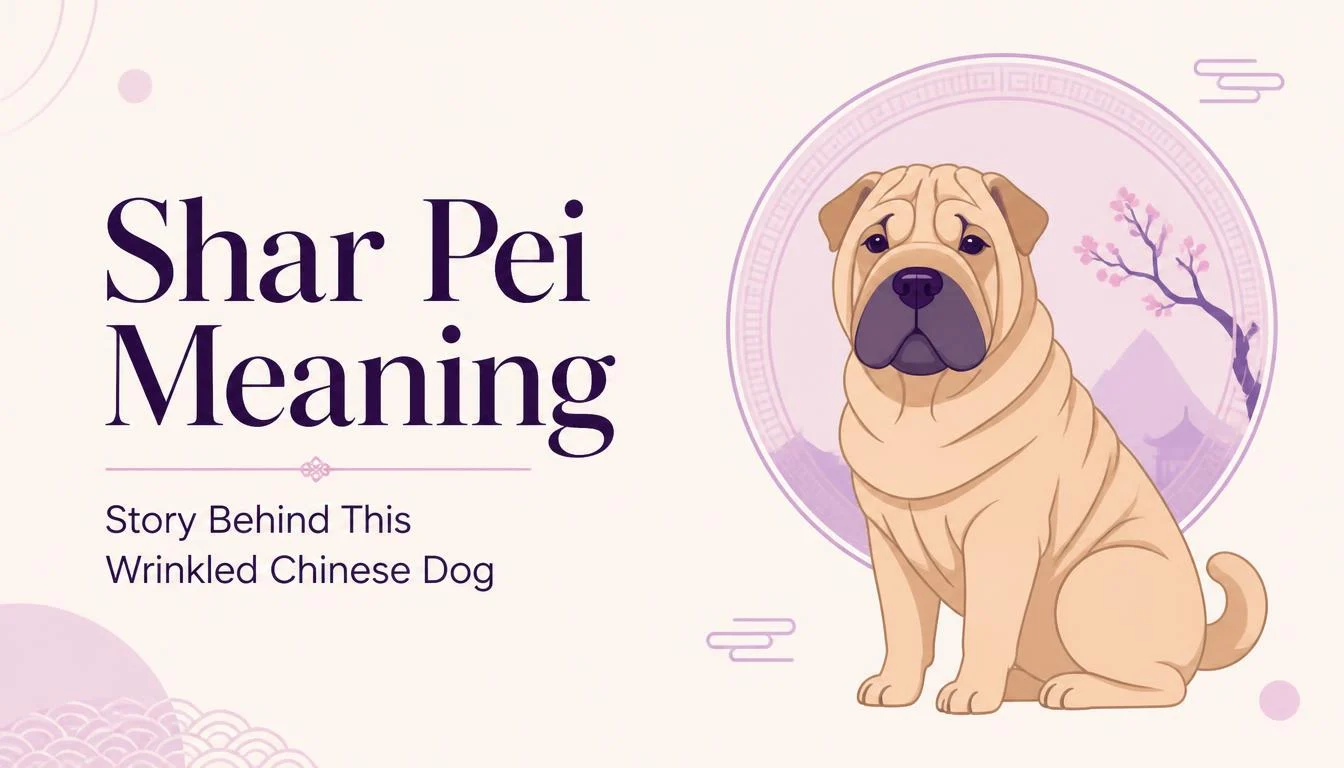
Shar Pei refers to a distinctive Chinese dog breed known for its wrinkled skin, broad muzzle and small, sunken eyes. The name comes from Chinese words commonly translated as “sand skin,” describing the breed’s rough, sandpaper-like coat.
The Shar Pei meaning is closely connected to the breed’s unique appearance and Chinese heritage. This dog stands out for its deep skin wrinkles, sturdy build and blue-black tongue. Originally bred in China, the Shar Pei served as a working dog and later became a beloved companion for families around the world.
Understanding the Shar Pei meaning also helps explain why this breed attracts so much attention. Its name reflects the texture of its coat, while its appearance and independent personality make it instantly recognizable. Whether you are researching the breed or considering one as a pet, learning about its name and background offers a useful introduction to this remarkable dog.
What Does Shar Pei Mean?
The name Shar Pei is commonly translated as “sand skin” or “sandpaper skin.” It refers to the distinctive texture of the breed’s coat, which can feel rough rather than soft and fluffy. This unusual name fits the dog’s appearance and gives a clue about one of its most recognizable physical characteristics.
The breed’s name is associated with Chinese language and culture. The Chinese name is commonly written as 沙皮犬, pronounced approximately shā pí quǎn. The character 沙 means sand, 皮 means skin or hide, and 犬 means dog. Together, the name identifies a dog associated with sand-like skin.
Unlike names that describe a dog’s color or place of origin, this one highlights a physical feature. The coat is short and bristly, and the skin may form prominent folds around the head, neck, and shoulders. Those features make the Shar Pei instantly recognizable even to people who know little about dog breeds.
There is an important distinction, however. The name does not mean that the dog has sandy-colored fur or that it lives in sandy environments. It refers primarily to the texture of its coat.
What Does the Name Tell Us About the Breed?
The name reflects a physical trait rather than the dog’s personality. Although Shar Peis are often described as calm, reserved, and loyal, those qualities are not contained in the literal meaning of the name.
It is also useful to distinguish between the breed’s name and its English nickname. People sometimes call the Shar Pei a “wrinkle dog” because of its folded skin. That nickname is easy to understand, but it does not capture the meaning of the original name or the breed’s full history.
In everyday conversation, someone using the name Shar Pei is almost always referring to the Chinese dog breed. The term is not generally used as a slang expression or as an ordinary English word unrelated to dogs.
Where Did the Shar Pei Originate?
The Shar Pei has a long history in China. Breed histories commonly trace its origins to southern China, particularly the area around Tai Li in Guangdong Province, formerly known in English as Kwangtung. Although the precise beginnings of the breed are difficult to establish, evidence suggests that dogs resembling it existed many centuries ago. The American Kennel Club (AKC) discusses the breed’s possible connection to China’s Han Dynasty, which began in 206 BC and ended in AD 220.
What Was the Original Purpose of These Dogs?
Shar Peis were working dogs rather than pets bred solely for their appearance. Historical accounts associate them with guarding homes and property, hunting, and farm work. Some accounts also describe their use in dogfighting, although that was only one part of their history.
Their compact build, alert nature, and independent temperament suited them to practical tasks. A dog expected to guard a property needed to notice unfamiliar people and respond to possible threats. These instincts help explain why modern Shar Peis may be reserved around strangers.
Their loose skin and rough coat are often discussed in connection with the breed’s working past. Loose skin could give a dog some freedom of movement if another animal grabbed it, while a harsh coat was less comfortable to hold in the mouth. However, it would be too simplistic to assume that every physical feature developed for one specific purpose.
How Did the Breed Become Popular Worldwide?
The breed faced a serious decline during the twentieth century. Political and social changes in China, including restrictions and heavy taxation affecting dog ownership, contributed to its dwindling numbers. By the 1970s, the Shar Pei was considered exceptionally rare.
A Hong Kong breeder named Matgo Law helped bring international attention to the situation. In 1973, he appealed to American dog enthusiasts to help preserve the breed. Interest grew in the United States, and the Shar Pei eventually became far more familiar to dog lovers outside China. The AKC officially recognized the Chinese Shar-Pei in 1992.
This history adds an important layer to the name. The Shar Pei is not simply a dog famous for its wrinkles. It is also a Chinese breed whose survival depended partly on dedicated breeders and international support.
What Makes the Shar Pei Look Different?
The breed’s appearance is a combination of several traits rather than wrinkles alone. Its broad muzzle, small ears, compact body, high-set tail, and short coat create a look that is difficult to confuse with most other dogs.
The AKC breed standard gives a typical height of 18 to 20 inches at the shoulder and a weight of approximately 45 to 60 pounds. Adult dogs may have fewer folds across the body than puppies, with wrinkles often remaining most noticeable around the head and neck.
Why Do Shar Peis Have So Many Wrinkles?
Young Shar Pei puppies often have abundant loose skin that forms deep folds across the head, neck, and body. As they mature, their bodies grow into some of that extra skin, so the folds may become less pronounced. Adults do not all have the same amount of wrinkling.
These folds are a defining feature, but they also require sensible care. Moisture and debris can collect between skin folds, particularly when the area stays damp. Owners should check the skin regularly and seek veterinary advice if they notice persistent redness, odor, swelling, or irritation.
It is also worth remembering that more wrinkles do not automatically mean a healthier or better-quality dog. Excessively heavy folds can contribute to discomfort and skin problems. A responsible breeder should prioritize sound health and comfortable movement rather than appearance alone.
What Is Special About the Shar Pei’s Tongue?
One of the breed’s lesser-known features is its dark blue-black tongue. The Chow Chow is another well-known dog breed with this characteristic. Both breeds are famous for the unusual pigmentation, but the shared trait does not establish a direct genetic relationship between them.
The tongue can be dark throughout or show some variation in pigmentation. This is different from a sudden blue or purple color in a dog whose tongue is normally pink. Sudden discoloration, especially with breathing difficulty or weakness, can indicate a medical emergency and needs immediate veterinary attention.
What Colors Can Shar Peis Have?
Shar Peis appear in several recognized coat colors. Common examples include black, red, cream, fawn, and blue, along with other shades and color variations accepted under the applicable breed standard. The coat itself is generally short and rough rather than long and silky.
Color does not reliably determine a dog’s personality. A cream Shar Pei is not inherently gentler than a black one, for example. Temperament depends on many factors, including inherited traits, early experiences, socialization, training, and the individual dog’s character.
Shar Pei Temperament and Personality
A Shar Pei can be devoted to its family while remaining cautious around unfamiliar people. The breed is commonly described as loyal, independent, calm, and protective. These characteristics can make it a rewarding companion for an owner who understands canine behavior and is prepared to provide consistent guidance.
Independence is an important part of the breed’s character. Some Shar Peis may not seek constant attention in the same way that highly people-oriented dogs do. They can enjoy spending time near their owners without always wanting to be held or petted.
That does not mean they lack affection. A well-socialized dog may form strong bonds with familiar people and become a steady presence at home.
Are Shar Peis Aggressive?
Not every Shar Pei is aggressive, and the breed name does not describe a dog’s behavior. However, many individuals have guarding instincts and can be wary of unfamiliar people or dogs. Without appropriate training and socialization, that caution may develop into difficult behavior.
Early exposure to different people, everyday sounds, environments, and well-mannered dogs can help puppies learn to respond calmly. Positive reinforcement, which rewards desirable behavior, is generally a useful training approach. Harsh punishment can increase fear and make behavioral problems harder to manage.
Owners should also recognize that socialization does not mean forcing a dog to interact with everyone. Calm observation at a comfortable distance can be more useful than repeated close encounters that make the animal uncomfortable.
Are Shar Peis Easy to Train?
Shar Peis are intelligent, but their independent nature may make training less straightforward than some new owners expect. They can learn household rules and basic commands, yet they may be less interested in repeating an exercise without a clear reward.
Short, consistent sessions often work better than long drills. Useful skills include coming when called, walking calmly on a leash, waiting at doors, and settling quietly around visitors. Puppy classes with a qualified trainer can also help owners build good habits early.
Patience matters. A Shar Pei should not have to guess what its owner wants, and a household should use consistent rules so that everyone handles the dog in the same way.
Shar Pei vs. Other Wrinkled Dog Breeds
Wrinkled skin is not unique to this breed. Several dogs have folds around their faces or bodies, but their size, coat, original purpose, and temperament can differ considerably.
| Feature | Shar Pei | Pug | English Bulldog | Chow Chow |
|---|---|---|---|---|
| Origin | China | China | England | China |
| Main appearance | Loose skin and rough coat | Flat face and compact body | Broad head and muscular build | Dense coat and lion-like appearance |
| Tongue | Often blue-black | Usually pink | Usually pink | Often blue-black |
| Typical temperament | Independent and loyal | Affectionate and playful | Steady and companionable | Independent and reserved |
| Grooming needs | Coat care and regular skin checks | Facial fold care | Facial fold care | Frequent brushing for the thick coat |
These are general breed tendencies, not guarantees about individual dogs. The American Kennel Club recognizes all four as distinct breeds with their own standards and characteristics.
The biggest distinction is that a Shar Pei combines loose skin with a short, coarse coat and an independent guarding temperament. A Pug is generally smaller and has a short, flat muzzle. An English Bulldog has a heavier, stockier build, while the Chow Chow is known for its thick coat and dark tongue.
Someone choosing between these breeds should consider health, exercise requirements, grooming, and temperament rather than appearance alone.
Health, Grooming, and Everyday Care
The Shar Pei’s unusual physical features make certain aspects of care especially important. Short fur does not mean that every part of the dog requires little attention. Skin folds, narrow ear canals, and eye problems can create additional responsibilities for owners.
Common Health Concerns
According to the American Kennel Club, recognized health concerns in the breed include eye disorders such as entropion, glaucoma, and retinal dysplasia. Entropion occurs when an eyelid turns inward, allowing eyelashes or surrounding hair to rub against the eye. This can cause irritation and potentially damage the eye if untreated.
Shar Peis can also experience skin irritation, ear problems, and certain inherited conditions. Familial Shar-Pei fever is a breed-associated inflammatory disorder that can cause recurring episodes of fever and swelling, including swelling around the hocks. A veterinarian should assess repeated fever episodes or unexplained swelling rather than assuming they are harmless.
Not every dog will develop these conditions. Still, prospective owners should ask breeders about health screening, family medical history, and veterinary examinations. Routine veterinary visits can help identify problems before they become more serious.
Grooming and Skin Care
A short coat is relatively easy to brush, but the skin needs regular attention. Owners should gently inspect folds and keep them clean and dry as advised by their veterinarian. Overwashing or applying unsuitable products may irritate sensitive skin.
The ears also deserve attention because infections can cause discomfort and may not be obvious at first. Look for persistent scratching, head shaking, unusual discharge, or an unpleasant smell. Contact a veterinarian if these signs appear instead of relying on home remedies.
Exercise and Nutrition
Most adult Shar Peis benefit from daily walks, opportunities to explore, and short periods of play. Their exercise needs vary with age, health, and individual energy levels. Avoid strenuous activity during hot weather, particularly if a dog shows signs of overheating.
Feed a complete, balanced dog food suited to the animal’s life stage and activity level. Monitor body condition rather than relying only on the number on a food package. A veterinarian can recommend an appropriate feeding plan, especially for puppies, older dogs, or dogs with medical conditions.
Is a Shar Pei a Good Family Dog?
A Shar Pei may be a good fit for a household that values a calm, loyal companion and can commit to training and health care. These dogs may appreciate a predictable home environment and owners who respect their boundaries.
Families with young children need to supervise interactions closely. Children should learn not to pull at a dog’s skin, disturb it while sleeping, or approach it while eating. Even a friendly dog can react defensively if frightened or hurt.
The breed may be less suitable for someone who wants a dog that immediately welcomes every visitor or plays freely with every unfamiliar dog. That does not make Shar Peis bad companions. It simply means their needs and tendencies should match the owner’s expectations.
Before bringing one home, consider the costs of veterinary care, the time required for socialization, and whether you can manage a strong-willed dog consistently. Adopting an adult dog may also be a good option for people who want a clearer picture of an individual animal’s temperament.
FAQs
1. Is Shar Pei a Chinese word?
Yes. The name comes from Chinese and is commonly interpreted as “sand skin.” It refers to the breed’s distinctive rough coat.
2. Is Shar Pei one word or two words?
Both Shar Pei and Shar-Pei are commonly used in English. The American Kennel Club generally uses the formal breed name Chinese Shar-Pei. The spelling may vary by publication, but it refers to the same breed.
3. What is the plural of Shar Pei?
The plural is commonly written as Shar-Pei, the same form used for one dog. You can write, “One Shar-Pei lives with the family,” or “Two Shar-Pei live with the family.”
4. Do all Shar Pei dogs have wrinkles?
No. Puppies usually have more extensive wrinkles, while adults may have fewer folds across their bodies. The amount of loose skin varies among individual dogs.
5. How long does a Shar Pei usually live?
The American Kennel Club lists a typical life expectancy of 8 to 12 years. Individual lifespan depends on genetics, overall health, preventive veterinary care, nutrition, and living conditions.
Conclusion
The Shar Pei is much more than a dog with a wrinkled face. Its name reflects its rough coat, while its history connects it to centuries of Chinese dog breeding and working traditions. For anyone considering this distinctive companion, understanding its independent temperament and particular health needs is just as important as appreciating its appearance.
Read More Related Articles:
- Hoisin Mean | Unlocking the Bold Taste Everyone Loves In 2026
- Herpetofauna Meaning | Guide to Amphibians and Reptiles in Nature In 2026
- Fozzie Meaning | Real Story Behind This Popular Character Name In 2026

Michael Turner is a U.S.-based content writer and blogger who enjoys uncovering the stories and meanings behind words. Through his work at Meanvora, he delivers well-researched, easy-to-read articles that help readers expand their vocabulary and gain a deeper understanding of language.










1 thought on “Shar Pei Meaning | Story Behind This Wrinkled Chinese Dog In 2026”