Quick Answer
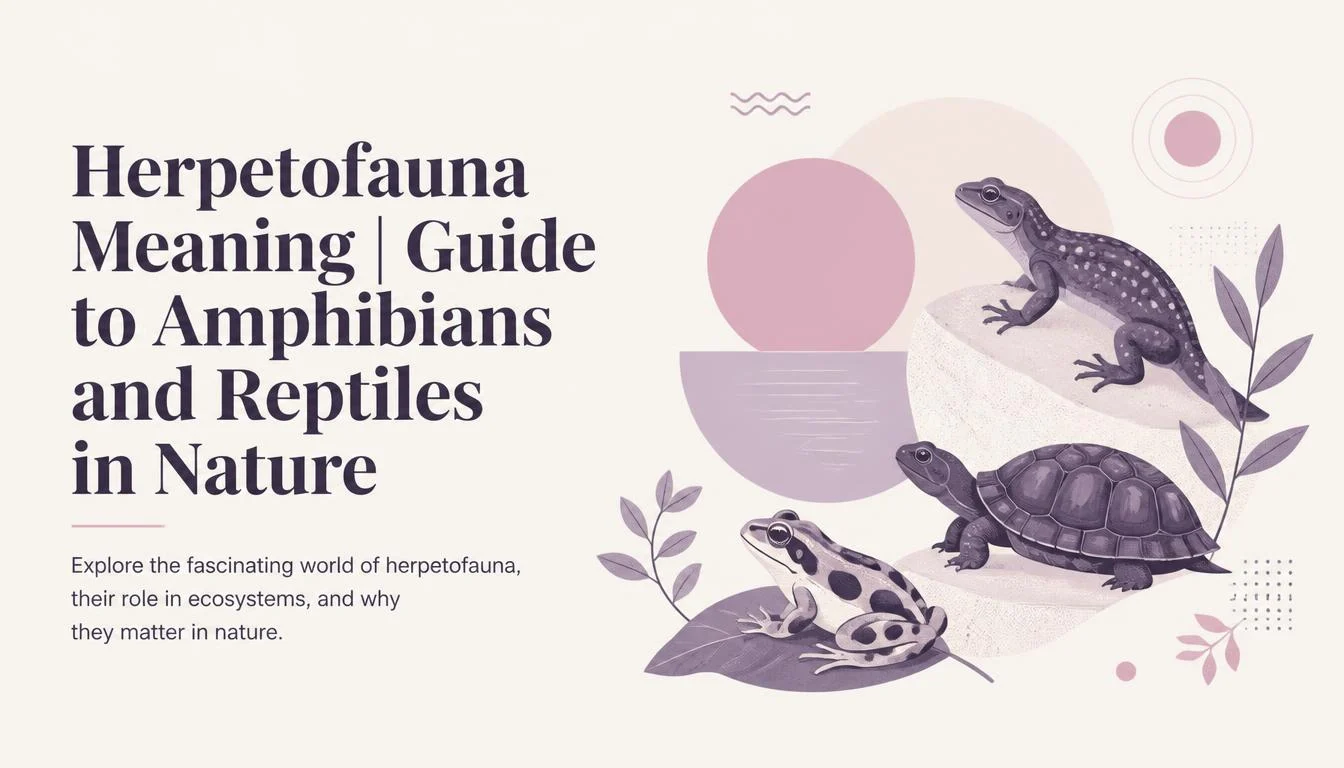
Herpetofauna meaning refers to all reptiles and amphibians found in a specific region or ecosystem. It includes animals like frogs, snakes, lizards, turtles and salamanders. These species are studied under zoology and herpetology. They play an important role in maintaining ecological balance and biodiversity.
Herpetofauna meaning is commonly used in biology and ecology to describe the combined group of reptiles and amphibians. The word is often used in scientific research when studying biodiversity in forests, wetlands, deserts, and other ecosystems. Herpetofauna includes species that are cold-blooded and depend on external heat sources to regulate their body temperature.
In simple terms, herpetofauna meaning covers all reptiles and amphibians living in a particular area. These animals play an important role in maintaining ecological balance by controlling insect populations and serving as both predators and prey. Scientists often study herpetofauna to understand environmental health and habitat changes.
Herpetofauna Meaning in Biology Explained
In biology herpetofauna meaning focuses on two main animal groups. These are amphibians and reptiles. Amphibians include frogs toads and salamanders. Reptiles include snakes lizards turtles and crocodiles.
These animals are vertebrates. They have a backbone and complex body systems. They are cold blooded which means their body temperature depends on external heat sources.
Herpetofauna definition in scientific terms highlights their role in food chains. They act as both predators and prey in ecosystems. This makes them essential for natural balance.
Classification of Herpetofauna
Herpetofauna animals are classified into two main biological classes. These classifications help scientists study their behavior and habitat.
Amphibians
Amphibians are animals that live both in water and on land. They usually start life in water as larvae and later move to land as adults. Common examples include frogs and salamanders.
Reptiles
Reptiles are land based or semi aquatic animals with dry scaly skin. They lay eggs or give live birth depending on the species. Examples include snakes lizards turtles and crocodiles.
Both groups together form herpetofauna in zoology. They are studied to understand evolution and environmental adaptation.
Examples of Herpetofauna Animals
Herpetofauna animals are found across the world in different habitats. They live in forests deserts wetlands and freshwater areas.
Common examples include frogs that live near ponds and rivers. Snakes that move through grasslands and forests are also part of herpetofauna. Lizards are often found in dry regions and rocky areas.
Turtles are slow moving reptiles that live in water and land environments. Salamanders are amphibians that prefer moist and shaded habitats.
These herpetofauna examples show how diverse this group of animals is in nature.
Importance of Herpetofauna in Ecosystem
Herpetofauna plays a very important role in maintaining ecological balance. These animals help control insect populations. They also serve as food for birds and larger predators.
Herpetofauna importance in ecosystem is linked to food chains and energy flow. Without them many ecological systems would become unstable.
Frogs for example eat large numbers of insects. Snakes help control rodent populations. This natural control reduces disease spread and crop damage.
Herpetofauna also helps scientists measure environmental health. A decrease in amphibians often indicates pollution or habitat loss.
Herpetofauna and Herpetology Connection
Herpetofauna is closely related to herpetology. Herpetology is the scientific study of reptiles and amphibians.
Researchers in herpetology study behavior reproduction and habitat of herpetofauna animals. This helps in understanding evolution and adaptation.
The difference between herpetofauna and herpetology is simple. Herpetofauna refers to the animals themselves. Herpetology is the study of those animals.
Both terms are widely used in zoology and wildlife biology.
Herpetofauna in Ecosystem Biodiversity
Herpetofauna is an important part of biodiversity. Biodiversity refers to the variety of life in a particular habitat.
Wildlife biodiversity herpetofauna contributes to ecological stability. These animals interact with plants insects and other animals in the food web.
Herpetofauna species are sensitive to environmental changes. This makes them good indicators of ecosystem health.
In forests wetlands and grasslands herpetofauna helps maintain natural balance. Their presence ensures that ecosystems remain stable and productive.
Importance of Herpetofauna Conservation
Herpetofauna conservation is becoming very important due to habitat loss and climate change. Many species are declining because of pollution deforestation and urban expansion.
Conserving herpetofauna means protecting their natural habitats. Wetlands forests and grasslands must be preserved for their survival.
Scientists use conservation programs to study endangered species. They also create awareness about environmental protection.
Protecting herpetofauna helps maintain biodiversity and ecological stability. It also supports future environmental balance.
Role of Herpetofauna in Environmental Science
In environmental science herpetofauna is used as a biological indicator. Scientists observe changes in their population to understand ecosystem health.
If amphibians decrease it often shows water pollution or habitat destruction. If reptile numbers change it can indicate climate change effects.
Herpetofauna study helps in conservation planning. It also helps in environmental impact assessment for development projects.
This makes herpetofauna an important part of ecological research.
Human Relevance of Herpetofauna
Herpetofauna is not only important for nature but also for humans. These animals help control pests that affect agriculture.
Frogs eat insects that damage crops. Snakes control rodents that destroy stored food. This natural pest control reduces the need for chemicals.
Herpetofauna also supports scientific research. Many medical discoveries are based on studies of amphibians and reptiles.
They also attract ecotourism which supports local economies in natural regions.
Threats to Herpetofauna
Herpetofauna faces many environmental threats today. Habitat destruction is one of the biggest problems. Forest cutting and wetland drainage reduce their living spaces.
Pollution also affects amphibians and reptiles. Chemicals in water and soil can harm their survival and reproduction.
Climate change is another major threat. Temperature changes affect breeding cycles and migration patterns.
Human activities like hunting and urban expansion also contribute to their decline.
Conservation Efforts for Herpetofauna
Many conservation programs are working to protect herpetofauna species. National parks and wildlife reserves help preserve their habitats.
Scientists also conduct field research to monitor populations. Awareness campaigns help educate people about their importance.
International organizations support conservation laws for endangered species. These efforts aim to protect biodiversity and ecosystem stability.
Sustainable development is also important for herpetofauna protection. It ensures that human progress does not harm natural habitats.
FAQs
What is herpetofauna meaning
Herpetofauna meaning refers to reptiles and amphibians found in a specific ecosystem.
What animals are included in herpetofauna
It includes frogs snakes lizards turtles and salamanders.
Why is herpetofauna important
It helps maintain ecological balance and controls pest populations.
What is the difference between herpetofauna and herpetology
Herpetofauna are the animals while herpetology is the study of these animals.
Where is herpetofauna found
It is found in forests wetlands deserts and freshwater habitats.
Conclusion
Herpetofauna meaning represents the group of reptiles and amphibians that play a vital role in ecosystems. These animals support biodiversity and maintain ecological balance.
They are important indicators of environmental health and are studied in herpetology. Their conservation is essential for protecting nature and future generations.
Understanding herpetofauna helps us appreciate the complexity of life on Earth. It also reminds us to protect natural habitats for a balanced ecosystem.
Read More Related Articles:
- “Sent as Text Message” Means | Explained Simply for iPhone Users In 2026
- “Message Blocking Is Active” Means | What This Error Says About Your Text In 2026
- “Take a Break” Meaning on Facebook | See What Changes After You Use It In 2026











7 thoughts on “Herpetofauna Meaning | Guide to Amphibians and Reptiles in Nature In 2026”