Quick Answer:
A Gaara tattoo symbolizes loneliness, emotional pain, resilience, self-acceptance and the journey from hatred to love. Inspired by Gaara from Naruto, it can also represent overcoming a difficult past and finding strength within yourself.
The Gaara tattoo meaning goes beyond anime fandom. Gaara from Naruto represents the struggle of feeling misunderstood, dealing with loneliness and learning to accept yourself. His character’s transformation from an isolated, feared individual into a respected leader makes his tattoo meaningful to people who have faced emotional challenges.
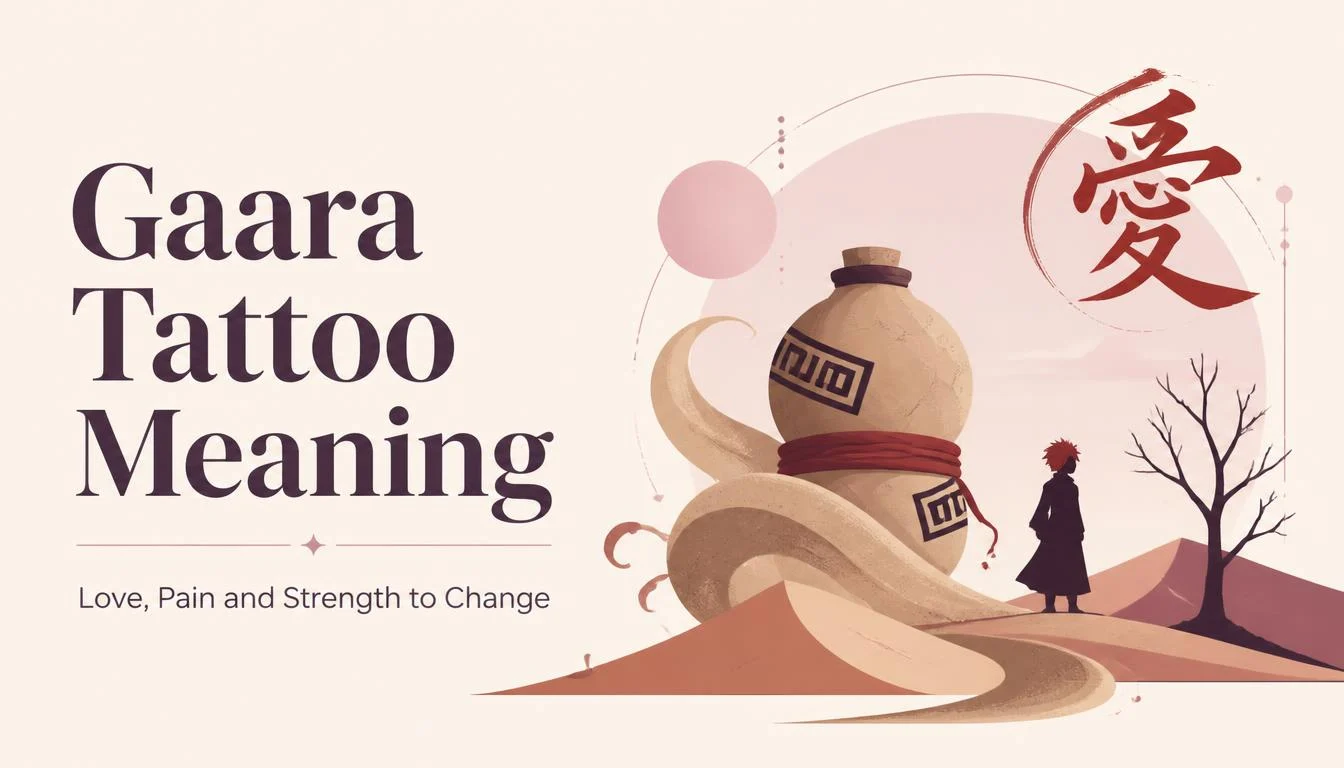
Many fans choose a Gaara tattoo to express inner strength, survival and personal growth. His iconic forehead symbol, which means “love,” carries a powerful message about self-worth and learning to love yourself despite past experiences. Whether you admire his character development or connect with his emotional journey, a Gaara tattoo can serve as a lasting reminder that your past does not define your future.
What Does a Gaara Tattoo Mean?
A Gaara tattoo is a character-inspired design based on one of the most recognizable figures in Naruto. Gaara begins his story as a feared shinobi whose childhood is shaped by rejection, isolation, and the burden of being a jinchūriki, a person who carries a powerful tailed beast inside them.
The symbol on his forehead becomes the central image associated with his character. It is the Japanese kanji 愛 (ai), meaning “love.” However, its significance goes beyond a simple expression of affection.
For Gaara, the symbol reflects a painful personal belief. After experiencing betrayal and being taught that nobody would ever care for him, he decides to live only for himself and to love himself alone. The mark becomes a reminder of that period in his life.
This is why people often choose the design for reasons that extend beyond their interest in anime. It can represent surviving rejection, rebuilding confidence, or finding a sense of worth after difficult experiences.
A Gaara tattoo can communicate several ideas:
- Self-love: Learning to value yourself even when others fail to understand you.
- Loneliness: Recognizing the emotional effects of isolation and rejection.
- Survival: Continuing to live despite painful experiences.
- Redemption: Choosing to become a better person instead of remaining trapped in the past.
- Inner strength: Turning vulnerability into resilience.
The meaning depends on which part of Gaara’s story resonates with the person wearing it. Some fans connect with his childhood struggles, while others admire the compassionate leader he eventually becomes.
The Meaning of Gaara’s Forehead Symbol
The original symbol is 愛, pronounced ai in Japanese and meaning “love.” In the series, Gaara carves this character into the left side of his forehead after a devastating experience during childhood. It becomes one of the most recognizable details of his appearance.
The kanji itself does not literally mean pain, revenge, loneliness, or strength. Those interpretations come from Gaara’s personal history and the way the story develops around the mark.
That difference is important if you are considering the symbol as a permanent tattoo. The character has a straightforward linguistic meaning, while its emotional significance comes from the fictional character who wears it.
What Does the Kanji 愛 Mean?
The Japanese character 愛 means “love” or “affection.” It appears in Japanese words associated with love, care, and emotional attachment.
In Gaara’s case, the symbol initially represents a decision to love himself because he believes nobody else will love him. It is an act of defiance as much as it is a declaration of affection.
The original context is tragic. Rather than expressing healthy confidence, the mark comes from a child trying to survive emotional rejection.
For fans, this creates an unusual contrast: a symbol associated with love is introduced at one of the darkest moments in Gaara’s life.
Is Gaara’s Tattoo Actually Japanese?
Yes. The character 愛 is a Japanese kanji, a writing character used in the Japanese language. Kanji originated from Chinese writing, so the character also exists in Chinese with a related meaning.
However, Japanese and Chinese are different languages, and the way characters are read or used can differ. If you want a design that matches Gaara’s original forehead mark, use the Japanese character 愛 rather than relying on a generic translation or a visually similar symbol.
The original mark is also distinct from the Roman letters used to spell ai. Writing “ai” in English letters would communicate the sound rather than reproduce the original symbol.
Gaara’s Story and the Symbol of Self-Love
To understand why the design carries so much emotional weight, it helps to understand Gaara before he becomes the respected leader seen later in Naruto Shippuden.
Gaara is born in Sunagakure, the Hidden Sand Village. He becomes the jinchūriki of Shukaku, the One-Tailed Beast, meaning that the powerful creature is sealed inside him. His village fears his abilities, and he grows up without the safety and affection that children need.
His childhood is marked by isolation. Even when he tries to form a connection with someone he trusts, he eventually experiences a devastating betrayal.
After that event, Gaara reaches a painful conclusion: if other people will only hate him, he will live for himself. The forehead mark becomes a physical expression of this decision.
He does not choose the symbol because he feels loved by the world. He chooses it because he believes he has no one else.
That is what makes the design more complicated than a typical symbol of self-confidence.
From Defensive Self-Love to Genuine Connection
At first, Gaara’s idea of self-love is built on fear and anger. He believes that his existence has value only when he protects himself and defeats those who threaten him.
His encounter with Naruto Uzumaki challenges that belief. Naruto also understands what it feels like to be rejected, but he has found meaning through his friendships and his desire to protect others.
Their conflict becomes a turning point in Gaara’s life. He begins to recognize that strength does not have to come from hatred and that connection with other people is possible.
Eventually, Gaara becomes the Fifth Kazekage, the leader of the Hidden Sand Village. The child who once viewed others as enemies grows into someone willing to protect his community.
This development gives the forehead symbol a second layer of meaning. What began as a declaration of isolation can now remind fans that people are capable of changing their beliefs and behavior.
Why a Gaara Tattoo Represents Pain and Loneliness
For some people, the appeal of a Gaara tattoo comes from the emotional experiences behind the character rather than his supernatural abilities.
Feeling excluded, misunderstood, or unwanted can affect how someone sees themselves. Gaara’s early story dramatizes those feelings through an extreme fictional situation, making his struggles recognizable even to viewers whose lives are very different from his.
A tattoo inspired by this part of the story may serve as a reminder of a difficult chapter in someone’s life. It can represent the decision to keep going, even when support from others is limited.
Representing Experiences That Others Cannot See
Emotional pain is not always obvious to the people around us. Someone may appear confident or independent while privately struggling with loneliness or insecurity.
Gaara’s character reflects that contrast. His power makes others fear him, but it does not protect him from emotional suffering.
For a tattoo wearer, the symbol might acknowledge that survival often involves more than overcoming visible obstacles. Sometimes, the hardest work is learning to trust again or accepting that past rejection does not define personal worth.
The design does not need to communicate these experiences to everyone who sees it. Its value may come from what it means privately to the person wearing it.
Self-Love Without Isolation
There is also a useful distinction between Gaara’s original belief and the lesson he eventually learns.
Healthy self-love means recognizing your own value, respecting your boundaries, and treating yourself with care. It does not require rejecting everyone else or believing that relationships are a weakness.
Gaara initially confuses independence with isolation. His development shows that personal strength and emotional connection can exist together.
Someone choosing the tattoo today might interpret it as a reminder to care for themselves without closing themselves off from meaningful relationships.
That reading captures the character’s growth rather than only the anger of his early years.
The Connection Between Gaara and Personal Transformation
One of the strongest reasons people connect with Gaara is that his story does not stop with his suffering. He changes.
His early experiences help explain his behavior, but they do not excuse every harmful choice he makes. The character eventually has to reconsider his beliefs, accept a different way of living, and take responsibility for protecting others.
That makes a Gaara tattoo relevant to people who see their own lives as a process of change. It can represent the belief that a painful past does not have to determine every future decision.
Redemption and Becoming a Different Person
Redemption is a central part of Gaara’s development. He moves from violence and self-isolation toward leadership, cooperation, and concern for other people.
A tattoo inspired by this stage of his life may represent leaving behind destructive habits or refusing to let resentment control the future.
It can also stand for personal accountability. Changing does not mean pretending the past never happened. It means learning from it and making different choices.
For some fans, this interpretation is more meaningful than the character’s original reputation as a dangerous shinobi.
Strength Through Compassion
Gaara’s later role as Kazekage changes how his power is used. He no longer defines his existence through harming others. He uses his position to protect his village and work with people who once might have been his enemies.
This is an important part of the tattoo’s potential meaning. Strength is not simply the ability to endure pain or defeat an opponent. It can also mean choosing compassion when anger would be easier.
A design featuring the kanji alongside Gaara as Kazekage may communicate that mature understanding of strength.
It honors not just what he survived, but what he eventually chose to become.
Popular Gaara Tattoo Designs and Their Meanings
A Gaara-inspired tattoo can be as simple as one character or as detailed as a full anime illustration. The best choice depends on whether you want to emphasize the symbol’s meaning, your connection to the story, or the character’s appearance.
1. The Original Love Kanji
Minimalist
A standalone 愛 character is the closest reference to Gaara’s signature mark. It suits people who prefer a small, recognizable design with a deeper personal meaning. Red ink mirrors the anime, while black ink creates a more understated appearance.
2. Gaara’s Face and Forehead Mark
Character portrait
A portrait can capture Gaara’s distinctive red hair, dark eye markings, and forehead symbol. This design is a good choice for fans who want the character himself to remain the focus rather than using the kanji alone.
3. Gaara’s Sand Gourd
Strength and protection
Gaara’s large sand gourd is one of his most recognizable accessories. Combined with flowing sand, it can suggest defense, endurance, and the ability to protect yourself. These are personal interpretations of the imagery rather than literal translations.
4. Gaara as the Fifth Kazekage
Growth and leadership
A more detailed design can show Gaara in his Kazekage appearance. It emphasizes his journey from an isolated child to a leader who protects others, making it especially suitable for people who connect with redemption and personal growth.
5. The Love Kanji With Sand Effects
Custom design
Combining 愛 with a sand swirl creates a more individual composition. The character provides the central meaning, while the surrounding movement adds a reference to Gaara’s abilities and identity as the shinobi of the sand.
Which Design Should You Choose?
Think about the message you want the tattoo to carry.
| Tattoo style | Main personal association | Ideal for |
|---|---|---|
| Single 愛 character | Self-love and survival | Fans who prefer simple designs |
| Gaara portrait | Personal connection to the character | Anime collectors and dedicated fans |
| Sand gourd | Defense and resilience | People drawn to his abilities |
| Kazekage portrait | Redemption and leadership | Fans who admire his development |
| Kanji with sand | Identity and transformation | People who want a custom design |
These associations are interpretations, not fixed rules. You can choose a design because you appreciate the character’s art, even if its emotional meaning is different from what other fans see in it.
Gaara Tattoo vs. Other Naruto Tattoos
Gaara’s forehead mark is not the only Naruto symbol with a strong personal association. Naruto’s whisker-like cheek marks, Sasuke’s curse mark, and the Uchiha clan’s fan symbol each connect with different aspects of the story.
Comparing them can help you decide whether Gaara’s mark best expresses what you want.
| Tattoo | Story association | Common personal interpretation |
|---|---|---|
| Gaara’s 愛 | His struggle with rejection and eventual change | Self-love, survival, and redemption |
| Naruto’s cheek marks | Naruto’s distinctive appearance and identity | Perseverance and individuality |
| Sasuke’s curse mark | Sasuke’s pursuit of power and his difficult choices | Conflict, ambition, and inner struggle |
| Uchiha fan symbol | Sasuke’s clan and family heritage | Family identity, loyalty, and legacy |
| Akatsuki cloud | The organization central to major conflicts | Fandom, rebellion, or the group’s visual identity |
The biggest distinction is that Gaara’s mark has an explicit meaning within the story: love. Its emotional weight comes from the contradiction between that meaning and the painful circumstances in which he adopts it.
If you want a tattoo that combines a simple symbol with a complex personal story, Gaara’s mark offers a particularly direct connection.
Best Placements for a Gaara Tattoo
Placement affects both the appearance and the practical details of a tattoo. A tiny kanji character needs different treatment from a full portrait with sand effects.
- Forearm: A visible location for the 愛 character or a small illustration. It also makes the tattoo easy to see yourself.
- Upper arm: A practical option for a portrait, sand gourd, or larger composition.
- Shoulder: Works well for a rounded design featuring Gaara’s face and swirling sand.
- Chest: A more personal placement for a symbol associated with self-worth or emotional survival.
- Back: Offers more space for a detailed scene, including Gaara, Shukaku, and the desert setting.
- Wrist: Suitable for a small design, although the limited space can make complex kanji details harder to preserve.
The forehead placement copies the character’s original appearance most closely, but it is not necessary to use the same location. A symbol can retain its personal significance wherever you choose to place it.
Should You Get It in Red or Black Ink?
Red ink is the most recognizable choice if you want to imitate Gaara’s anime appearance. Black ink can look more subtle and may fit better with an existing collection of tattoos.
Neither color changes the linguistic meaning of 愛. Color is a design choice, so choose according to your aesthetic preferences and the advice of a qualified tattoo artist.
For a small kanji tattoo, ask the artist to preserve the character’s individual strokes. A design that looks attractive on a screen may lose important details if it is reduced too much.
Things to Know Before Getting the Tattoo
Because this design uses a Japanese character, accuracy matters.
First, verify that the stencil contains 愛, the character meaning love. Do not rely only on an image found through a search engine or a tattoo artist’s interpretation of the symbol.
Second, consider the difference between copying Gaara’s appearance and adopting the symbol’s personal message. Some fans want a direct reference to Naruto. Others connect with the ideas of self-acceptance and recovery. Neither approach is more valid, but knowing your reason will help you choose a design you still appreciate years later.
Finally, ask your artist how much detail the intended size can support. Tiny designs with intricate lines may become less distinct as they heal and age. A slightly larger design may preserve the character’s structure more effectively.
If you are unfamiliar with Japanese writing, having a knowledgeable Japanese reader verify the final stencil is a sensible extra precaution.
FAQs
Does Gaara’s forehead tattoo change meaning throughout Naruto?
The kanji itself continues to mean love. What changes is how viewers understand Gaara’s relationship with that idea. Initially, he associates love with himself alone because he believes nobody else will accept him. His later development introduces a broader understanding of caring for others.
Is the Gaara tattoo a symbol of mental health struggles?
Some people interpret it that way because Gaara’s story includes isolation, emotional pain, and a difficult journey toward connection. However, the tattoo is not an official mental health symbol. Its significance depends on the wearer’s personal experiences and interpretation of the character.
Can someone who has never watched Naruto get a Gaara tattoo?
Yes. Anyone can choose a tattoo based on its visual appeal or the meaning they associate with it. However, knowing the character’s background helps explain why the symbol is associated with survival, self-love, and transformation rather than simply romantic love.
What does the name Gaara mean compared with his tattoo?
Gaara’s name and his forehead mark are separate elements of the character’s identity. The kanji 愛 on his forehead means love. The Japanese spelling of his name is 我愛羅, which is distinct from the standalone character used for his tattoo. Interpretations of the full name should not be confused with the direct translation of the forehead symbol.
Is Gaara’s tattoo suitable as a matching tattoo?
It can work as a matching design for friends, siblings, or partners who connect with the character’s story. One person might associate it with self-love, while another sees it as a reminder of personal growth. Discussing those meanings together can make the shared design more personal.
Conclusion
A Gaara tattoo is more than a recognizable mark from an anime series. Its central character means love, but the story behind it explores loneliness, survival, self-acceptance, and the possibility of becoming a different person. Whether you choose the simple kanji or a detailed portrait, the strongest design is one that reflects what Gaara’s journey means to you.
Read More Related Articles:
- Slime Someone Out Mean | Real Story Behind This Slang In 2026
- Adjacent Mean in Math | Easy Way to Get It Right In 2026
- Congruent Mean in Geometry | Learn the Secret of Identical Shapes In 2026