Quick Answer:
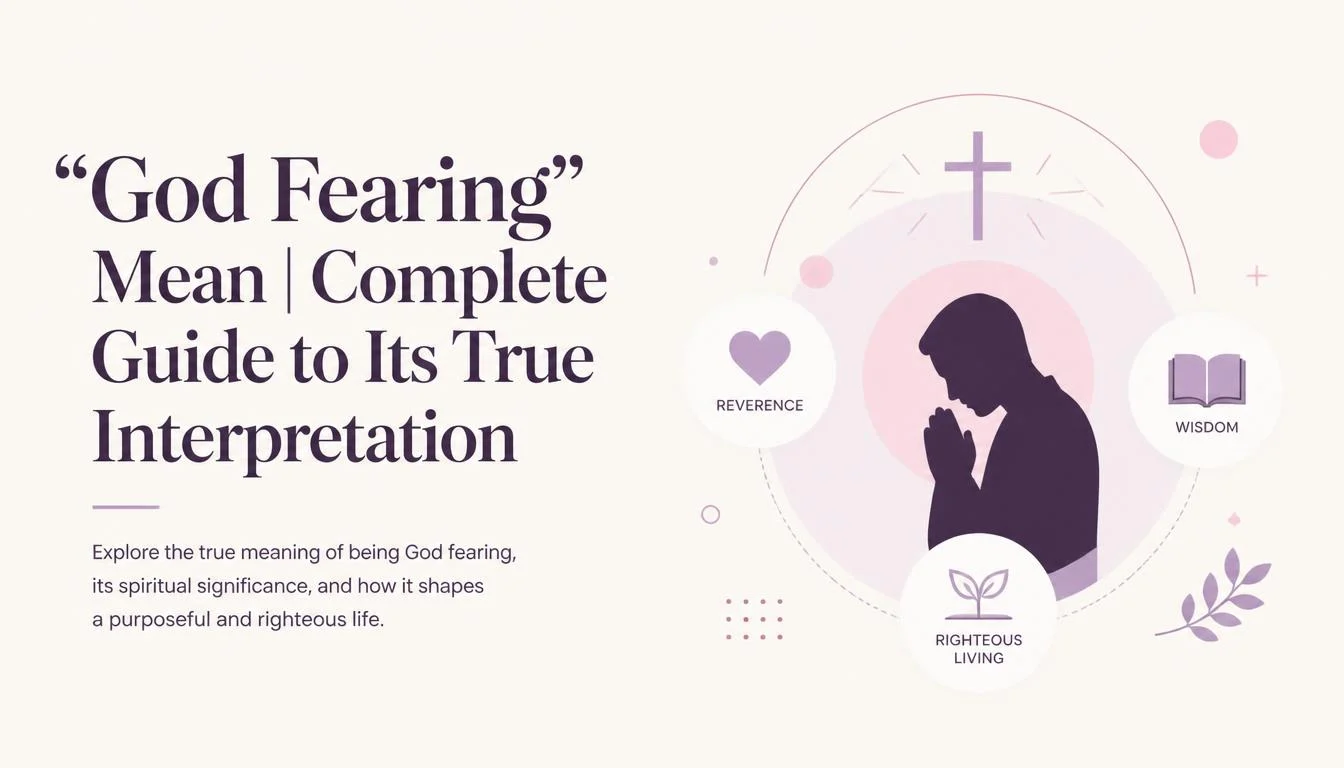
“God Fearing” means a person who deeply respects God and tries to live according to moral and religious values. It describes someone who avoids wrongdoing because of their strong belief in accountability to God.
A God Fearing person is someone who lives with a strong sense of faith and awareness of God in their daily life. This term is often used to describe individuals who follow ethical behavior, avoid sins, and try to do what is right according to their religion.
Being God Fearing does not mean being afraid in a negative way, but rather having deep respect, devotion, and responsibility toward God. Such people are usually seen as honest, humble, and guided by strong moral principles in their actions.
God Fearing Meaning: Definition
“God fearing” (adjective) means having deep respect, reverence, and awe for God, and living your life in a way that reflects strong moral and religious values. It does not usually mean being literally scared or terrified of God it means holding Him in such high regard that it shapes your behavior, choices, and sense of right and wrong.
In short: a god fearing person is someone whose faith actively guides how they treat others and how they conduct their life.
| Element | Detail |
|---|---|
| Part of speech | Adjective (sometimes hyphenated as “God-fearing”) |
| Simple meaning | Deeply reverent toward God; morally upright because of faith |
| Tone | Usually respectful and positive |
| Common context | Describing character, upbringing, or community values |
| Opposite | Godless, irreverent, ungodly |
Where Does “God Fearing” Come From? Origin & History
The phrase has roots that stretch back thousands of years, long before it became a casual descriptor in modern English.
Biblical and Religious Roots
The concept traces back to Hebrew scripture, where the “fear of the Lord” appears repeatedly as a foundation for wisdom and righteous living. In this context, “fear” didn’t mean terror it meant a profound, humbling reverence. Someone who “feared God” recognized His authority and power, and that recognition naturally led them to act honestly, treat others fairly, and avoid wrongdoing.
This idea carried into the New Testament and later religious writing, where “god fearing” described someone whose entire moral compass was anchored in their relationship with a higher power.
How It Entered Everyday English
Over centuries, the phrase moved out of strictly religious texts and into everyday speech. By the time it became common in English-speaking communities especially in the 18th and 19th centuries it was used to describe an entire type of person: honest, disciplined, family-oriented, and community-minded, simply because their faith demanded it of them.
It became especially common in rural, small-town, and traditionally religious communities in the U.S., U.K., and parts of Africa and the Caribbean, where being “god fearing” was almost a badge of trustworthiness.
How Popular and Common Is the Phrase Today?
“God fearing” is still widely used, though its popularity varies by region and context:
- Religious communities still a common way to describe admirable character
- Southern and rural U.S. English frequently used to describe someone’s upbringing or values (“She was raised in a god fearing home”)
- African and Caribbean English very common, often used as high praise
- Formal writing (obituaries, biographies) regularly used to summarize a person’s moral character
- Online and dating profiles used to signal that faith and values matter to someone
- Younger, secular audiences used less often, and sometimes with a slightly ironic or skeptical tone
So while it’s not as trendy as slang terms that spike and fade, “god fearing” has stayed remarkably stable in usage for generations a sign of how deeply it’s rooted in cultural and religious tradition.
How Is “God Fearing” Used in Real Life? Examples with Context
The tone of this phrase almost always depends on who’s saying it and why. Here are some real-world style examples across different tones.
Positive / Respectful Usage
- “My grandmother was a god fearing woman who never missed church and always put family first.” 🙏
- “We’re looking for a god fearing nanny who will help raise our kids with strong values.”
- “He built his business on god fearing principles honesty, hard work, and fairness.”
Neutral / Descriptive Usage
- “The town was known as a god fearing community, with churches on nearly every corner.”
- “She described her parents as god fearing people who instilled discipline early on.”
Skeptical or Slightly Dismissive Usage
Not everyone uses the phrase warmly. Sometimes it’s used with a hint of sarcasm, especially by people questioning whether someone’s actions match their claimed values.
- “He calls himself god fearing, but I’ve never seen him show an ounce of kindness.”
- “Funny how the most ‘god fearing’ people in the room are the quickest to judge others.” 😒
In Titles, Bios, and Formal Writing
- Obituary: “A devoted husband, father, and god fearing man, he will be deeply missed.”
- Dating bio: “Looking for someone god fearing, loyal, and family-oriented.”
God Fearing vs. Similar Terms: How They Compare
People often use “god fearing,” “religious,” “devout,” and “pious” interchangeably but they don’t mean exactly the same thing. Here’s how they stack up.
| Term | Core Meaning | Tone | Typical Usage |
|---|---|---|---|
| God fearing | Reverence for God that shapes moral behavior | Warm, character-focused | Describing someone’s values or upbringing |
| Religious | Practicing or following an organized faith | Neutral | Describing beliefs or practices, not necessarily character |
| Devout | Deeply committed and sincere in religious practice | Formal, respectful | Describing dedication to rituals and worship |
| Pious | Outwardly, sometimes performatively, religious | Can be neutral or slightly negative | Often implies visible religious display |
| Righteous | Morally correct, just | Positive or self-righteous depending on context | Describing behavior, not necessarily faith |
| Godless / Ungodly | Lacking reverence or morality tied to God | Negative | Describing someone seen as immoral or non-religious |
Key difference: “Religious” simply describes belief or practice, while “god fearing” specifically emphasizes that this belief actively shapes someone’s morals and behavior. “Pious,” on the other hand, can sometimes carry a slightly critical undertone, suggesting someone performs religiousness rather than truly living it.
Are There Other Meanings of “God Fearing”?
The phrase is mostly used in its traditional sense, but there are a couple of nuances worth knowing:
- Cultural shorthand for “trustworthy” or “honest” In many communities, calling someone “god fearing” is really a compact way of vouching for their integrity, even outside strictly religious conversations.
- Ironic or critical use As mentioned earlier, some people use the phrase sarcastically to call out hypocrisy, especially when someone’s actions don’t match their claimed faith.
- Community identity marker In some regions, “god fearing” describes not just a person but an entire town or group, signaling shared conservative or traditional values.
Polite and Professional Alternatives to “God Fearing”
If you’re writing something formal, secular, or aimed at a broad audience, you might want alternatives that convey similar respect without the explicitly religious framing:
- Values-driven
- Principled
- Morally grounded
- Ethical and disciplined
- Of strong moral character
- Faith-based (if you want to keep the religious element but sound slightly more modern)
- Conscientious
These options work well in workplace bios, professional recommendations, or writing for mixed audiences where you want to communicate integrity without assuming shared religious belief.
Tone Guide: When to Use “God Fearing”
| Situation | Should You Use It? | Why |
|---|---|---|
| Obituary or tribute | ✅ Yes | Warm, traditional, widely understood |
| Religious community writing | ✅ Yes | Fits naturally and carries positive weight |
| Dating profile (values-focused) | ✅ Yes | Signals faith and family priorities clearly |
| Corporate or workplace bio | ⚠️ Use with caution | May feel out of place in secular settings |
| Academic or journalistic writing | ⚠️ Use with context | Better to explain or quote rather than assume meaning |
| Casual conversation with mixed audience | ⚠️ Optional | Depends on relationship and setting |
FAQs
1. What does “god fearing” mean in simple terms?
It means someone deeply respects and reveres God, and that respect shapes how they live honestly, morally, and with strong values.
2. Is “god fearing” a compliment?
Yes, in most contexts it’s meant as a compliment, describing someone as trustworthy, morally grounded, and disciplined because of their faith.
3. Does “god fearing” mean someone is scared of God?
Not exactly. It’s less about literal fear and more about deep reverence, humility, and respect for God’s authority.
4. Is “God-fearing” hyphenated?
Both “god fearing” and “God-fearing” are used, though the hyphenated form is more common in formal writing when it comes before a noun, like “a God-fearing man.”
5. What’s the difference between “god fearing” and “religious”?
“Religious” describes someone who practices a faith, while “god fearing” specifically highlights that their faith shapes their morals and everyday behavior.
6. Can “god fearing” be used sarcastically?
Yes, some people use it critically or sarcastically to point out when someone’s actions don’t match their claimed religious values.
7. Is “god fearing” still commonly used today?
Yes, especially in religious communities, rural areas, obituaries, and character descriptions, though it’s less common among younger, more secular audiences.
8. What can I say instead of “god fearing” in a professional setting?
Try alternatives like “values-driven,” “principled,” “morally grounded,” or “of strong moral character” for a more neutral, secular tone.
Conclusion:
“God fearing” is one of those phrases that’s simple on the surface but carries centuries of meaning underneath it. At its core, it describes someone whose reverence for God actively shapes their honesty, kindness, and moral choices not someone who’s literally afraid of a higher power.
Quick recap:
- It means deep reverence for God that shapes moral behavior, not literal fear.
- It’s rooted in biblical language and has been used for centuries to describe trustworthy, principled people.
- It’s still widely used today, especially in religious communities, rural regions, and formal writing like obituaries.
- Tone can range from warmly respectful to mildly sarcastic, depending on context.
- If you need a more secular alternative, “principled,” “values-driven,” or “morally grounded” work well.
Whether you’re writing a tribute, filling out a bio, or just curious about a phrase you’ve heard your whole life, now you know exactly what “god fearing” means and how to use it with confidence.
Read More Related Articles:
- Slime Someone Out Mean | Real Story Behind This Slang In 2026
- Adjacent Mean in Math | Easy Way to Get It Right In 2026
- Congruent Mean in Geometry | Learn the Secret of Identical Shapes In 2026









10 thoughts on ““God Fearing” Mean | Complete Guide to Its True Interpretation In 2026”