Quick Answer :
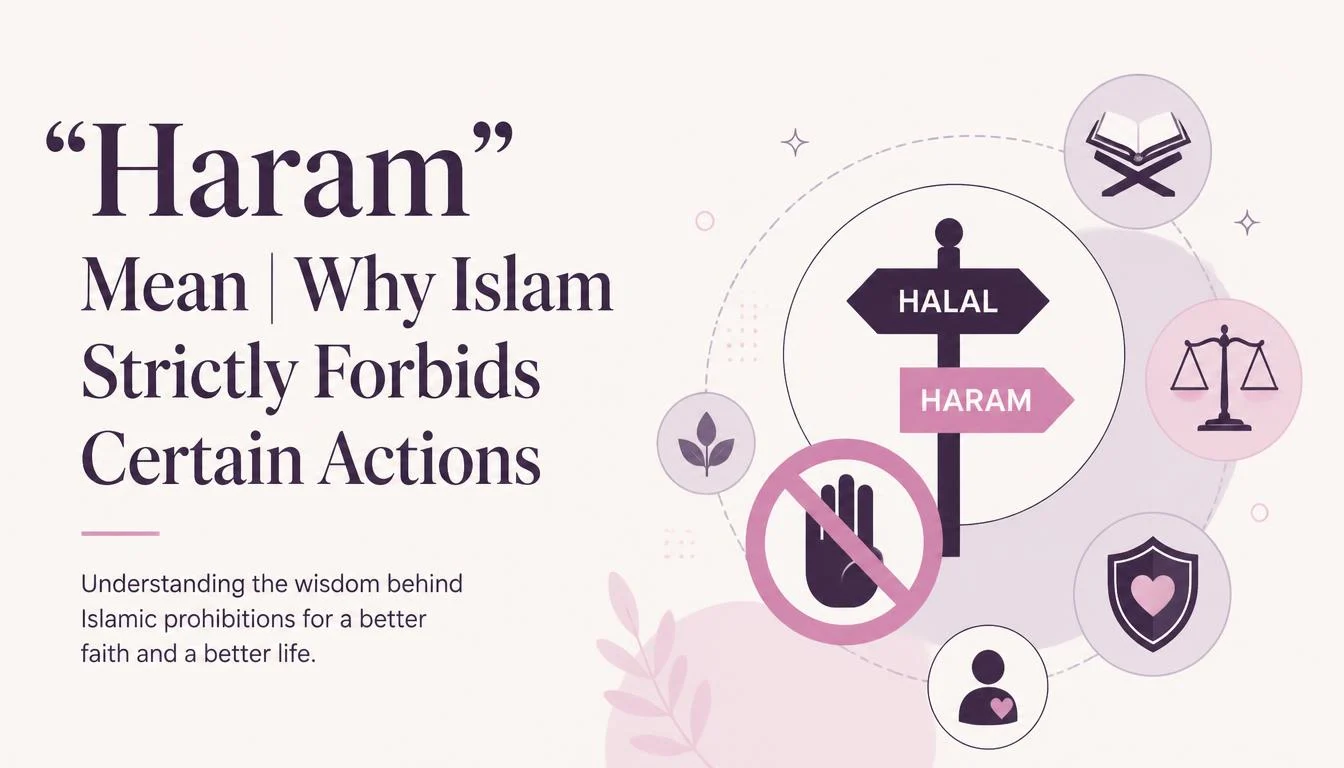
“Haram” is an Arabic word meaning forbidden or prohibited in Islam. It refers to actions, foods, or behaviors that are not allowed according to Islamic law (Shariah). Doing haram acts is considered a sin in Islam.
The word “Haram” mean in simple terms is something that is strictly forbidden in Islam. It comes from Arabic and is used to describe anything that a Muslim is not allowed to do, eat, or engage in according to religious teachings. It is the opposite of “Halal,” which means permitted.
Understanding the “Haram” mean helps clarify Islamic guidelines in daily life. It is not just limited to food but also includes actions like lying, stealing, or harming others. The concept is meant to guide Muslims toward ethical and lawful behavior.
Haram Meaning: Definition
Haram (حَرَام) is an Arabic word meaning “forbidden” or “unlawful.” In Islamic terminology, it refers to any action, behavior, food, or practice that is prohibited under Islamic law (Sharia). It’s the direct opposite of halal, which means “permissible” or “allowed.
In casual, modern usage especially online “haram” has also become a playful or exaggerated way of saying something is “wrong,” “off-limits,” or “a bit much,” even when there’s no religious weight behind the comment at all.
That’s the short version. Now let’s unpack where this word comes from, how it’s used in real life, and why it’s suddenly everywhere on social media.
Where Does the Word “Haram” Come From?
Haram is rooted in Classical Arabic, and it shares a root (ح-ر-م, ḥ-r-m) with several other important Islamic and Arabic words, including:
- Haram (forbidden)
- Ihram (the sacred state pilgrims enter during Hajj)
- Harim/Harem (a protected or sacred space)
- Muharram (the first, sacred month of the Islamic calendar)
The shared root essentially carries the idea of something being sacred, restricted, or off-limits which is why so many related words deal with boundaries, protection, or prohibition.
In the Quran and Islamic jurisprudence (fiqh), haram is one of the five core categories used to classify human actions. Scholars often refer to these five categories as the “Five Rulings” (Al-Ahkam Al-Khamsa):
| Category | Arabic Term | Meaning |
|---|---|---|
| Obligatory | Fard / Wajib | Must be done |
| Recommended | Mustahabb | Encouraged, but not required |
| Neutral | Mubah | Neither encouraged nor discouraged |
| Disliked | Makruh | Discouraged, but not sinful |
| Forbidden | Haram | Strictly prohibited |
So within Islamic thought, haram isn’t just a vague “no” it’s the most serious classification, reserved for things explicitly prohibited by religious sources like the Quran and Hadith (the recorded sayings and actions of the Prophet Muhammad).
How Is “Haram” Used in Real Life?
1. In a Religious Context
This is the original and most important use of the word. It applies to a wide range of categories:
- Food and drink pork, alcohol, and improperly slaughtered meat are commonly cited as haram.
- Financial practices earning or paying interest (riba) is generally considered haram in mainstream Islamic finance.
- Behavior lying, theft, and adultery fall under haram actions.
- Relationships certain relationships and interactions are considered haram outside the bounds of marriage.
In this context, the word is used seriously and carries real spiritual and ethical weight for practicing Muslims.
2. In Everyday Muslim Conversation
Within Muslim communities, “haram” is used constantly in daily life sometimes seriously, sometimes with a light touch of humor between friends or family. For example:
“Don’t skip your prayers, that’s haram, you know.” “Is this shampoo halal or does it have alcohol in it? I don’t want anything haram.”
3. In Pop Culture and Internet Slang
Here’s where things get interesting. Over the last several years, “haram” has been adopted mostly by younger, internet-savvy users, including many non-Muslims as a lighthearted way to call out something that feels wrong, excessive, or slightly scandalous, with zero actual religious meaning attached.
Examples of this casual, joking usage:
- “You put pineapple on pizza? That’s haram. 🍍🚫”
- “She texted her ex at 2am… haram behavior 😭”
- “Skipping leg day again? Haram.”
- “My cat knocked my coffee over. Haram.”
In these cases, the word functions more like “that’s a crime” or “not okay” used for comedic effect, not doctrine.
Tone Guide: How Haram Is Used Across Different Contexts
| Context | Tone | Example |
|---|---|---|
| Religious/Formal | Serious, respectful | “Consuming pork is considered haram in Islam.” |
| Everyday Muslim speech | Neutral, informative | “Check the label I don’t want anything haram in it.” |
| Family/Friend banter | Playful, gentle | “Eating in bed? Kind of haram, ngl.” |
| Internet/Meme culture | Exaggerated, humorous | “He microwaved fish at work. Haram behavior fr.” |
| Dismissive/Sarcastic | Light mockery | “Oh, you don’t like tacos? That’s haram, honestly.” |
A quick tip: the tone almost always depends on who’s saying it and where. In a mosque or religious study circle, it’s a serious term. In a group chat, it’s often a joke.
Haram vs. Halal vs. Makruh: What’s the Difference?
People often confuse these three terms, so here’s a simple, clear breakdown.
| Term | Meaning | Example |
|---|---|---|
| Halal | Permissible, allowed | Eating chicken slaughtered according to Islamic guidelines |
| Haram | Forbidden, prohibited | Consuming alcohol or pork |
| Makruh | Disliked/discouraged, but not sinful | Excessive talking during meals |
| Mubah | Neutral, no religious ruling either way | Choosing what color shirt to wear |
| Fard/Wajib | Obligatory, required | Performing the five daily prayers |
The key distinction people miss most often is the difference between haram and makruh. Haram is a firm prohibition doing it is considered a sin. Makruh is more like “better to avoid it,” but it’s not treated as sinful the way haram is.
Common Examples of Things Considered Haram
To make this more concrete, here are some frequently cited examples across different areas of life:
Food & Drink:
- Pork and pork by-products
- Alcohol and intoxicants
- Meat not slaughtered according to Islamic method (zabiha)
- Blood and carrion (animals that died naturally, not slaughtered)
Financial:
- Charging or paying interest (riba)
- Gambling
- Fraud or deceptive business practices
Behavioral:
- Lying
- Theft
- Backbiting/gossip
- Adultery
Important note: Interpretations can vary between different Islamic schools of thought (madhabs) and scholars, so what’s considered strictly haram, makruh, or a matter of personal conscience can differ slightly depending on context, region, and scholarly opinion. This article offers a general overview, not a religious ruling for specific guidance, it’s always best to consult a knowledgeable scholar or imam.
Alternate and Related Meanings
While “haram” is overwhelmingly used in the religious/Islamic sense, it’s worth knowing a couple of related linguistic branches:
- Haram (as in “sacred site”) In some contexts, particularly referring to Masjid al-Haram in Mecca, “haram” also carries the meaning of a sacred, protected place tying back to the root meaning of something set apart or protected. This is a different nuance from “forbidden,” even though the spelling and root are related.
- Harem An English word borrowed from the same Arabic root, historically referring to the private, protected living quarters of women in some Middle Eastern and South Asian households. It reflects the “protected/restricted” side of the root word rather than the “forbidden” side.
These aren’t interchangeable with the everyday “that’s forbidden” meaning, but they help explain why the root shows up in more than one context.
Polite and Professional Alternatives to “Haram”
If you’re writing formally, speaking in a professional or academic setting, or just want a more neutral phrase, here are some solid alternatives depending on context:
| Instead of “Haram,” you could say… | Best used when… |
|---|---|
| “Prohibited” | Discussing religious or legal restrictions formally |
| “Forbidden” | General, neutral English translation |
| “Not permissible” | Academic or legal writing |
| “Against Islamic guidelines” | Explaining religious dietary/behavioral rules |
| “Off-limits” | Casual, non-religious contexts |
| “Not allowed” | Everyday conversation, no religious connotation needed |
If you’re writing an article, product description, or business communication (say, labeling food products for a Muslim audience), using “not halal-certified” or “contains non-halal ingredients” is often clearer and more precise than just saying “haram.”
Why Has “Haram” Become So Popular Online?
A few real reasons behind this trend:
- Muslim creators went mainstream. As more Muslim influencers, comedians, and creators gained large followings on TikTok, Instagram, and YouTube, casual religious vocabulary naturally spread into broader internet culture.
- It’s a satisfying word to say. Short, punchy, and expressive “haram” hits the same comedic beat as saying “that’s illegal” or “that’s a crime” for something silly and low-stakes.
- Meme culture loves borrowed phrases. Internet slang constantly borrows from different languages and cultures (think “yeet,” “sus,” or “bet”), and “haram” fit right into that pattern as a fun, exaggerated way to call something out.
- It’s flexible. It works for food, relationships, fashion, habits basically anything you want to jokingly disapprove of.
It’s worth being mindful, though: for practicing Muslims, haram is a meaningful religious term, not just a punchline. Using it respectfully and understanding its real weight goes a long way, especially in mixed company or public content.
FAQs
1. What does haram mean in English?
Haram translates most directly to “forbidden” or “unlawful” in English. It is an Arabic-origin term used mainly in Islamic religious contexts.
2. Is haram a bad word?
No, haram is not a “bad word” or a curse. It is a religious term used to describe something that is prohibited in Islamic law. It is neutral in meaning, similar to how “illegal” simply describes something against the law.
3. What is the opposite of haram?
The opposite of haram is halal, which means “permissible” or “allowed.”
4. Is haram only about food?
No. While food (such as pork and alcohol) is a common example, haram applies to many areas including behavior, financial dealings, and other actions in Islamic teachings not just diet.
5. Can non-Muslims use the word haram?
Yes, people of any background can use the word. It is commonly used in casual online conversation. However, it’s important to understand its religious meaning and avoid using it disrespectfully or mockingly.
6. What does “haram police” mean?
“Haram police” is a slang, often humorous term used for someone sometimes a friend or family member who frequently points out things they consider haram, even in small or casual situations.
7. Is makruh the same as haram?
No. Makruh means “disliked” or “discouraged,” but it is not sinful like haram. Haram refers to a strict prohibition, while makruh is something better to avoid.
8. How do you use haram in a sentence?
Religious example: “Drinking alcohol is considered haram in Islam.”
Casual example: “Texting and driving? That’s haram be careful.”
Conclusion
Here’s the quick recap if you’re skimming:
- Haram means “forbidden” or “unlawful” in Arabic and Islamic terminology.
- It’s the opposite of halal (“permissible”).
- It applies to food, behavior, finance, and relationships within Islamic teaching.
- Casually, it’s become internet slang for anything “wrong” or “a bit much,” often used humorously.
- Related but distinct terms include makruh (disliked, not sinful) and mubah (neutral).
- When writing professionally, alternatives like “prohibited,” “not permissible,” or “against Islamic guidelines” can offer more clarity depending on your audience.
Whether you heard it in a serious religious discussion or a joking TikTok comment, now you know exactly what’s going on when someone says “haram” and you can use (or understand) it with confidence.
Read More Related Articles:
- Slime Someone Out Mean | Real Story Behind This Slang In 2026
- Adjacent Mean in Math | Easy Way to Get It Right In 2026
- Congruent Mean in Geometry | Learn the Secret of Identical Shapes In 2026

Michael Turner is a U.S.-based content writer and blogger who enjoys uncovering the stories and meanings behind words. Through his work at Meanvora, he delivers well-researched, easy-to-read articles that help readers expand their vocabulary and gain a deeper understanding of language.





24 thoughts on ““Haram” Mean | Why Islam Strictly Forbids Certain Actions In 2026”