Quick Answer
Burning Blue Meaning can refer to something intense, passionate, or emotionally powerful, often connected with deep sadness, longing, or energy. Its exact meaning depends on the context where the phrase appears.
Burning Blue Meaning may seem contradictory because “burning” suggests heat or passion while “blue” is often linked with sadness or calmness. Together, the phrase can create a powerful image of intense emotions, especially feelings that are difficult to hide.
The meaning can change depending on whether you see burning blue in a song, poem, conversation, artwork, or social media post. Understanding the surrounding context is the best way to determine what the phrase means.
Burning Blue Meaning: Definition
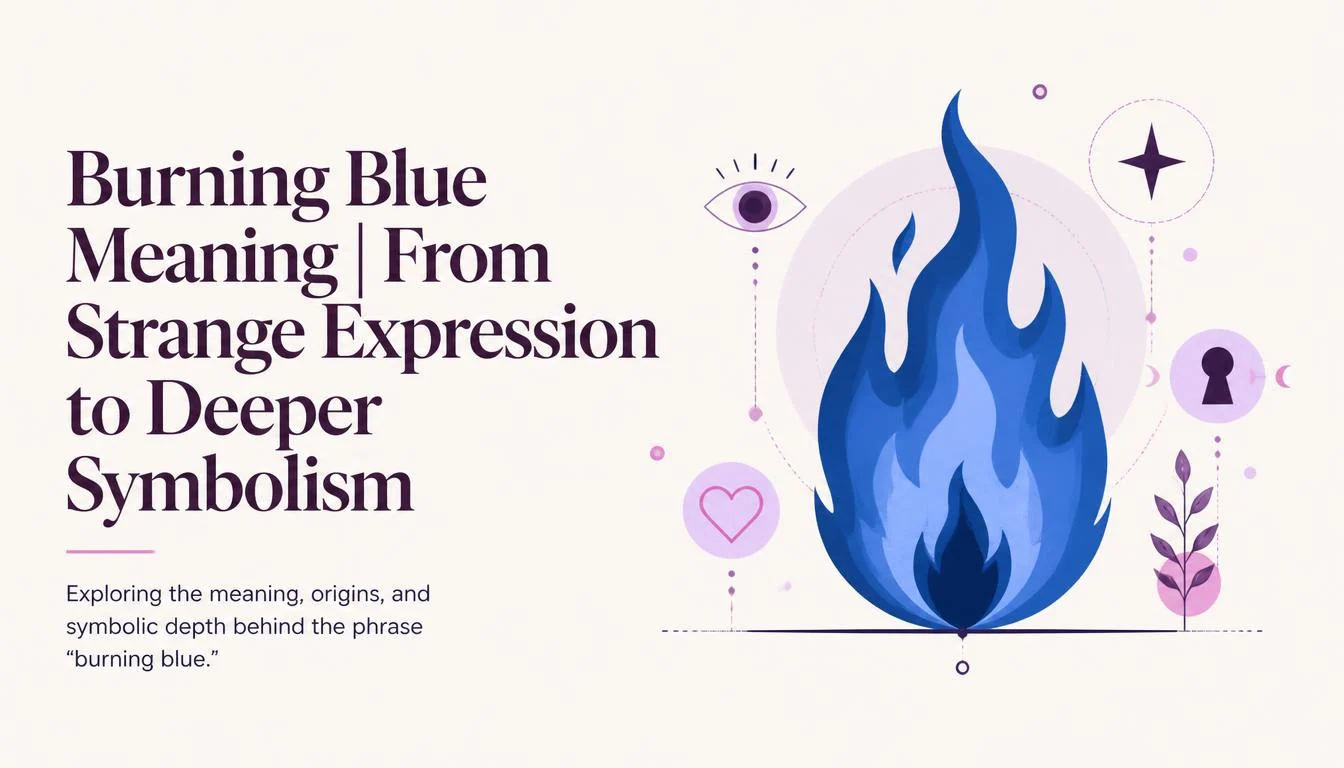
Burning blue is an expression used to describe an emotion, gaze, or situation that feels intensely hot and passionate on the inside while appearing calm, cold, or distant on the outside. It draws on the real scientific fact that the hottest part of a flame burns blue rather than orange so “burning blue” signals a quiet intensity: feelings that run deeper and hotter than they let on. It’s most often used to describe:
- 💙 A love or attraction that feels overwhelming despite looking composed on the surface
- 🔥 Eyes, a gaze, or a person’s presence described as intensely fiery yet icy-toned
- 🎵 The title and central metaphor of Mariah the Scientist’s 2025 R&B song “Burning Blue”
In short: when something is “burning blue,” it means the feeling is at its most extreme point, even though it doesn’t look like it from the outside.
Where Does “Burning Blue” Come From?
The Science Behind the Phrase
Before it became a pop-culture phrase, “burning blue” was simply a fact about fire. Anyone who’s watched a gas stove or a candle knows that the base of a flame, where combustion is most complete and oxygen-rich, glows blue and that section is actually the hottest part of the fire, hotter than the orange or yellow tips people usually associate with heat. Writers and poets picked up on this irony a long time ago: the part that looks the coolest is the part that burns the most fiercely. That contradiction is the backbone of every modern use of the phrase.
From Metaphor to Mainstream
The expression has floated around in literature and song lyrics for years as a way to describe intense eyes or hidden passion (you’ll find lines like “his eyes were flames of the fiercest, iciest blue” in romance and fantasy novels). But it picked up serious momentum thanks to a few specific moments:
- Music: Mariah the Scientist’s 2025 single “Burning Blue” turned the phrase into a genuine cultural moment. In the song, she casts herself as “cold as ice” and the other person as fire, using the blue-flame imagery to describe a relationship built on risk, restraint, and surrender. The chorus repeats “I’m burning blue, I’m letting it burn,” which is where a lot of listeners first encountered the phrase and started asking what it meant.
- Film and theatre: There’s also a 2013 film (and earlier 1992 stage play) called Burning Blue, about U.S. Navy pilots during the “Don’t Ask, Don’t Tell” era. In that context, the title leans on the idea of a controlled, disciplined exterior (military life, the sky, “the blue”) hiding something far more combustible underneath a different story, but the same underlying wordplay.
- Internet slang: On Urban Dictionary, “burning blue” has been defined informally as loving someone with a love “that is more than love” an over-the-top, all-in kind of devotion. It’s a smaller, older entry, but it shows the phrase was already being used this way in everyday slang before the song made it mainstream.
Popularity Today
Search interest in “burning blue meaning” spiked heavily after the Mariah the Scientist song gained traction on streaming and short-form video platforms in 2025 and into 2026. Most people typing the phrase into Google or TikTok search bars today are trying to understand either the song’s lyrics or how to use the expression themselves in captions, texts, or creative writing.
How Is “Burning Blue” Used in Real Life?
The phrase shows up in a few distinct contexts, and the tone shifts depending on where you see it.
1. Romantic or Emotional Context (Most Common)
This is the dominant use today. People describe a relationship, crush, or feeling as “burning blue” when it’s intense but complicated often involving someone who seems emotionally guarded while secretly feeling everything at full volume.
- “She acts unbothered, but I know she’s burning blue for him.”
- “This whole situationship is burning blue calm on the group chat, chaos in the DMs.”
- “I don’t do ‘in love.’ I do burning blue. 🔥💙”
2. Descriptive / Literary Context
Writers use it to describe eyes, a gaze, or a person’s aura something that looks cool-toned but carries real heat.
- “His eyes were burning blue, and I couldn’t look away.”
- “There was a burning blue intensity in the way she argued her point.”
3. Dismissive or Sarcastic Context
Occasionally, people use it more loosely or even mockingly, especially online, to poke fun at over-the-top declarations of passion.
- “Oh here we go, ‘burning blue’ again just say you like him and move on. 🙄”
- “Every situationship is ‘burning blue’ until someone actually has to text back.”
4. Neutral / Factual Context
Sometimes it’s used with zero emotional weight at all just describing the literal color and heat of a flame, like in a chemistry class or a candle-making tutorial.
- “Turn the burner up until the flame is burning blue that’s when it’s fully combusting.”
Comparison Table: Burning Blue vs. Similar Expressions
| Expression | Core Meaning | Typical Tone | Best Used In |
|---|---|---|---|
| Burning blue | Intense feeling hidden under a calm or cool exterior | Passionate, poetic, sometimes dramatic | Song lyrics, captions, describing eyes or hidden emotion |
| Ice and fire | Two opposing forces or personalities in conflict/attraction | Dramatic, symbolic | Describing a relationship dynamic between two people |
| Slow burn | Something that builds gradually over time before intensifying | Patient, anticipatory | Describing a relationship or storyline that develops slowly |
| Cold as ice | Emotionally detached or unreadable | Neutral to negative | Describing someone unemotional or guarded |
| Playing with fire | Doing something risky, often emotionally | Cautionary, warning | Describing risky romantic or personal decisions |
| Burning out | Exhausted from overexertion | Negative, tired | Work, stress, and mental health contexts |
Notice the pattern: most of these fire-and-ice idioms are about contrast something looking one way while being another underneath. “Burning blue” specifically emphasizes that the coolest-looking part is actually the hottest, which is what sets it apart from a phrase like “cold as ice,” which has no hidden heat at all.
Alternate Meanings You Might Come Across
While the emotional/romantic sense is by far the most common today, keep these in mind so you don’t get confused if you see the phrase elsewhere:
- Chemistry/physics: A literal description of a flame’s hottest, most complete-combustion zone.
- Film title: Burning Blue (2013), a Navy aviation drama unrelated to the romantic slang meaning the title plays on military discipline concealing personal turmoil.
- Song title: Mariah the Scientist’s “Burning Blue,” the specific piece of music most people are referencing when they search this phrase in 2025–2026.
- General intensity: Occasionally used outside romance entirely, to describe any situation ambition, anger, determination that’s more intense than it appears on the surface.
Polite or Professional Alternatives
“Burning blue” is casual, poetic, and emotionally loaded great for creative writing, captions, or conversations with friends, but not something you’d use in a work email or formal writing. If you need a more professional or neutral way to express the same idea, try:
- “Deeply passionate but composed”
- “Intensely focused beneath a calm exterior”
- “Quietly but powerfully driven”
- “Understated intensity”
- “Reserved on the surface, intense underneath”
For romantic contexts specifically, softer alternatives include “deeply infatuated,” “quietly smitten,” or simply “really into someone.”
How to Use “Burning Blue” the Right Way (Usage Tips)
- Match the tone to your audience. It reads as poetic and heartfelt in captions or lyrics, but can come across as overly dramatic in casual texting if used too often.
- Pair it with contrast. The phrase works best when you’re describing two opposing things calm vs. chaos, ice vs. fire, silence vs. intensity.
- Don’t overuse the emoji combo. 🔥💙 is a fun visual shorthand for the phrase, but sprinkling it into every caption dilutes the effect.
- Know your context. If someone mentions “Burning Blue” out of nowhere, check whether they’re talking about the song, the emotion, or literally a flame context clues (music references, relationship talk, or science talk) will tell you which one applies.
FAQs
1. What Does “Burning Blue” Mean in Slang?
In slang, “burning blue” describes an intense and often romantic feeling hidden beneath a calm or guarded exterior. It suggests that someone feels much more deeply than they openly show.
2. Is “Burning Blue” a Real Idiom or Just a Song Reference?
It can be both. The phrase has been used poetically to describe hidden intensity, while its recent popularity is strongly connected to Mariah the Scientist’s song titled “Burning Blue.”
3. What Is the Meaning Behind Mariah the Scientist’s “Burning Blue”?
The song uses fire and ice imagery to portray a relationship filled with emotional contrast. The narrator appears cold and controlled while being drawn toward someone fiery and unpredictable, capturing the tension of giving in to that attraction.
4. Why Is Blue Fire Hotter Than Red or Orange Fire?
Blue flames are generally associated with more complete combustion and can reach higher temperatures than the yellow or orange parts of a flame. This helps create the metaphor of something appearing calm while actually being extremely intense.
5. Is “Burning Blue” a Compliment?
Usually, yes. It can affectionately describe deep passion, captivating eyes, or an intense personality hidden beneath a composed exterior. In some situations, it may also be used humorously or sarcastically.
6. How Is “Burning Blue” Different From “Slow Burn”?
A “slow burn” refers to feelings or situations that gradually develop over time. “Burning blue” focuses more on intense emotions that already exist but remain hidden beneath a calm surface.
7. Can “Burning Blue” Describe Feelings Other Than Love?
Yes. Although romance is a common context, the phrase can describe other powerful emotions too. It may refer to ambition, determination, anger, focus, or any strong feeling that is not immediately visible.
8. Where Did the Phrase “Burning Blue” Come From?
The phrase draws on the literal imagery of blue flames and their association with intense heat. Its poetic use has appeared in literary and creative contexts, while music and social media have helped bring the expression to a wider modern audience.
Conclusion
“Burning blue” endures as a phrase because it captures something most people recognize instantly: the idea that the calmest-looking feelings are often the strongest ones. Whether you first heard it in a song, a book, or a caption on your feed, the core meaning stays consistent intensity disguised as composure.
Quick recap:
- Definition: An intense feeling (often love or passion) hidden beneath a calm, cool, or guarded exterior.
- Origin: Rooted in the science of blue flames being the hottest part of fire; popularized culturally through literature, a 2013 film, and especially Mariah the Scientist’s 2025 song of the same name.
- Usage: Most common in romantic, poetic, or descriptive contexts; occasionally used sarcastically or literally.
- Alternatives: For formal writing, swap it for phrases like “quiet intensity” or “composed but deeply passionate.”
Next time you see or hear “burning blue,” you’ll know exactly what’s being said and whether it’s time to use the phrase yourself.
Read More Related Articles:
- Safety Pin Necklace Mean | Why This Tiny Symbol Holds Big Meaning In 2026
- OBO Mean on Facebook Marketplace | Guide to Buying and Selling Smarter In 2026
- Outbox Mean in Email | Easy Explanation You Need In 2026








4 thoughts on “Burning Blue Meaning | From Strange Expression to Deeper Symbolism In 2026”