Quick Answer:
The symbol “/s” most commonly means sarcasm or a sarcastic tone in online conversations, social media posts and comment threads. It helps readers understand that a statement is meant sarcastically rather than taken literally.
The term /s meaning is useful to know if you spend time on platforms like Reddit, Discord, X or other social media sites. People often add “/s” at the end of a sentence to show that they are joking or being sarcastic. It prevents confusion when the intended tone is difficult to understand through text alone.
Understanding the /s meaning can make online conversations easier to follow. For example, someone might write, “Wow, I just love waking up at 5 AM every day /s.” The tag signals that the person probably does not enjoy waking up so early. Instead, they are using sarcasm to express the opposite of what the sentence literally says.
What Does /s Mean in Text?
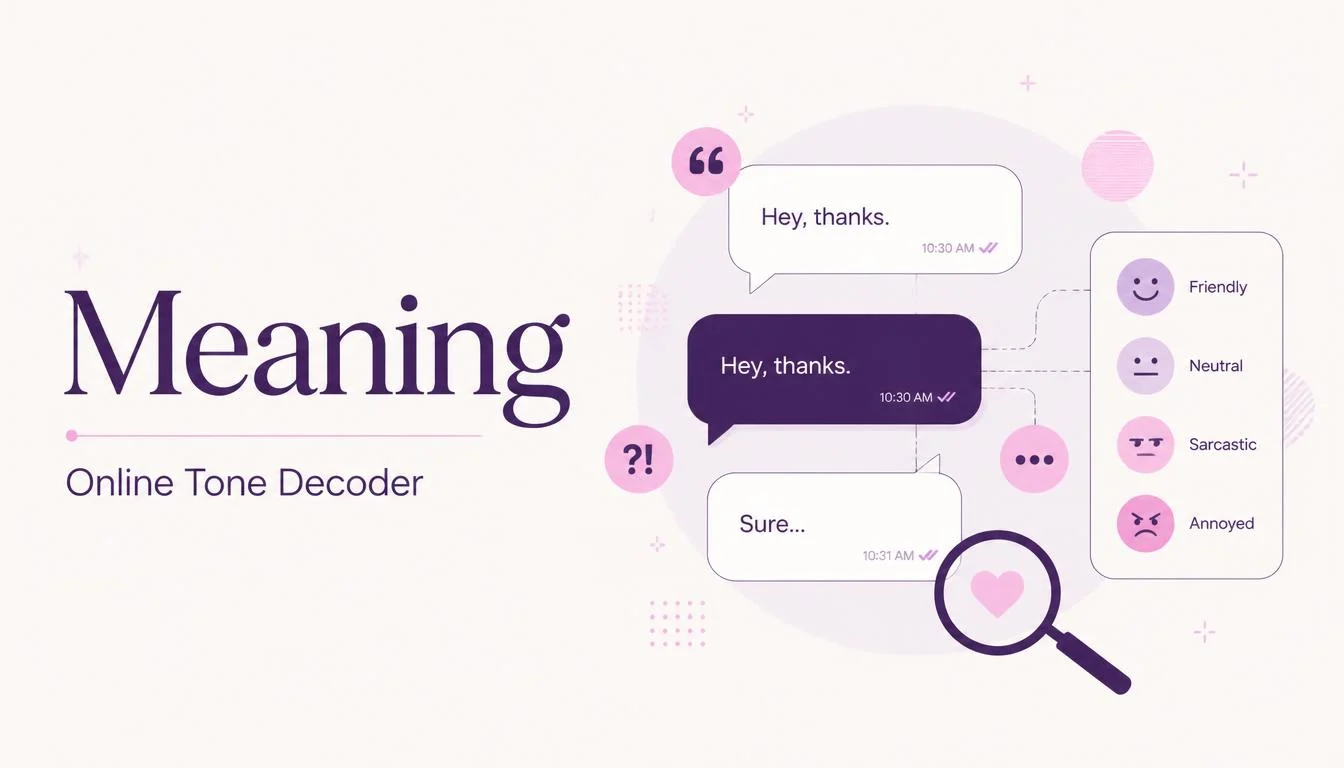
The symbol /s is a tone indicator that tells readers a statement is sarcastic. People use it when their words might otherwise sound serious, confusing, or misleading.
Sarcasm often involves saying something that means the opposite of what you actually feel. For example, someone who spills coffee on their shirt before an important meeting might say, “Well, this day is going perfectly. /s”
Without the marker, readers might interpret the sentence as genuine positivity. Adding /s makes the intended sarcasm much clearer.
This symbol is especially useful in online conversations because written messages lack the facial expressions, voice changes, and gestures people rely on during face-to-face communication.
What Does the Letter S Stand For?
The letter s stands for sarcasm. The forward slash makes the symbol look like a short label attached to the sentence.
It is not usually an abbreviation for a longer phrase. Instead, it functions as a simple signal that helps readers understand the writer’s intended tone.
Consider these examples:
- “Wow, you finished your homework early. /s”
- “I absolutely love waiting three hours for a bus. /s”
- “Another software update that fixes nothing. /s”
Each statement sounds positive or approving on the surface, but the marker signals that the writer intends a sarcastic interpretation.
Does /s Always Mean Sarcasm?
In online discussions, /s most commonly signals sarcasm. However, abbreviations can have different meanings in other settings.
For example, /s can appear in programming, mathematics, technical documents, and informal writing with meanings determined by context. In some online communities, it may also appear as part of formatting or a command.
If you see it at the end of a comment, joke, or social media post, sarcasm is generally the most likely interpretation.
Why Do People Use /s Online?
Online communication can make humor surprisingly difficult to understand. A comment that sounds hilarious to its writer may appear insulting or completely serious to someone reading it.
The sarcasm indicator helps prevent this problem.
To Make Jokes Easier to Understand
Some jokes depend on saying something obviously exaggerated or intentionally unreasonable. Although many readers recognize the humor, others may take the words literally.
For example:
“Sure, because spending all my savings on snacks is an excellent financial plan. /s”
The marker tells readers that the writer does not genuinely believe the decision is sensible.
To Avoid Misunderstandings
Sarcasm can easily be mistaken for genuine criticism, particularly when strangers communicate online.
Imagine someone commenting, “You’re definitely the world’s greatest driver,” after watching a friend bump into a parking barrier. Depending on the relationship, this might be affectionate teasing or a serious insult.
Adding /s clarifies the sarcastic intention, although it cannot completely prevent misunderstandings.
To Express Frustration Humorously
People often use sarcasm to describe annoying situations without writing a lengthy complaint.
Examples include:
- “My internet disconnected during the final minute. Love that for me. /s”
- “Nothing says relaxation like a hundred unread emails. /s”
- “Fantastic, my phone battery died when I needed directions. /s”
The marker allows the writer to communicate irritation while maintaining a humorous tone.
To Communicate With Online Communities
On platforms such as Reddit, users frequently encounter unfamiliar people who cannot recognize their personal sense of humor.
A tone indicator offers a quick way to communicate intent without relying on shared experiences or a familiar relationship.
It can be particularly helpful in text-heavy discussions, where people might disagree about whether a statement is serious, ironic, or deliberately exaggerated.
How to Use /s in Text Messages
Using the symbol is straightforward. In most informal online conversations, you place it at the end of a sarcastic sentence or statement.
The marker works best when the surrounding words contain some indication of humor, exaggeration, or irony.
Put /s at the End of Your Sentence
The most familiar format is a sentence followed by a space and /s.
Examples:
- “I really needed another problem today. /s”
- “Spilling water on my laptop was the highlight of my morning. /s”
- “Obviously, getting four hours of sleep is the perfect productivity strategy. /s”
The placement makes the intended tone easy to recognize without interrupting the sentence.
Use It in Casual Messages
You can use the symbol in text messages, group chats, online gaming conversations, and social media comments.
For instance, imagine your friend tells you that they forgot their umbrella on a rainy day.
You might reply:
“Excellent planning skills right there. /s”
The message communicates playful sarcasm instead of genuine praise.
Still, consider your relationship with the recipient. A close friend might understand your humor immediately, while someone unfamiliar with internet slang may find the symbol confusing.
Use It After an Obviously Exaggerated Statement
Sarcasm often becomes clearer when a statement is intentionally unrealistic.
For example:
“I’m sure my cat has a detailed five-year plan to destroy my furniture. /s”
The exaggeration makes the joke apparent, and the marker removes any remaining doubt.
However, you do not need to add /s to every joke. It is most useful when the sentence could reasonably be interpreted in more than one way.
Real Examples of /s in Conversations
The easiest way to understand this indicator is to see how it changes the interpretation of everyday messages.
Here are several examples from common online situations.
Example 1: Talking About School
Person A: “I have three assignments due tomorrow.”
Person B: “Lucky you. /s”
Person B is not genuinely saying that having multiple assignments is fortunate. The comment expresses sympathy through sarcasm.
Example 2: Discussing Work
Person A: “My manager scheduled another meeting during my lunch break.”
Person B: “Amazing workplace planning. /s”
The second person is criticizing the decision rather than complimenting it.
Example 3: Complaining About Technology
Person A: “My laptop restarted right before I saved my project.”
Person B: “Technology always knows the perfect time to help. /s”
The sarcastic reply highlights frustration with the computer’s behavior.
Example 4: Talking About the Weather
Person A: “It’s raining again, and I just washed my car.”
Person B: “Perfect timing! /s”
The second person means that the timing is unfortunate, not perfect.
Example 5: Social Media Comments
Someone posts a picture of a messy bedroom with the caption, “My room is definitely ready for a home design magazine. /s”
The marker suggests that the person is joking about the mess rather than seriously praising the room’s appearance.
Example 6: Gaming Conversations
Player A: “Our entire team ran into the same trap.”
Player B: “Professional-level teamwork right there. /s”
The reply pokes fun at the team’s mistake.
Example 7: Everyday Group Chats
Friend A: “I forgot my keys inside the house again.”
Friend B: “Your memory is truly unbeatable. /s”
The comment is playful teasing. Depending on the friendship, it might be understood as harmless humor rather than an insult.
These examples share a pattern: the words initially suggest approval, excitement, or praise, but the marker signals a different intention.
/s vs. Other Internet Tone Indicators
The internet uses several short symbols to explain how a message should be interpreted. Although they may look similar, each has a different purpose.
| Indicator | Meaning | Example |
|---|---|---|
/s | Sarcasm | “I love being stuck in traffic. /s” |
/j | Joking | “I’m secretly a professional astronaut. /j” |
/srs | Serious | “I’m being completely honest. /srs” |
/gen | Genuine question or statement | “Are you feeling okay? /gen” |
/lh | Lighthearted tone | “You’re such a troublemaker. /lh” |
/pos | Positive tone | “That was really helpful. /pos” |
/neg | Negative tone | “That comment upset me. /neg” |
/nm | Not mad | “It’s okay, I’m not upset. /nm” |
These labels are sometimes called tone indicators. They are particularly common in online communities that want to make written communication easier to interpret.
Usage is not perfectly standardized, and not everyone recognizes every indicator. Context remains important.
/s vs. /j
The distinction between /s and /j is worth understanding.
/s specifically signals sarcasm. /j indicates that the statement is intended as a joke, which does not necessarily involve sarcasm.
For example:
“I’m going to become a millionaire by selling invisible sandwiches. /j”
This is a silly joke, not necessarily a sarcastic comment.
By comparison:
“Wonderful, another bill to pay. /s”
This expresses frustration through sarcasm.
/s vs. /srs
These indicators communicate different intentions.
/s means the statement is sarcastic, while /srs means it is serious.
Consider the following examples:
- “I’m absolutely thrilled about another exam. /s”
- “I’m genuinely worried about tomorrow’s exam. /srs”
The first sentence communicates the opposite of its literal meaning. The second emphasizes that the writer is speaking sincerely.
/s vs. /lh
The /lh marker means lighthearted. It suggests that the writer intends a playful or non-serious tone.
Sarcasm can sometimes be lighthearted, but the two indicators are not interchangeable.
For instance, “You stole my last cookie. /lh” might be playful teasing. “You’re clearly the most considerate cookie thief alive. /s” is sarcastic.
The difference lies in the intended tone rather than the subject of the message.
Where Did /s Come From?
The use of /s is connected to the broader history of internet communication and text-based communities.
Early online discussions often took place through email, bulletin boards, chat rooms, and message forums. These environments offered little support for communicating facial expressions or vocal tone.
As online communities developed their own conventions, people began using symbols and abbreviations to clarify how their messages should be understood.
The Connection to HTML and Online Formatting
One explanation for the familiar slash format is its resemblance to HTML closing tags.
In HTML, a closing tag uses a forward slash, as in </p>, to indicate the end of an element. Internet users familiar with markup and online formatting may recognize a similar visual pattern in /s.
However, the sarcasm indicator is not an HTML tag. Its use in conversation is informal, and its history should not be reduced to a single confirmed origin without reliable historical evidence.
The symbol became widely recognizable in online discussion spaces, including Reddit, where people often use it to mark sarcasm explicitly.
Why Did It Become Popular?
A short marker is easy to type, takes up little space, and can change how an entire sentence is interpreted.
It also works across different types of written communication. People can use it in a long forum post, a short comment, or a quick message without changing the structure of their writing.
Its usefulness comes from a basic problem: readers cannot always hear the voice behind the words.
When Should You Use /s?
Although the indicator can be useful, it is not necessary in every conversation.
Knowing when to include it helps your messages feel natural rather than overly explained.
Use It When Your Sarcasm Might Be Misunderstood
A sarcastic comment about an everyday inconvenience is often easy for friends to understand. The same comment directed at strangers may not be as clear.
For example, “This is exactly how I wanted my vacation to begin. /s” could refer to a delayed flight, lost luggage, or unexpected rain.
The marker helps readers understand that the situation is frustrating rather than desirable.
Use It When Discussing Sensitive Topics Carefully
Sarcasm about personal struggles, identity, health, or serious events can be misunderstood or hurtful.
Even if your intention is humorous, readers may interpret the message differently. A tone indicator can help communicate intent, but it cannot make every joke appropriate.
When the topic is sensitive, direct and respectful language is often a better choice.
Use It on Platforms With Unfamiliar Readers
On Reddit, public discussion forums, and other social platforms, people may encounter your message without knowing anything about you.
They cannot rely on your usual speaking style or personal relationship to understand your intention.
A short marker can make your meaning easier to recognize, especially when the sentence sounds sincere on its own.
Avoid Adding It to Every Playful Message
Overusing /s can make ordinary jokes feel unnecessarily explained.
For example, if you tell a close friend, “You’re impossible,” they may already understand that you are teasing them.
A tone indicator is most useful when the risk of misunderstanding is meaningful. Use it when it adds clarity, not simply because a sentence contains humor.
Common Mistakes to Avoid
The symbol is simple, but several common misunderstandings can lead to confusion.
Mistaking /s for a Plural or Formal Abbreviation
In informal online conversation, /s generally means sarcasm when it appears after a statement. It does not automatically mean plural, seconds, or any other technical abbreviation.
If the symbol appears in a different context, check the surrounding words before deciding what it means.
Assuming Everyone Knows the Meaning
Not all internet users are familiar with tone indicators. Someone who rarely visits online forums may read /s as a typo or an unfamiliar abbreviation.
If you are communicating with someone who might not recognize it, you can express your intention in plain language.
For example, instead of writing “Great job breaking the printer. /s,” you could say, “I’m being sarcastic. That was frustrating.”
Using Sarcasm to Hide Genuine Insults
Adding /s does not automatically make a statement harmless.
A comment that humiliates someone or attacks a personal characteristic can still be hurtful even when labeled as sarcasm. The marker explains the intended tone, but it does not remove the impact of the words.
Confusing Sarcasm With Irony
Sarcasm and irony are related, but they are not identical.
Sarcasm often involves mockery, criticism, or pointed humor. Irony is broader and can describe a contrast between expectations and reality.
For example, a fire station catching fire is an ironic situation. A person saying, “Brilliant idea,” after someone makes an obvious mistake is using sarcasm.
The /s marker is commonly used for sarcasm, although people sometimes apply it to statements that are more broadly ironic.
Is /s Rude or Offensive?
No. The symbol itself is neither rude nor offensive. It simply indicates the tone of a statement.
Whether the message is appropriate depends on what the person says and how the recipient interprets it.
For example, “Wonderful, another rainy weekend. /s” is usually a harmless expression of disappointment. By contrast, a sarcastic comment that targets someone’s insecurity may cause genuine hurt.
The same distinction applies to spoken sarcasm. Tone can make a comment playful, critical, or cruel, and a written marker cannot guarantee that everyone will interpret it in the intended way.
If you are unsure how a message will sound, consider whether the recipient is likely to understand the joke and whether the comment could reasonably be taken as a personal attack.
FAQs
1. Should /s go before or after a sentence?
It usually appears at the end of the sentence or comment. For example, “I just love losing my homework. /s” is a common format. This placement allows readers to interpret the statement before seeing the tone marker.
2. Can I use /s on Instagram, TikTok, or Discord?
Yes. You can use it on Instagram, TikTok, Discord, Reddit, and other platforms that support ordinary text. Whether other users understand it depends on their familiarity with internet slang and tone indicators.
3. What does /s mean when someone replies to my comment?
When someone adds /s to a reply, they are generally signaling sarcasm. They may be joking about your statement, criticizing something, or making an exaggerated observation. Read the entire conversation before deciding whether the comment is friendly or hostile.
4. Is /s the same as an eye-roll emoji?
Not exactly. Both can communicate sarcasm or annoyance, but they work differently. /s is a written tone label, while an eye-roll emoji conveys meaning through a visual expression. People may use either one depending on their preferred communication style.
5. Do I need to use /s if my joke is obvious?
No. If your intended tone is already clear, the marker may be unnecessary. It is most helpful when your words could sound sincere or serious to someone unfamiliar with your humor.
6. Can /s mean something other than sarcasm?
Yes. The meaning depends on context. In online comments and text messages, it usually signals sarcasm, but technical writing, programming, and other specialized settings may use the same characters differently.
Conclusion
The /s indicator is a simple way to make sarcasm easier to recognize in online conversations. It helps readers distinguish a sarcastic statement from a sincere one, particularly when facial expressions and vocal tone are missing. You can use it in comments, group chats, and social media posts whenever your intended humor might be misunderstood. Keep the context in mind, though, because clear communication depends on more than a single symbol.
Read More Related Articles:
- Slime Someone Out Mean | Real Story Behind This Slang In 2026
- Adjacent Mean in Math | Easy Way to Get It Right In 2026
- Congruent Mean in Geometry | Learn the Secret of Identical Shapes In 2026











2 thoughts on “/s Meaning | Online Tone Decoder In 2026”