Quick Answer
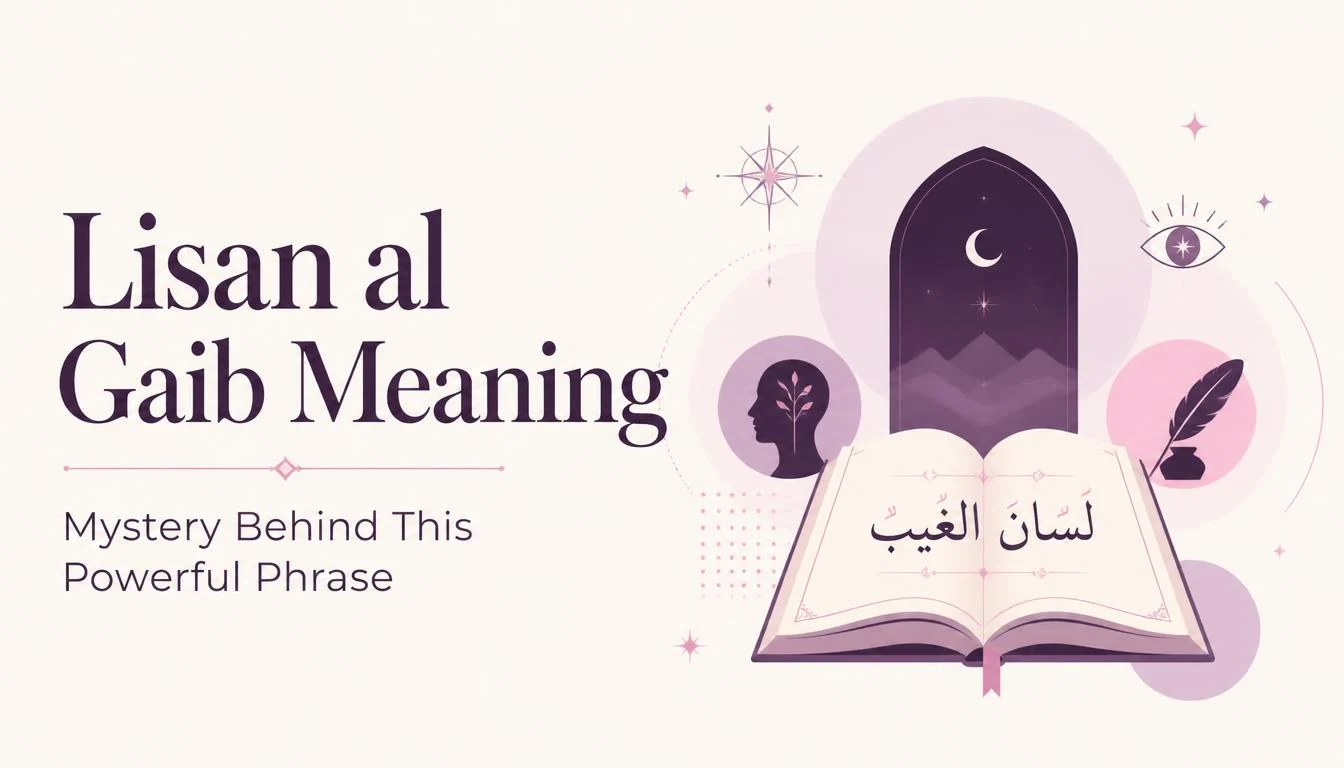
Lisan al Gaib is an Arabic phrase written as لسان الغيب. It can be understood literally as “tongue of the unseen” or more naturally as “voice of the unseen.” The phrase became especially famous through Frank Herbert’s Dune, where it is the Fremen title for a prophesied outsider and messianic leader. The expression also has a real literary and cultural history outside the novel, including its association with the Persian poet Hafez.
The phrase Lisan al Gaib Meaning can seem mysterious at first because it combines Arabic language with a powerful spiritual and fictional context. In Arabic, Lisan al Gaib roughly translates to “the tongue of the unseen” or “the voice of the unseen,” giving it a sense of hidden knowledge and prophecy.
Today, Lisan al Gaib is especially recognized by fans of Dune, where the title carries deep religious and prophetic significance. Understanding its Arabic roots makes the phrase easier to appreciate and explains why it sounds so powerful within the story.
What Does Lisan al Gaib Mean in Arabic?
The phrase is usually written in Arabic as لسان الغيب and can be transliterated as lisān al-ghayb. English spellings vary, so you may also see Lisan al-Gaib, Lisan al-Ghaib, or Lisan al-Ghayb.
The first word, lisān, literally means “tongue.” In ordinary language, a tongue is also closely associated with speech, expression, and language. That is why “voice” can be a useful English rendering when the phrase is being translated for modern readers.
The second part, al-ghayb, refers to the unseen or hidden. The Arabic concept is much broader than simply something that happens to be invisible. It can refer to matters beyond ordinary human perception or knowledge.
The Quran uses the word ghayb in several places. For example, Quran 2:3 describes believers as those who believe in the unseen, while other passages refer to knowledge of hidden matters.
Put together, the phrase can therefore be understood as “voice of the unseen,” “tongue of the unseen,” or “speaker for the unseen.”
That last interpretation helps explain why the expression can carry a prophetic feeling. Someone described this way sounds like a person giving voice to something hidden from ordinary people.
Breaking Down the Phrase
Understanding the two Arabic components makes the expression much easier to remember.
| Part | Arabic | Basic meaning | Meaning in context |
|---|---|---|---|
| Lisān | لسان | Tongue | Speech, voice, language, expression |
| Al | ال | The | Definite article |
| Ghayb | الغيب | The unseen | Hidden or unknown matters |
| Lisan al Gaib | لسان الغيب | Tongue of the unseen | Voice or speaker associated with hidden knowledge |
The translation “Voice of the Unseen” is therefore an interpretive rendering rather than a word-for-word translation of every possible nuance.
That distinction matters when discussing Dune. Herbert did not simply take an everyday Arabic sentence and insert it unchanged into the story. He adapted Arabic influenced vocabulary into the fictional culture and religious system of the Fremen.
Lisan al Gaib Meaning in Dune
For most modern readers, the phrase is connected first with Frank Herbert’s Dune.
In the novel, the Fremen are the desert people of Arrakis, a planet dominated by extreme heat, scarce water, giant sandworms, and the valuable spice melange. Their society contains a powerful messianic tradition.
The Lisan al-Gaib is the figure expected to come from outside Arrakis and fulfill that prophecy. The title is commonly rendered in the Dune context as “Voice from the Outer World.” It is also associated with the idea of an off-world prophet or messiah.
This is where the phrase takes on a meaning that differs from a simple Arabic dictionary gloss.
In Herbert’s fictional setting, it is not merely someone who knows secret information. It identifies a promised figure who is expected to change the fate of the Fremen.
That figure eventually becomes Paul Atreides, who adopts the Fremen name Muad’Dib.
Paul’s identity becomes increasingly complicated because he is simultaneously an outsider, a political heir, a trained fighter, and a person whose visions of possible futures become increasingly important.
The title therefore carries several ideas at once:
- A prophetic outsider
- A promised leader
- A messianic figure
- Someone associated with hidden knowledge
- A person expected to lead the Fremen toward a better future
This layered meaning is one reason the phrase feels so powerful in the story.
Why Is Paul Called Lisan al Gaib?
Paul does not simply walk onto Arrakis and receive the title because he asks for it.
The Fremen already possess a prophecy about a figure who will arrive from another world. When Paul and his mother, Lady Jessica, reach Arrakis, certain details of their arrival appear to match elements of the existing belief.
Paul’s abilities make the connection even stronger.
- His prescient visions allow him to perceive possible future events.
- His training gives him unusual physical and mental abilities.
- His knowledge of Bene Gesserit techniques also helps him survive situations that would overwhelm an ordinary outsider.
To many Fremen, these characteristics make the old prophecy seem to be coming true.
Paul eventually becomes associated with several names and titles, including Muad’Dib, Mahdi, and Lisan al-Gaib. Each carries a slightly different emphasis within the story.
The result is important to the larger plot. Paul is not simply gaining a nickname. He is becoming the figure through which Fremen religious expectations, political hopes, and military ambitions converge.
The Prophecy Was Not Completely Accidental
One of the most interesting parts of the story is that the prophecy surrounding Paul was not created spontaneously when he arrived.
The Bene Gesserit, a powerful sisterhood in Herbert’s universe, had established religious beliefs and protective traditions among various populations long before Paul’s arrival.
This program is called the Missionaria Protectiva.
Its purpose was partly practical. Bene Gesserit teachings could create beliefs that might later help one of their members survive in a dangerous society.
Arrakis had its own version of these traditions. Jessica recognizes that some of the beliefs surrounding the expected outsider could benefit her and Paul.
This creates a major tension in the story.
The Fremen believe they are recognizing a figure foretold by ancient prophecy. Yet the audience knows that at least part of the groundwork for that belief was deliberately planted by the Bene Gesserit.
That makes the title more complicated than “chosen one.”
Paul becomes the focus of a prophecy that is both manufactured and genuinely powerful. His abilities and later actions give the old story new force, but the original framework was already there.
Lisan al Gaib and the Fremen Idea of a Messiah
The word messiah can make the concept sound simpler than it actually is.
The Fremen expectation is tied to a specific desert culture, its history, and its struggle to survive on Arrakis. The promised outsider is expected to help lead the people toward freedom and a better future.
The related term Mahdi is also important. In the Fremen religious vocabulary of Dune, Mahdi is associated with the figure who will lead the people toward paradise.
This does not mean that Mahdi and Lisan al-Gaib are perfect synonyms in every context. Herbert’s fictional terminology draws from several real Arabic and Islamic concepts, then reshapes them for the story.
That mixture is typical of the world-building in Dune.
Herbert used Arabic influenced terminology throughout the Fremen culture, including names such as Muad’Dib, Shai-Hulud, jihad, and Mahdi. Scholars have examined these linguistic and cultural influences as an important part of the series.
The Real Arabic Concept of Al-Ghayb
To understand the phrase properly, it helps to separate Herbert’s fictional use from the older concept of al-ghayb.
In Arabic and Islamic contexts, ghayb refers broadly to what is hidden from ordinary human perception or knowledge.
The Quranic Arabic Corpus records numerous occurrences of the root associated with ghayb. These include expressions translated as “the unseen” and references to hidden knowledge.
Quran 6:59, for example, speaks of the “keys of the unseen” and states that their knowledge belongs to God. Quran 7:188 also uses the concept when discussing knowledge of the unseen.
This is important because al-ghayb should not simply be treated as a synonym for “magic.”
Its traditional meaning has a much deeper theological context.
The concept concerns things hidden from human beings, including matters that cannot be established through ordinary sensory perception. Islamic discussions of the unseen can include angels, the afterlife, divine knowledge, and matters of the future.
That gives the phrase Lisan al-Gaib a natural association with someone who gives expression to hidden truths.
Lisan al Gaib and Hafez
The connection to Hafez of Shiraz is one of the most fascinating parts of the phrase’s history outside Dune.
Hafez, whose full name was Shams al-Din Muhammad Hafez Shirazi, was a celebrated Persian poet who lived in Shiraz during the eighth Islamic century. He is widely known by the honorific Lisan al-Ghayb, or “Tongue of the Unseen.”
His poetry is famous for its layers of symbolism, spiritual imagery, love poetry, and criticism of hypocrisy.
The title was connected to the perception that his poetry could express subtle or hidden meanings. A later tradition associated the title with his ability to reveal profound meanings through poetic language.
This historical use is especially interesting because it shows that Herbert’s phrase was not simply invented from scratch for science fiction.
The expression had a life in Persian literary culture before Dune.
That does not mean Hafez and Paul Atreides have the same role. They clearly do not. Hafez was a real historical poet, while Paul is a fictional character. The connection is linguistic and thematic rather than a claim that Herbert copied the entire concept directly from Hafez.
How the Real Phrase Differs From the Dune Version
There are two meanings worth keeping separate.
| Context | Meaning | Main idea |
|---|---|---|
| Arabic expression | Tongue or voice of the unseen | Speaking about hidden matters |
| Persian literary tradition | Honorific associated with Hafez | A poet expressing hidden or profound meanings |
| Dune | Voice from the Outer World | A prophesied off-world leader |
| Modern fandom | Prophetic or chosen figure | A reference to Paul and Fremen belief |
This distinction prevents one of the most common misunderstandings.
Lisan al-Gaib is not originally a word that means “Paul Atreides.”
Paul is the fictional character who becomes associated with the title in Herbert’s story.
Likewise, the phrase should not automatically be translated as “Messiah” in every Arabic context. “Messiah” describes its role in Dune rather than giving the literal meaning of the Arabic words.
Why the Phrase Fits Paul So Well
The title works because Paul is connected to knowledge that ordinary people cannot easily access.
His prescience gives him visions of possible futures. He can see patterns and consequences that other characters cannot.
Yet Herbert makes this ability unsettling rather than completely heroic.
Paul gradually realizes that seeing possible futures does not necessarily mean being able to control them. Some paths appear to lead toward enormous violence and religious warfare.
That tension gives the title an ironic edge.
The people around Paul increasingly see him as a divinely expected figure. Paul himself understands that political forces, prophecy, belief, and manipulation are all involved.
So the “voice of the unseen” is not simply a flattering title. It becomes part of a larger question about what happens when people place absolute faith in a person they believe has access to knowledge beyond their own.
Five Names and Terms Connected to Paul
Readers sometimes encounter several unfamiliar terms together. Here is a simple way to separate them.
Paul Atreides
This is Paul’s original name and his identity as the son of Duke Leto Atreides and Lady Jessica.
Muad’Dib
This is the name Paul adopts among the Fremen. In Dune, it refers to a desert creature and becomes Paul’s principal Fremen identity.
Mahdi
This is a messianic title used by the Fremen for their expected leader.
Lisan al-Gaib
This identifies the prophesied outsider or “Voice from the Outer World” within the Fremen tradition.
Kwisatz Haderach
This is a separate Bene Gesserit concept concerning a person capable of accessing forms of awareness that their training and breeding program had sought to produce.
These terms overlap around Paul’s identity, but they should not be treated as interchangeable translations.
How People Use Lisan al Gaib Online
The phrase became much more recognizable to general audiences after Denis Villeneuve’s Dune films.
In particular, the 2024 release of Dune: Part Two brought the Fremen prophecy and Paul’s transformation to a huge movie audience. Online communities then turned the dramatic phrase into a meme and fandom expression.
You may see someone jokingly call a person “Lisan al Gaib” when that person seems unusually prophetic, successful, or capable of predicting what will happen next.
For example:
“He predicted the whole game. Lisan al-Gaib!”
In that kind of sentence, the speaker is usually not making a serious religious claim. They are borrowing the Dune reference humorously.
The phrase can therefore function in three different ways today:
- As a genuine Arabic influenced expression
- As a literary reference to Hafez or the unseen
- As a Dune reference to Paul and the Fremen prophecy
Context tells you which meaning is intended.
Is Lisan al Gaib Actually Arabic?
Yes, the phrase is based on Arabic words and uses recognizable Arabic morphology.
However, there is an important distinction between saying “the phrase has Arabic roots” and saying “the entire Fremen language is Arabic.”
Those statements are not equivalent.
Herbert’s Fremen vocabulary contains substantial Arabic and Islamic influence, but the fictional culture and language are constructed for the world of Dune. Scholarly discussion of Herbert’s use of Arabic examines how real words and cultural references were adapted into the fictional setting.
The films also use Chakobsa as a constructed language for much of the Fremen dialogue. It contains influences from real languages but should not simply be described as modern Arabic.
So calling the term Arabic based is accurate. Calling the fictional Fremen language simply Arabic would be misleading.
Common Misunderstandings About the Phrase
It does not literally mean “superhero”
That is a modern interpretation based on Paul’s role. The underlying phrase is connected to the tongue, speech, and unseen or hidden matters.
It does not always mean “Messiah”
In Dune, the title has a messianic role. Outside the fictional setting, the words have a broader linguistic and literary meaning.
It is not exclusively a Dune invention
The phrase has a real history in Persian literary culture, particularly through its association with Hafez.
Gaib and Ghayb refer to the same Arabic word
Different English spellings reflect differences in transliteration and pronunciation. Ghayb is closer to a scholarly transliteration, while Gaib is common in Dune discussions.
Why Lisan al Gaib Became Such a Memorable Phrase
A good fictional title usually does more than identify a character. This one carries an entire worldview.
The Fremen hear it and think of prophecy.
Paul hears it and understands the political power behind that prophecy.
Readers hear it and see how language can shape belief.
That is why the expression remains memorable even outside the specific scenes where it appears. It combines a short, striking sound with an idea that is immediately dramatic: someone is speaking for something ordinary people cannot see.
Herbert also benefits from the contrast between the grandeur of the title and the complicated reality behind it.
Paul is not simply a supernatural savior who arrives to solve every problem. He becomes trapped inside a system of expectations, political ambitions, religious beliefs, and his own visions of possible futures.
The title grows more complicated as Paul’s story develops.
FAQs
Is Lisan al Gaib a name or a title?
In Dune, it functions primarily as a title associated with the Fremen’s prophesied outsider. It is not Paul’s birth name. Paul Atreides is the character’s original name.
Who is the real Lisan al Gaib in Dune?
Paul Atreides becomes the person most strongly identified with the title. The Fremen interpret his arrival, abilities, and actions as evidence that he fulfills their existing prophecy.
Is Lisan al Gaib connected to Hafez?
Yes. Hafez of Shiraz is traditionally known by the title Lisan al-Ghayb, which is generally rendered as “Tongue of the Unseen.” His use of the title predates Frank Herbert’s Dune by centuries.
What is the difference between Gaib and Ghayb?
They are different English transliterations of the Arabic word غيب. “Ghayb” more closely reflects common scholarly transliteration, while “Gaib” is especially familiar to readers because of the spelling used in Dune.
Does the phrase appear in the Quran?
The exact expression Lisan al-Gaib is not the same as the Quranic phraseology, but the word al-ghayb, meaning the unseen, appears repeatedly in the Quran. Quranic passages discuss the unseen and knowledge of hidden matters in several contexts.
Conclusion
Lisan al Gaib carries a meaning far richer than a simple movie nickname. Its Arabic components point toward a “voice” or “tongue” associated with the unseen, while its literary history connects it with Hafez and Persian poetic tradition. In Dune, Frank Herbert transforms that idea into the title of a prophesied outsider whose arrival changes the fate of Arrakis.
That combination of real linguistic roots, literary history, and fictional prophecy is what makes the phrase so memorable.
Read More Related Articles:
- Por Que Meaning in Spanish | Need to Know Today In 2026
- PA-C Meaning in Healthcare | Roles Duties and Career Scope In 2026
- Imploded Meaning | Step by Step with Clear Examples In 2026
Michael Turner is a U.S.-based content writer and blogger who enjoys uncovering the stories and meanings behind words. Through his work at Meanvora, he delivers well-researched, easy-to-read articles that help readers expand their vocabulary and gain a deeper understanding of language.