Quick Answer
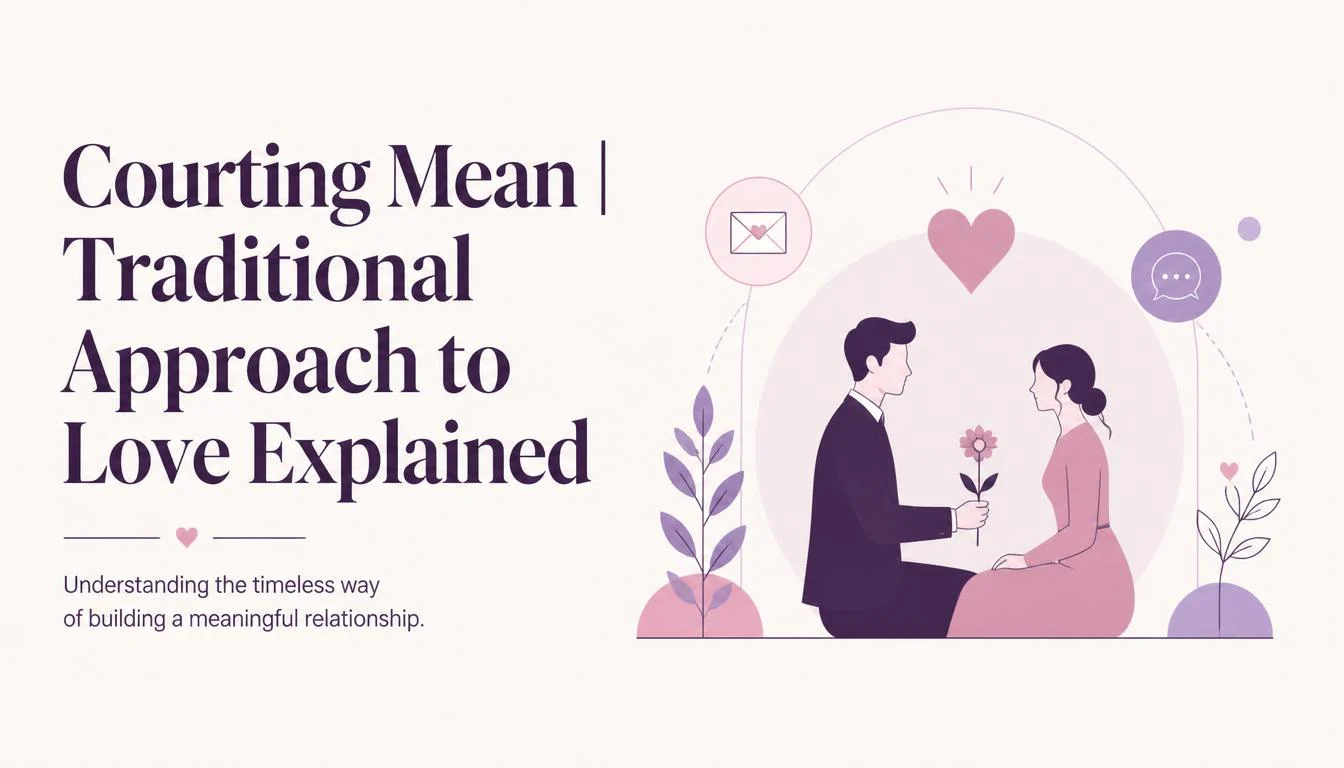
“Courting” means pursuing someone romantically with the serious intention of building a committed relationship. Traditionally, courting is more intentional and marriage focused than casual dating.
If you’ve come across “Courting” Mean and wondered how it differs from dating, the idea is fairly simple. Courting refers to a romantic relationship where two people intentionally get to know each other with long term commitment in mind.
The meaning of “Courting” Mean can vary slightly depending on culture and personal values. In general, it emphasizes serious intentions, emotional connection, compatibility, and the possibility of marriage rather than casual romance.
Courting Meaning: Definition
Courting means the act of pursuing someone romantically with the clear, stated intention of eventually marrying them or entering a serious, committed relationship. Unlike casual dating, courting is deliberate, structured, and usually involves both people (and sometimes their families) knowing exactly where things stand from the start.
In short: courting = dating with a defined purpose and long-term intent, minus the guesswork.
If you searched “what does courting mean” hoping for a one-line answer, that’s it. Now let’s dig into where the term came from and how people actually use it today.
The Origin of “Courting”: A Word With Old Roots
The word “court” comes from the Latin cohors, which referred to a royal enclosure or the group of people who attended a monarch. Over centuries, “to court” evolved to mean seeking someone’s favor and eventually, seeking someone’s hand in marriage.
Here’s a quick timeline of how the meaning shifted:
| Era | Meaning of Courting |
|---|---|
| Medieval Europe | Winning favor at a royal court; flattery and etiquette |
| 17th–19th Century | Formal romantic pursuit, often supervised by family, aimed at marriage |
| Early-to-mid 1900s | Traditional dating with marriage as the expected outcome |
| Mid-to-late 1900s | Term became less common as “dating” took over as the default word |
| 2020s (Today) | Revived by faith-based communities, traditionalists, and Gen Z as an intentional alternative to casual dating culture |
So courting isn’t a brand-new concept it’s a centuries-old practice that’s simply being rediscovered by people who want more clarity and less ambiguity in their love lives.
Why Is “Courting” Trending Again?
You’ve probably noticed the word making a comeback online, especially in relationship advice content and dating discourse. A few reasons this is happening:
- Dating app fatigue People are exhausted by ghosting, breadcrumbing, and situationships with no clear direction.
- Desire for intentionality Courting signals “I know what I want” instead of “let’s see where this goes.
- Religious and cultural revival Many faith-based communities (Christian, Muslim, and others) have always used courting as the preferred path to marriage, and this practice is gaining visibility on social media.
- Gen Z’s ironic-but-serious embrace Younger users are half-joking, half-serious about wanting “old-school romance,” using the word almost like a trend while genuinely valuing what it represents.
How “Courting” Is Used in Real Life
Courting can show up in different tones depending on context sincere, playful, or even a little judgmental. Here’s how:
1. Sincere / Traditional Tone
Used earnestly, often in religious or culturally conservative contexts, to describe a serious, marriage-minded relationship.
“We’ve been courting for six months, and both our families are involved in the process.” 💍
“He asked permission to court her properly before their first date.”
2. Friendly / Trendy Tone
Used casually online, often to describe wanting a more intentional relationship without the drama of modern dating.
“I’m done with situationships, I want someone who’s actually courting me.” ✨
“Not me wanting to be courted instead of just ‘hanging out’ 😩”
3. Neutral / Descriptive Tone
Used simply to explain the concept, especially in articles, forums, or advice columns.
“Courting differs from dating in that it typically has marriage as the end goal from the beginning.”
4. Dismissive / Sarcastic Tone
Sometimes used jokingly or critically, especially by people who find the concept outdated or overly formal.
“Oh please, nobody ‘courts’ anymore, this isn’t the 1800s 🙄”
“She said he was ‘courting’ her and I nearly choked on my coffee.”
Courting vs. Dating vs. Talking Stage: What’s the Difference?
This is one of the most searched comparisons, so here’s a clear breakdown:
| Term | Intent | Exclusivity | Family Involvement | Pace |
|---|---|---|---|---|
| Courting | Marriage or long-term commitment | Usually exclusive from the start | Often involved early | Deliberate, structured |
| Dating | Getting to know someone; intent may or may not be serious | Can be exclusive or casual | Rarely involved early | Varies widely |
| Talking Stage | Testing compatibility before anything official | Not exclusive | Not involved | Slow, undefined |
| Situationship | Undefined, often avoids labels | Ambiguous | Not involved | Inconsistent |
The biggest distinction? Courting removes the guesswork. Everyone involved knows the goal is marriage or a serious future, whereas dating and talking stages can drift along indefinitely without a clear direction.
Does “Courting” Have Other Meanings?
Yes while the romantic meaning is the most common, “court” and “courting” have a few other uses worth knowing:
- Legal context: “Courting a lawsuit” means engaging in behavior likely to result in legal action.
- Business context: “Courting investors” or “courting clients” means actively trying to win their favor or business.
- General pursuit: “Courting danger” or “courting controversy” means inviting risk or attention through one’s actions.
- Sports: A “court” refers to a playing area (basketball, tennis), unrelated to the romantic meaning.
These alternate meanings all trace back to the same root idea: actively seeking to win someone’s or something’s favor.
Polite and Professional Alternatives to “Courting”
If you’re writing something formal, or simply want a word that feels more current, here are some solid alternatives depending on context:
| Instead of “Courting,” Try… | Best Used When… |
|---|---|
| Pursuing a relationship | You want a modern but still intentional tone |
| Exclusively dating | You want clarity without sounding old-fashioned |
| Getting to know someone seriously | You want a softer, low-pressure phrase |
| Building a relationship with marriage in mind | You want to be explicit about long-term intent |
| Seeking a committed partnership | You want a professional or written tone |
Using these alternatives can help you sound clear and intentional without the sometimes old-fashioned connotation “courting” carries in casual conversation.
Tone Tips: How to Use “Courting” the Right Way
Since this word carries a slightly formal or traditional weight, tone matters a lot. Here’s a quick guide:
- ✅ Use it sincerely when discussing intentional, marriage-minded relationships, especially in cultural or religious contexts where it’s the accepted term.
- ✅ Use it playfully in casual conversation or social media if you’re describing a desire for more clarity and effort in dating.
- ⚠️ Be careful using it sarcastically around people who take courting seriously it can come across as dismissive of their values or beliefs.
- ❌ Avoid using it interchangeably with “dating” in formal writing, since the two terms imply different levels of commitment.
FAQs
1. What Does Courting Mean in a Relationship?
Courting refers to a romantic relationship where both people have a clear intention of building a serious future together. Marriage or long-term commitment is usually part of that intention.
2. Is Courting the Same as Dating?
Not quite. Dating can be casual or serious depending on the people involved. Courting is more intentional and usually begins with the goal of finding a long-term partner.
3. Does Courting Sound Old-Fashioned?
The term has been used for centuries, so it can sound traditional. However, courting has seen a modern revival among people who prefer purposeful and commitment-focused relationships.
4. Who Uses the Term “Courting” Today?
Courting is common in religious and traditional communities. It is also used by younger people online who want to describe a more intentional approach to relationships.
5. How Is Courting Different From a Talking Stage?
A talking stage is often an undefined period where two people are getting to know each other. Courting is more structured and intentional, with serious commitment or marriage often being the ultimate goal.
6. Can You Start Courting Without Dating First?
Yes. In some traditional or faith-based approaches, two people may begin courting without going through a casual dating phase. Their intentions are usually made clear from the start.
7. Can Courting Be Used Outside Romantic Relationships?
Yes. The word can also describe pursuing something in a non-romantic context. For example, someone might be “courting investors” or “courting controversy.”
8. What Is a Modern Synonym for Courting?
Modern alternatives include “intentional dating,” “serious dating,” “dating with marriage in mind,” and “pursuing a serious relationship.” The best choice depends on the relationship and context.
Conclusion
At its core, “courting” is about clarity, intention, and purpose in relationships qualities that a lot of people feel modern dating has lost somewhere between ghosting and endless “talking stages.” Whether you use the word sincerely, playfully, or as a conversation starter about what you actually want in a relationship, it carries a meaning that’s both historical and surprisingly relevant today.
Key takeaways:
- Courting means pursuing a relationship with marriage or long-term commitment as the clear goal.
- It differs from dating and talking stages by removing ambiguity about intentions.
- The term has religious, cultural, and now trendy modern usage.
- Tone matters sincere in traditional contexts, playful online, and best avoided sarcastically around those who value it.
- If you want a more modern phrasing, “intentional dating” or “exclusive dating with marriage in mind” work well.
Read More Related Articles:
- Mercy Meaning | Powerful Lesson Behind Kindness and Forgiveness In 2026
- Mija Meaning In Spanish | Sweet Nickname You’ll Hear Everywhere In 2026
- Punta Meaning In Spanish | From Literal Meaning to Everyday Usage In 2026





12 thoughts on ““Courting” Mean | Traditional Approach to Love Explained In 2026”