Quick Answer
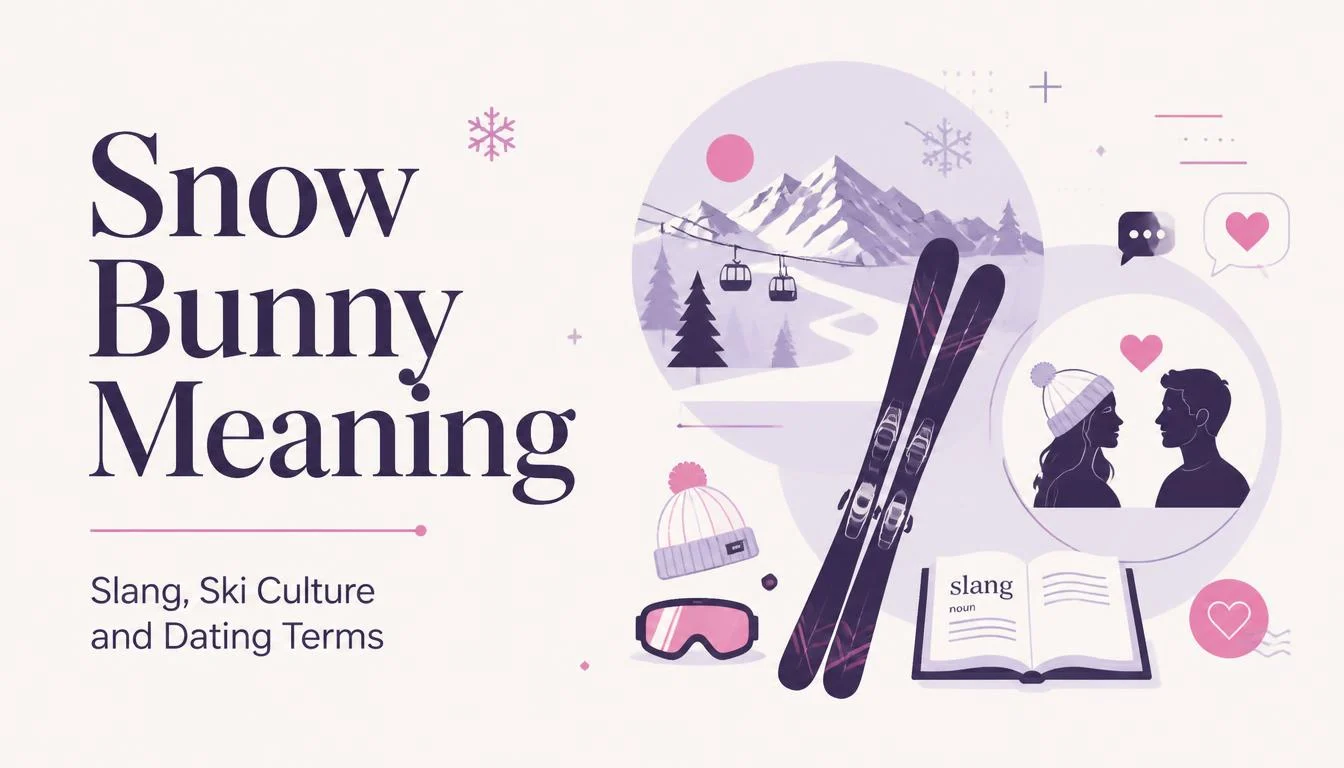
The phrase snow bunny has more than one established meaning. In its older use, it describes a woman associated with skiing, snowboarding, or ski resort culture, often someone who is new to skiing. In modern slang, it can also refer to a white woman who dates or is attracted to Black men. The second meaning can be racialized, sexualized, or offensive depending on who says it and how it is used.
The Snow Bunny Meaning can be confusing because the phrase has more than one use. In casual conversations, it may describe someone who loves winter activities and spends time at ski resorts. In slang, however, it can have a racial or dating related meaning.
Understanding the context is important when you see snow bunny in texts, social media posts or everyday conversations. The tone can range from playful and harmless to suggestive or potentially offensive depending on how the phrase is used.
What Does Snow Bunny Mean?
Snow bunny is an informal slang expression with two major meanings. The older meaning comes from skiing culture and generally describes a woman who enjoys skiing or spends time around ski resorts. It can also suggest that she is inexperienced on the slopes or more interested in the social side of winter resorts.
The newer meaning is quite different. In some American slang and online conversations, the phrase refers to a white woman who dates, pursues, or is attracted to Black men. This sense is often connected with discussions about interracial dating and attraction.
That difference is important because the same phrase can sound completely harmless in one conversation and uncomfortable in another. A caption about a ski trip probably points to the winter sports meaning. A comment about someone’s dating preferences may point to the racialized slang meaning.
The Two Main Meanings
The easiest way to understand the expression is to separate its meanings instead of treating every use as the same.
| Meaning | Typical Context | What It Suggests | Tone |
|---|---|---|---|
| Ski culture | Skiing, snowboarding, resorts | A woman associated with winter sports or ski culture | Usually playful or casual |
| Beginner skier | Ski slopes and lessons | A woman who is inexperienced at skiing | Light teasing or informal |
| Winter fashion | Ski trips, resort posts, clothing | A stylish woman in a snowy setting | Flirty or complimentary |
| Dating slang | Dating, relationships, social media | A white woman attracted to or dating Black men | Can be sensitive or offensive |
These meanings are related by wording but not by social context. The ski sense developed first, while the racialized dating sense appeared much later.
That is why guessing from the phrase alone can lead to a bad interpretation.
Where Did the Phrase Come From?
The history of snow bunny is older than modern social media. Dictionary references place recorded use of the phrase in the mid 20th century, with Dictionary.com giving an earliest recorded range of 1940 to 1945. The ski related sense became especially associated with American ski culture during the 1950s.
The word bunny also had older slang uses referring to an attractive or youthful woman. Adding snow connected the expression with snowy slopes, ski resorts, and winter recreation.
The 1950s were an important period for recreational skiing in the United States. Skiing became increasingly visible as a leisure activity, while winter resorts developed into social destinations as well as sporting locations.
The 1952 Winter Olympics also helped put skiing and other winter sports in a larger international spotlight. Women’s Nordic skiing was part of those Games, making the decade an especially relevant period in the growth of skiing’s public profile.
The later racialized sense has a less clearly documented single origin. Dictionary.com dates that particular definition to approximately 1995 to 2000. There is no reliable reason to claim that one person, song, or website invented it.
That distinction matters. The phrase has a traceable history in ski culture, but its later slang development is better understood as a gradual change in usage.
Snow Bunny in Ski Culture
The original use is relatively straightforward.
Someone might describe a woman as a snow bunny because she enjoys skiing, snowboarding, ski resorts, or the social atmosphere around winter sports. The label can imply that she is stylish, attractive, or enthusiastic about the scene.
It does not necessarily mean that she is an expert skier.
In fact, the phrase has long been associated with less experienced skiers. Cambridge Dictionary defines a snow bunny as someone who is not very experienced at skiing or someone who goes on a skiing vacation mainly to enjoy the social activities around it.
That gives the expression a slightly teasing quality.
Imagine someone visiting Aspen for the first time. She buys fashionable ski clothes, takes a few lessons, spends time at the lodge, and posts pictures from the mountain. A friend might jokingly call her a snow bunny.
The phrase can therefore describe a whole lifestyle rather than technical ability.
The Social Side of Ski Resorts
Ski resorts have always been about more than skiing.
Places such as Aspen, Stowe, and resorts in British Columbia combine slopes with restaurants, hotels, nightlife, fashion, and social events. That environment helped the expression develop beyond a simple description of someone who skis.
This is also why the phrase sometimes appears in fashion writing. A “snow bunny look” can refer to stylish winter clothing associated with ski resorts rather than the person’s skiing ability.
The meaning becomes more about image and atmosphere.
Snow Bunny in Dating and Social Slang
The modern slang use is more sensitive.
In some conversations, snow bunny describes a white woman who is romantically or sexually attracted to Black men. It may refer to a Black man and white woman in an interracial relationship, or it may be used more broadly to describe a perceived dating preference.
This meaning is documented in slang references, but its tone is not automatically neutral.
Someone may use the phrase jokingly about themselves. Another person may use it as an insult. A third person may use it to stereotype someone’s romantic preferences based only on race.
Those differences cannot be ignored.
For example, a white woman in an interracial relationship might describe herself with the term in a playful social media post. Her partner might also use it affectionately. But a stranger using the same word to label her because of her relationship can sound objectifying.
The surrounding language matters.
So does the relationship between the people speaking.
Why Context Matters So Much
Slang is rarely understood through the dictionary definition alone. Tone, setting, speaker, audience, and subject all influence how a word lands.
Consider these two situations:
“She is such a snow bunny. She finally learned to ski this winter.”
Here, the skiing meaning is obvious.
Now consider:
“He’s always dating snow bunnies.”
There is no skiing context. The statement is much more likely to refer to white women and interracial dating.
A third example might appear in a winter fashion post:
“Snow bunny outfit for the weekend.”
Here, the phrase may simply refer to a fashionable winter or ski inspired appearance.
The phrase itself has not changed. The context has.
This is one reason slang dictionaries often list several definitions for the same expression. Real language does not always stay inside one fixed meaning.
Snow Bunny vs. Similar Terms
Several expressions can sound similar but are not interchangeable.
| Term | Main Meaning | How It Differs |
|---|---|---|
| Snow bunny | Ski culture or racialized dating slang | Has two distinct major uses |
| Ski bunny | Woman associated with skiing | Usually stays within the skiing context |
| Beginner skier | Person new to skiing | Gender neutral and more literal |
| Après-ski | Social activities after skiing | Describes an activity or culture, not a person |
| Winter girl | Informal description of someone who loves winter | Does not normally carry the same racialized meaning |
Ski bunny is probably the closest alternative when the subject is winter sports. Even then, the expressions are not always identical because snow bunny has developed meanings outside skiing.
Après-ski is completely different. It refers to the social side of skiing after time on the slopes, such as eating, drinking, relaxing, or attending events.
Using one term in place of another can therefore change the meaning of a sentence.
Real World Examples of the Phrase
The phrase has appeared across several forms of American popular culture and media.
Aspen and Ski Resort Culture
Aspen, Colorado is strongly associated with luxury skiing, winter fashion, and resort culture. In this setting, a reference to a snow bunny is likely to have the older ski or fashion meaning.
The phrase can describe someone who enjoys the look and lifestyle surrounding the slopes, even if skiing is not her strongest skill.
British Columbia
British Columbia is another major destination for winter sports. Dictionary.com itself uses British Columbia in an example involving snow bunnies and winter skiing.
In this context, the racialized meaning would make little sense unless the surrounding conversation clearly shifted away from skiing.
Stowe
Stowe, Vermont is another established ski destination. Historical references to snow bunnies have included women associated with ski resorts ranging from western American destinations to northeastern locations such as Stowe.
This shows how closely the older meaning became tied to American ski culture.
The Alpine World Cup
The Alpine World Cup represents the professional side of skiing. Snow bunny, by contrast, is informal slang and is not a technical sporting category.
A professional skier competing at this level would not be called a snow bunny simply because she is a woman who skis. The phrase belongs to casual social language rather than official skiing terminology.
Bootsy Collins
The phrase has also appeared in music. Funk musician Bootsy Collins released a song titled “Snow Bunny” on his 2017 album World Wide Funk.
That example demonstrates something important about slang. A phrase can move between everyday conversation, music, fashion, and social media while carrying different shades of meaning in each setting.
Is Snow Bunny Offensive?
It can be.
The answer depends heavily on which meaning is intended.
The ski related use is generally much less sensitive. Even there, it can sometimes sound patronizing if someone uses it to imply that a woman is interested in skiing mainly for attention, fashion, or romance.
The racialized use requires considerably more caution. It places race and sexual or romantic preference into the same label. That can reduce an individual to a stereotype rather than describing them as a whole person.
It may also sound fetishizing when used to suggest that someone is desirable specifically because of her race.
There is an important difference between self identification and labeling someone else. A person may choose a slang term for herself because she finds it funny or empowering. That does not mean another person can use it in exactly the same way without causing offense.
If you are unsure how someone feels about the term, a neutral description is safer.
For example, say “They are an interracial couple” rather than assigning a slang label to the woman.
How Social Media Changed Its Use
Social media did not create the phrase, but it gave older slang a much larger audience.
A person might encounter snow bunny on TikTok, Instagram, X, Reddit, or in a private group chat without having any connection to ski culture. That makes the racialized meaning more likely to appear in online conversations where there are no visual clues about skiing.
At the same time, winter fashion accounts can use the phrase in a completely different way.
A ski photo caption may use it to describe a winter outfit. A dating discussion may use it to describe interracial attraction. A meme may exaggerate the term for humor.
This is why online searches for the phrase can produce seemingly contradictory definitions.
Both uses can exist at the same time.
The Rise of Meme Language
Internet culture also tends to exaggerate slang. A phrase that once had a relatively specific meaning can become a meme, a joke, or a recurring character type.
That does not necessarily create a new dictionary definition.
Instead, people start using the phrase in exaggerated situations because other users understand the reference. The meaning becomes part of the joke.
This is especially common with relationship slang. A person may use a term dramatically to describe someone’s dating history without intending the literal definition in every detail.
Reading the entire post or conversation is often necessary.
How to Tell Which Meaning Someone Intended
When you see the phrase online, look at the words surrounding it.
- If you see skiing, snowboarding, slopes, resort, boots, mountain, powder, lodge, or après-ski, the winter sports meaning is probably intended.
- If you see dating, boyfriend, girlfriend, attraction, Black men, interracial relationship, or preferences, the racialized slang meaning is more likely.
- If you see outfit, coat, boots, winter fashion, or snowy vacation, it may be describing a winter aesthetic.
You should also consider the platform. A ski community is more likely to use the traditional meaning. A dating discussion may use the newer slang meaning.
When there is still doubt, do not assume.
Is Snow Bunny the Same as Ski Bunny?
Not exactly.
The two expressions overlap heavily in skiing contexts. Both can describe a woman associated with skiing or ski resort culture.
However, snow bunny has acquired additional meanings outside winter sports. Ski bunny generally remains more closely tied to skiing.
That makes ski bunny less ambiguous when you are talking specifically about the slopes.
If your goal is clear communication, using a more literal phrase such as beginner skier, ski enthusiast, or woman who enjoys skiing removes even more uncertainty.
Can Snow Bunny Be a Compliment?
Yes, but context determines whether it feels complimentary.
In a ski setting, someone might use the phrase playfully to describe a woman who looks stylish in winter clothing or enjoys the resort scene.
In a relationship setting, someone might use the racialized sense affectionately or as self description.
Still, the phrase is not universally positive. The racialized meaning can be perceived as stereotyping or objectifying, while the ski meaning can sometimes carry assumptions about appearance and social behavior.
A compliment should focus on the person rather than relying on a label that may have unwanted baggage.
FAQs
Does snow bunny only refer to white women?
No. The phrase has an older ski related meaning that has nothing to do with race. The racialized slang use specifically refers to white women in certain dating or attraction contexts.
Can a man be called a snow bunny?
The traditional slang is strongly associated with women, especially in descriptions of ski culture. The racialized use is also generally directed toward women. Calling a man a snow bunny would therefore be unusual unless someone is deliberately playing with the phrase.
Is snow bunny a formal English term?
No. It is an informal slang expression. Dictionaries such as Cambridge Dictionary and Dictionary.com document its usage, but that does not make it appropriate in every formal or professional setting.
Does snow bunny always mean someone who skis?
No. Skiing is the older meaning, but modern slang has given the phrase another racialized dating meaning. You need the surrounding context to determine which sense is intended.
Is snow bunny the same as snow girl?
Not really. Snow girl is not a standard equivalent for the slang expression. It may simply describe a girl associated with snow or winter, while snow bunny has a specific history and multiple slang meanings.
Why does the phrase have two unrelated meanings?
Slang often develops through different communities and periods. The original phrase grew from ski culture, while a later meaning developed around race and interracial attraction. The two meanings eventually became associated with the same wording.
Conclusion
Snow bunny is a good example of how a short slang phrase can carry very different meanings. Its older use is tied to skiing, winter resorts, and the social side of snow sports, while its later slang use can refer to a white woman in the context of attraction to Black men. Because the second meaning can be racialized or sexualized, context and speaker intent matter. If there is any uncertainty, a more direct and neutral description is usually the better choice.
Read More Related Articles:
- TDY Mean | Military Term Explained in Simple Words In 2026
- GC Mean | Don’t Reply Until You Know This In 2026
- 224 Mean | Hidden Meaning Behind This Popular In 2026










4 thoughts on “Snow Bunny Meaning | Slang, Ski Culture and Dating Terms In 2026”