Quick Definition:
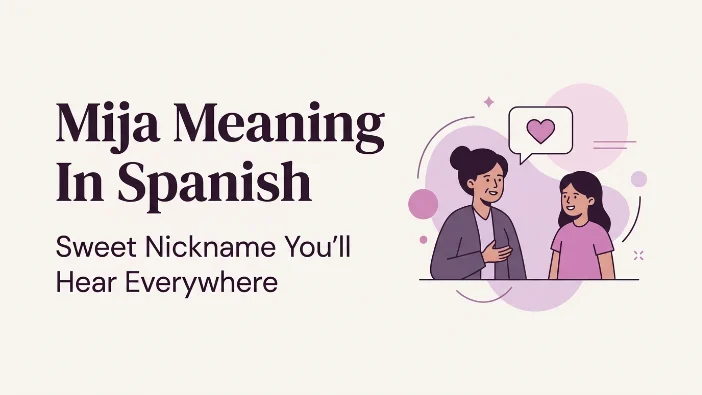
“Mija” in Spanish means “my daughter” or “my girl.” It is a shortened form of “mi hija” (“my daughter”) and is commonly used as an affectionate term by parents, grandparents, friends, and Spanish speakers to show love, care, or closeness. Depending on the situation and tone, mija can express affection, comfort, friendship, or even a gentle way of addressing someone younger.
Language is not only about words; it is also about emotions, relationships, and culture. What does mija mean in Spanish? This is a common question among people learning Spanish because the word appears frequently in movies, music, social media, and everyday conversations. Although mija literally means “my daughter,” Spanish speakers often use it as a loving and familiar expression similar to “sweetheart,” “dear,” or “my girl” in English.
The popularity of mija comes from its emotional meaning. In many Spanish-speaking cultures, family connections and expressions of affection are deeply valued. Words like mija, mijo, cariño, and mi amor are often used to create warmth and closeness between people.
You may hear mija between parents and children, grandparents and grandchildren, teachers and students, or even friends. However, it is important to understand that the word does not always mean the person is actually someone’s daughter. It can simply communicate kindness, protection, or familiarity.
This guide explains the meaning of mija in Spanish, its origin, cultural importance, examples, similar expressions, and how to use it naturally without sounding inappropriate.
Mija Meaning In Spanish: Meaning & Definition
If you have heard someone say “mija” in a Spanish conversation, you may wonder what it means and why people use it so often. The word mija literally translates to “my daughter” in English, but its real meaning goes beyond a simple family relationship.
The term comes from combining two Spanish words:
- Mi = my
- Hija = daughter
Together, mi hija becomes mija in everyday speech.
While the direct translation is “my daughter,” Spanish speakers often use mija as a warm expression toward someone they care about. A mother might call her daughter mija, but an older person may also use it for a younger woman as a friendly or caring nickname.
For example:
- “Come here, mija.” → “Come here, my girl.”
- “Are you okay, mija?” → “Are you okay, sweetheart?”
The meaning depends heavily on the speaker’s relationship with the person, tone of voice, and cultural background.
Origin of Mija in Spanish
The word mija has its roots in traditional Spanish language patterns where words are shortened and combined during everyday conversation.
The original phrase is:
Mi hija → Mija
Over time, Spanish speakers naturally blended the two words together. This type of linguistic change is common in spoken Spanish because people often shorten phrases to make conversations smoother and more natural.
The same process created other familiar expressions, such as:
- Mijo = mi hijo (“my son”)
- Pa’lante = para adelante (“forward”)
- Tómalo = toma + lo (“take it”)
The use of mija became especially common in many Latin American countries, including:
- Mexico
- Colombia
- Venezuela
- Puerto Rico
- Dominican Republic
- Cuba
- Other Spanish-speaking regions
Although the word originated from a literal family relationship, its meaning expanded culturally. Today, mija represents affection, guidance, and emotional connection.
Popularity of Mija in Spanish-Speaking Culture
The popularity of mija comes from its strong connection with family values and everyday communication.
In many Hispanic and Latino communities, using affectionate words is a normal part of conversation. People often express warmth through language, especially when speaking with children, relatives, or close friends.
Why People Use Mija
People may say mija to:
- Show affection
- Offer comfort
- Give advice
- Express concern
- Create a friendly connection
- Show respect toward someone younger
For example:
A grandmother might say:
“Mija, don’t forget to eat breakfast.”
Here, mija expresses love and care.
A friend might say:
“Mija, you looked amazing today!”
Here, it means something closer to “girl” or “bestie.”
Mija in Media and Pop Culture
The word has become more familiar worldwide because of:
- Spanish-language television shows
- Movies
- Latin music
- TikTok videos
- Social media conversations
- Hispanic cultural content
Many non-Spanish speakers now recognize mija as a warm Spanish expression, even if they do not speak the language fluently.
How Mija Is Used in Everyday Spanish
The meaning of mija changes depending on the relationship between speakers and the situation.
1. Between Parents and Children
This is the original and most traditional use.
Example:
Mother: “Mija, did you finish your homework?”
Meaning: “My daughter, did you finish your homework?”
The word expresses parental love and care.
2. Between Older and Younger People
An older person may use mija when speaking kindly to someone younger.
Example:
“Sit down, mija. You look tired.”
Meaning:
“Sit down, dear. You look tired.”
3. Between Friends
Among close friends, especially in some Latin communities, mija can mean:
- Girl
- Babe
- Bestie
- Dear friend
Example:
“Mija, you won’t believe what happened today!”
This is similar to saying:
“Girl, you won’t believe this!”
4. As a Comforting Expression
Someone may use mija when offering emotional support.
Example:
“Mija, everything will be okay.”
Meaning:
“Sweetheart, everything will be okay.”
Examples of Mija in Different Contexts
Understanding the tone behind mija is important because the same word can feel different depending on who says it and why.
| Situation | Spanish Example | English Meaning | Tone |
| Mother speaking to daughter | “Mija, come aquí.” | “My daughter, come here.” | Loving |
| Grandmother giving advice | “Mija, take care of yourself.” | “Dear, take care.” | Caring |
| Friend talking casually | “Mija, look at this!” | “Girl, look at this!” | Friendly |
| Teacher speaking kindly | “Mija, good job.” | “You did well, dear.” | Encouraging |
| Stranger using it | “Mija, you need help?” | “Dear, do you need help?” | Depends on culture |
Friendly Examples
Example 1
Spanish:
“Mija, I’m so happy you came to visit.”
English:
“My girl, I’m so happy you came to visit.”
Tone: Warm and affectionate.
Example 2
Spanish:
“Don’t worry, mija. Everything will work out.”
English:
“Don’t worry, sweetheart. Everything will work out.”
Tone: Supportive.
Example 3
Spanish:
“Mija, tell me what happened.”
English:
“Girl, tell me what happened.”
Tone: Friendly conversation.
Professional Examples
Although mija is usually informal, it may appear in professional settings where there is a close relationship.
Examples:
A Spanish-speaking mentor might say:
“Mija, you have done excellent work on this project.”
Meaning:
“You have done excellent work.”
The word adds warmth but may not be suitable in formal business communication.
In professional environments, alternatives like these are usually better:
- “Señorita” (young woman/miss)
- “Colleague’s name”
- “Dear”
- “Ms. + surname”
Funny Examples
Because mija often appears in casual conversations, it can create humorous situations.
Example:
Friend:
“Mija, you said you would only buy one thing!”
Meaning:
“Girl, you said you would only buy one thing!”
The humor comes from the playful relationship between friends.
Another example:
“Mija, your phone knows more about you than your family.”
This uses mija as a fun, dramatic way to address someone.
Comparison with Similar Terms
Spanish has many affectionate expressions, and each one carries a slightly different feeling.
| Term | Meaning | Common Use | Tone |
| Mija | My daughter / my girl | Family, friends, younger people | Loving |
| Mijo | My son / my boy | Family, younger males | Caring |
| Hija | Daughter | Literal family relationship | Neutral |
| Mi amor | My love | Partners, family, affection | Romantic or loving |
| Cariño | Darling / dear | Friends, family | Warm |
| Chica | Girl | General conversation | Casual |
| Señorita | Young lady | Formal situations | Polite |
Mija vs Mi Hija
The difference is mainly formality.
Mi hija:
- More literal
- Used when referring to an actual daughter
Example:
“Mi hija lives in Madrid.”
Mija:
- More casual
- Often emotional or affectionate
Example:
“Mija, I missed you.”
Alternate Meanings of Mija
Although the main meaning is “my daughter,” mija can have additional meanings depending on context.
1. My Girl
In casual conversation, especially among friends:
“Mija” = “my girl”
Example:
“Mija, you look beautiful!”
2. Sweetheart or Dear
Older speakers may use it like:
- Sweetheart
- Dear
- Honey
3. A Nickname
Some Spanish speakers use mija as a personal nickname even when there is no family connection.
Professional or Polite Alternatives
Because mija is informal, it is not always appropriate in formal situations.
Better alternatives include:
| Situation | Better Expression |
| Business meeting | Señorita / Name |
| Email communication | Dear + Name |
| Formal introduction | Ms. + Last Name |
| Customer service | Ma’am / Señora |
| Workplace conversation | Colleague’s name |
Use mija when you already have a friendly relationship, not with every Spanish speaker you meet.
Common Mistakes When Using Mija
Many Spanish learners misunderstand how and when to use this word.
Mistake 1: Thinking It Always Means Daughter
While the literal meaning is daughter, the cultural meaning is broader.
Mistake 2: Using It With Everyone
Calling a stranger “mija” may sound overly familiar depending on the person and country.
Mistake 3: Using It in Formal Writing
“Mija” is a spoken, emotional expression. It is rarely used in professional documents.
Mistake 4: Confusing Mija and Mijo
Remember:
- Mija = female
- Mijo = male
Quick Tips for Using Mija Correctly
- Use mija with people you know or in warm situations.
- Understand the speaker’s culture and tone.
- Do not assume every Spanish speaker uses it the same way.
- Use it naturally rather than forcing it.
- Remember that pronunciation matters.
Pronunciation:
Mija = MEE-ha
The “j” sounds like an English “h” sound in most Spanish dialects.
FAQs
1. What does mija mean in Spanish?
Mija means “my daughter” or “my girl.” It is commonly used as an affectionate expression.
2. Is mija a romantic word?
Usually no. Mija is generally affectionate, not romantic. It depends on context.
3. Can friends call each other mija?
Yes. Close friends may use mija to mean “girl” or “bestie.”
4. What is the difference between mija and hija?
“Hija” means daughter, while “mija” is the affectionate shortened form of “mi hija.”
5. Is mija only used for daughters?
No. It can also be used for younger women or someone a person cares about.
6. How do you pronounce mija?
Mija is pronounced MEE-ha.
7. Is mija used in Mexico?
Yes. Mija is very common in Mexico and many other Spanish-speaking countries.
8. Can I call a Spanish-speaking woman mija?
It depends on your relationship. It is better used when there is familiarity or affection.
Conclusion
Understanding what does mija mean in Spanish helps you understand more than just a translation it reveals an important part of Spanish-speaking culture. While the literal meaning of mija is “my daughter,” the word often carries deeper emotions such as love, care, friendship, and warmth.
Spanish speakers may use mija with family members, friends, or younger people as a way to create a feeling of closeness. However, because it is an informal and personal expression, it should be used carefully in unfamiliar or professional situations.
Whether you hear it in a conversation, movie, song, or social media post, remember that mija is a word of connection and affection. Learning these cultural meanings will help you communicate more naturally and respectfully in Spanish.
Read More Related Articles:
- Mercy Meaning | Powerful Lesson Behind Kindness and Forgiveness In 2026
- JSP Meaning | Internet Acronym Everyone Gets Wrong In 2026
- Street Cred Meaning | Cool Slang Everyone Should Know In 2026

Michael Turner is a U.S.-based content writer and blogger who enjoys uncovering the stories and meanings behind words. Through his work at Meanvora, he delivers well-researched, easy-to-read articles that help readers expand their vocabulary and gain a deeper understanding of language.








6 thoughts on “Mija Meaning In Spanish | Sweet Nickname You’ll Hear Everywhere In 2026”