Quick Answer
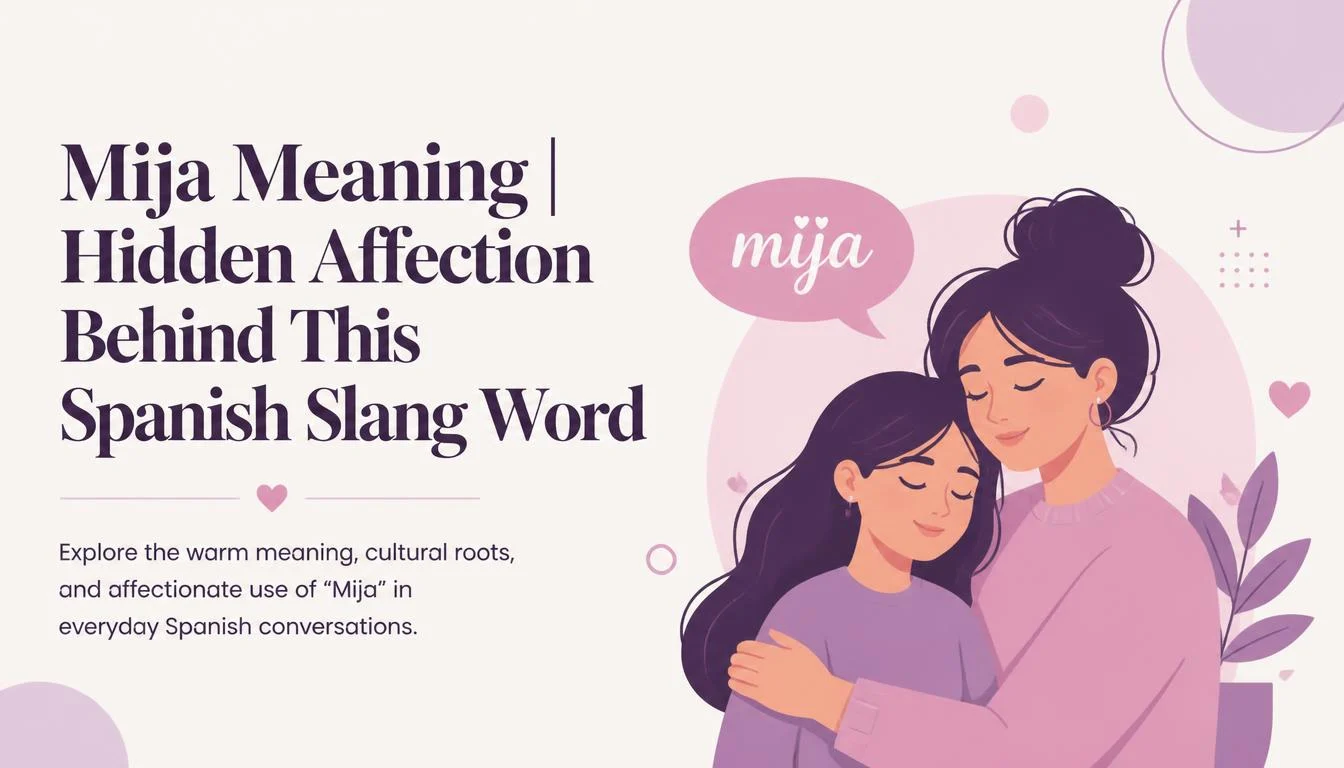
Mija is a Spanish term that means “my daughter” or more casually “honey” or “sweetheart.” It is used as an affectionate way to address a younger female or someone close.
It comes from “mi hija” which literally means “my daughter,” but in everyday speech it is often used more broadly with warmth and care.
Mija meaning is commonly used in Spanish speaking cultures as a term of endearment. People use it to show affection respect or emotional closeness. It is often heard in families where parents or elders call younger females mija in a loving way. In some contexts mija can also be used informally among friends. It carries a soft emotional tone and is usually not meant to be offensive. The meaning depends on the relationship and situation.
The phrase mija meaning reflects cultural warmth in language. It blends family connection with everyday communication and is widely used in conversations, movies and songs. Understanding mija meaning helps you recognize emotional tone in Spanish speech. It is a simple word but it carries deep affection and care in most situations.
What Does “Mija” Mean?
The mija meaning is simple at its core: it’s a contraction of the Spanish phrase “mi hija,” which literally translates to “my daughter.”
- Mi = my
- Hija = daughter
When you say them together quickly, “mi hija” naturally blends into “mija.” This process is called contraction, and it happens all the time in spoken Spanish. Native speakers don’t pause to say “mi hija” they glide right through it, and over time, the two words became one.
But here’s where it gets interesting the mija translation isn’t always literal. While it can mean “my daughter,” it’s often used as a term of endearment for any female, regardless of whether she’s actually your daughter. A grandmother might call her granddaughter “mija.” A friend might call her best friend “mija.” A shopkeeper might greet a regular customer with a warm “¡Hola, mija!”
So what does mija mean in everyday conversation? It can mean:
- My daughter (literal)
- Sweetheart / honey / dear (affectionate)
- Girl / young lady (informal address)
- Hey girl (between friends)
The beauty of the word is its flexibility. It adapts to the relationship, the tone, and the setting. That’s what makes mija slang so widely used and so hard to pin down with a single English equivalent.
Mija Definition and Part of Speech
From a linguistic standpoint, the mija definition is:
Mija (noun / informal address): A colloquial Spanish contraction of “mi hija,” used as a term of endearment or familiar form of address for a female.
It functions much like “honey,” “sweetie,” or “girl” in English a word you use to address someone directly, usually with warmth or familiarity. Grammatically, it behaves like a noun, but in practice, it works as a vocative a word used to call or address someone.
It’s also worth noting that mija is informal. You wouldn’t use it in a formal letter or a business email. It belongs to the world of family kitchens, neighborhood streets, and friendly conversations.
Mija Meaning in English
The mija meaning in English depends on context, but common translations include:
| Spanish | English Equivalent |
|---|---|
| Mija | My daughter / sweetheart / honey / girl |
| ¡Mija! | Hey girl! / Sweetie! |
| Ven acá, mija | Come here, honey |
| ¿Cómo estás, mija? | How are you, sweetie? |
So if you’re searching for what does mija mean in English, the safest answer is: an affectionate way to address a female, often meaning “my daughter” but frequently used more broadly.
The tricky part is that English doesn’t have a perfect one-word equivalent. “Honey” and “sweetie” come close, but they don’t carry the same familial warmth. “Girl” can work between friends, but it can also sound dismissive in the wrong tone. That’s why the best way to understand mija is through context who’s saying it, to whom, and why.
Is “Mija” a Bad Word?
This is a common question and the answer is no. Mija is not a bad word. It’s a warm, familiar term.
However, tone matters. Like “honey” or “girl” in English, mija slang can sound:
- Affectionate between family and friends
- Familiar when used by strangers (which can sometimes feel too informal)
- Condescending in rare cases, depending on tone and context
In most cases, though, “mija” is friendly and endearing. If a stranger calls you “mija,” it’s usually meant kindly a sign of warmth rather than disrespect. But if the tone is sharp or dismissive, the word can take on a different color, just like any term of address.
The key takeaway: mija itself is neutral-to-positive. The meaning lives in the delivery.
How to Use “Mija” Examples in a Sentence
Want to see mija in a sentence? Here are some natural examples:
- “¿Cómo estás, mija?” “How are you, sweetie?”
- “Ven aquí, mija.” “Come here, honey.”
- “Mija, no te preocupes.” “Girl, don’t worry about it.”
- “Esa es mi mija.” “That’s my daughter.”
- “Buenos días, mija.” “Good morning, dear.”
- “Mija, ¿ya comiste?” “Sweetie, have you eaten yet?”
Notice how the meaning shifts slightly depending on who’s speaking. A mother speaking to her daughter uses it literally; a friend speaking to a friend uses it casually; a grandmother uses it with deep affection.
This flexibility is exactly why mija is so loved and why it’s so common in daily conversation across Latin America and Latino communities in the United States.
Mija vs. Mijo: What’s the Difference?
If you’ve heard mija, you’ve probably also heard mijo. Here’s the breakdown:
| Term | Origin | Gender | Meaning |
|---|---|---|---|
| Mija | mi hija | Female | My daughter / sweetie |
| Mijo | mi hijo | Male | My son / buddy |
So mija vs mijo comes down to gender:
- Use mija for a female
- Use mijo for a male
Both work the same way as affectionate, informal terms of address. And just like mija, mijo is a contraction of “mi hijo” (my son). The two words are a matched pair, and you’ll often hear them used side by side in the same family or conversation.
For example, a mother with a son and a daughter might say:
- “Mijo, ayuda a tu hermana.” “Son, help your sister.”
- “Mija, ven a comer.” “Sweetie, come eat.”
They’re simple, warm, and deeply embedded in Spanish-speaking culture.
Mi Hija Meaning: The Root Word
To fully understand mija, it helps to understand mi hija meaning:
- Mi hija = “my daughter” (literal, formal phrase)
- Mija = the casual, contracted, affectionate version
Think of it like the difference between “my dear” and “dearie” in English same idea, different level of familiarity. Or consider how “going to” becomes “gonna” in casual English. The contraction isn’t sloppy; it’s natural, efficient, and intimate.
Understanding mi hija meaning also helps you see why mija carries such a strong sense of family. Even when it’s used between friends or strangers, it borrows that familial warmth. It’s a way of saying, “You matter to me” even if you’re not actually my daughter.
Mija in Mexican Spanish and Regional Usage
The mija meaning in Mexican Spanish is especially common. In Mexico and across parts of the U.S. Southwest, mija is used constantly between mothers and daughters, aunts and nieces, friends, and even shopkeepers addressing customers warmly.
In other Spanish-speaking regions, you might hear variations like:
- M’hija (Argentina, Uruguay)
- Mija (Mexico, Central America, U.S. Latino communities)
- Mi’ja (written in some Chicano literature to capture the dropped syllable)
This regional flexibility is part of why mija in Spanish is so widely recognized. It’s not limited to one country or one dialect. It belongs to the broader Spanish-speaking world, and it travels well.
In Mexican culture especially, mija is a staple of everyday speech.
- It’s the word a mother uses to call her daughter in from the yard.
- It’s the word a grandmother uses when she’s proud.
- It’s the word a friend uses when she’s checking in.
Mija as a Term of Endearment
At its heart, mija is a term of endearment a word that builds connection. It signals closeness, warmth, and often love.
Other Spanish terms of endearment in the same family include:
- Mijo my son / sweetie (male)
- Mi amor my love
- Corazón sweetheart (literally “heart”)
- Cariño dear / affection
- Bebé baby
- Hermosa / Hermoso beautiful / handsome
If you’re learning Spanish, mija is one of the most natural, friendly words you can add to your vocabulary. It’s simple, it’s warm, and it’s used everywhere. Mastering it along with its counterpart mijo will make your Spanish sound more natural and more human.
How to Pronounce “Mija”
Mija pronunciation is straightforward:
MEE-hah
- Mee rhymes with “see”
- hah like a soft “ha”
In some regions, it sounds almost like “mee-ha” blended together quickly. The “j” in Spanish sounds like the English “h” so it’s never “mee-jah” with a hard J like in English.
If you’re practicing mija pronunciation, try saying it softly and quickly, the way you’d say “sweetie” to a child. The word should feel warm, not clipped.
Quick Recap: Mija Meaning at a Glance
| Question | Answer |
|---|---|
| What does mija mean? | A contraction of “mi hija” my daughter / sweetie |
| Is mija a bad word? | No, it’s affectionate |
| Mija vs mijo? | Mija = female, Mijo = male |
| Mija in English? | Honey, sweetie, girl, my daughter |
| Where is it used? | Mexico, Central America, U.S. Latino communities |
FAQs
1. What does “mija” mean in English?
Mija most commonly translates to “my daughter,” but it’s far more often used as an affectionate term like “sweetie,” “honey,” or “girl.” The exact mija meaning in English depends on context who’s speaking and to whom.
2. Is “mija” a bad word or an insult?
No, mija is not a bad word. It’s a warm, affectionate term. However, like any term of address, tone matters. Said kindly, it’s endearing; said sharply, it can sound dismissive. In nearly all everyday situations, mija is friendly and positive.
3. What’s the difference between “mija” and “mijo”?
Mija comes from “mi hija” (my daughter) and is used for females. Mijo comes from “mi hijo” (my son) and is used for males. Both are informal, affectionate terms of address used in the same way just for different genders.
4. Can I use “mija” with someone who isn’t my daughter?
Yes. Although mija literally means “my daughter,” it’s commonly used for any female a niece, a friend, a student, or even a customer. It’s a term of endearment, not a strict family label.
5. How do you pronounce “mija”?
Mija is pronounced MEE-hah. The “j” sounds like the English “h,” so it’s never “mee-jah.” Say it softly and quickly, the way you’d say “sweetie.”
6. Is “mija” used in Spain?
Mija is more common in Latin America especially Mexico, Central America, and U.S. Latino communities than in Spain. In Spain, you’re more likely to hear “hija” or “cariño” as terms of endearment.
7. What is the male version of “mija”?
The male version is mijo, a contraction of “mi hijo” (my son). It’s used the same way as a warm, informal way to address a male.
Conclusion
The mija meaning goes far beyond a simple dictionary definition. It’s a word packed with culture, affection, and familiarity a small term that carries big warmth. From mija in Spanish to mija vs mijo, from mi hija meaning to mija pronunciation, every angle of this word reveals something about how Spanish speakers build connection through language.
Whether you’re translating a conversation, learning Spanish, or just curious about what does mija mean, the short answer is this: it’s a loving, informal way to address a female, most often meaning “my daughter” but used far more broadly as a term of endearment.
So next time someone calls you “mija,” you’ll know they’re speaking to you with a little bit of heart. 💛
Read More Related Articles:
- “Sent as Text Message” Means | Explained Simply for iPhone Users In 2026
- “Message Blocking Is Active” Means | What This Error Says About Your Text In 2026
- “Take a Break” Meaning on Facebook | See What Changes After You Use It In 2026









3 thoughts on “Mija Meaning | Hidden Affection Behind This Spanish Slang Word In 2026”