Quick Answer
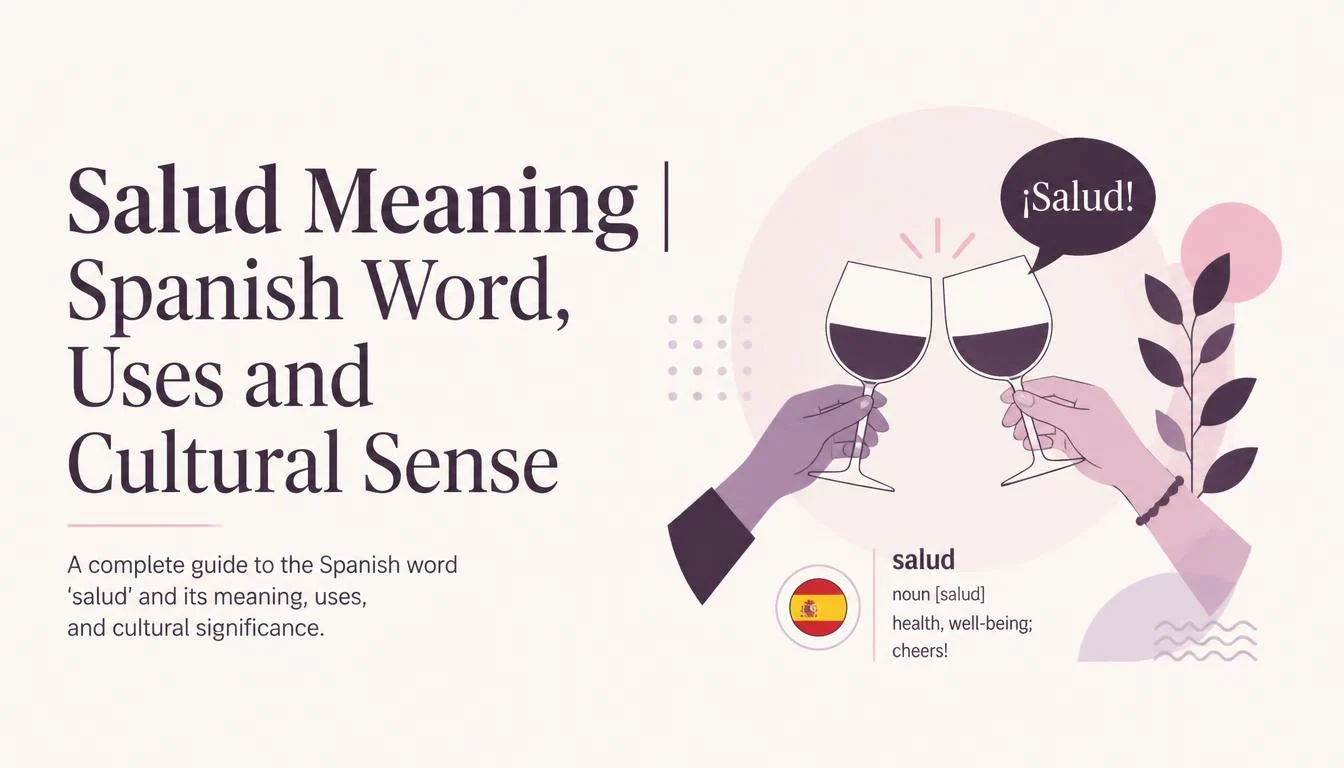
“Salud” is a Spanish word that primarily means health. In everyday conversation, it is often used as a toast similar to “cheers,” especially when people raise a glass before drinking. It also appears in expressions of goodwill when someone sneezes or wishes another person well.
“Salud meaning” comes from the Spanish language where it directly translates to health. It is one of the most commonly used words in social settings, especially during celebrations. In everyday use, it carries a positive and friendly tone linked with good wishes and well-being.
In many cultures, “salud” is more than just a word. It is a gesture of respect and care when people gather together. When someone says “¡Salud!”, they are expressing hope for health, happiness and a good life for others around them.
Definition of “Salud” in Spanish
“Salud” is a feminine noun in Spanish that directly translates to health in English. It comes from the Latin word salus, which also meant safety, welfare, or well-being.
In formal contexts, it refers to physical or mental health. For example, doctors, public health campaigns, and official institutions like Spain’s Ministry of Health (Ministerio de Sanidad) frequently use the term in its literal sense.
In everyday life, though, the meaning shifts depending on how it is spoken. Tone, situation, and cultural setting decide whether it sounds medical, social, or symbolic.
One key idea stays consistent: the word is always connected to well-being.
Everyday Usage vs Social Usage
The meaning of “salud” changes depending on context. Below is a simple breakdown.
| Context | Meaning | Example Use |
|---|---|---|
| Medical | Physical or mental health | “Tu salud es importante” (Your health is important) |
| Social toast | Expression before drinking | “¡Salud!” before a drink |
| Response to sneeze | Polite goodwill | Saying “¡Salud!” after someone sneezes |
| General well-being | Life condition or safety | “Buena salud” (Good health) |
In daily conversations, the social usage is often more common than the medical one, especially in casual gatherings.
How “Salud” is Used Across Spanish-Speaking Countries
The word appears across all Spanish-speaking regions, but usage patterns can differ slightly.
In Spain, “salud” is widely used both in healthcare contexts and as a toast. It is common in family dinners and social gatherings.
In Mexico, people often say “¡Salud!” when someone sneezes or during celebrations. It carries a warm, friendly tone.
In Argentina, it is strongly tied to social drinking culture, especially during asados (barbecue gatherings).
In Cuba, the word is deeply embedded in everyday speech, often used to express good wishes for someone’s well-being.
Despite regional differences, the core meaning remains stable across countries.
Real-World Examples of “Salud”
Here are some natural ways the term appears in daily life:
- “¡Salud!” said before drinking wine in Spain
- “Te deseo buena salud” meaning “I wish you good health” in Mexico
- “Salud y felicidad” used in greetings and celebrations in Argentina
- Public health campaigns by institutions like the World Health Organization (WHO) often use the concept of “salud” when addressing Spanish-speaking audiences
- Doctors in Latin America commonly use phrases like “cuidar la salud” (take care of health)
These examples show how flexible the word is in real communication.
Cultural Importance of Toasting with “Salud”
One of the most recognizable uses of the word is during toasts.
When people say “¡Salud!” before drinking, it is not just a habit. It reflects a shared wish for well-being. In many cultures, raising a glass is a symbolic act of trust and friendship, and the word strengthens that meaning.
This tradition is especially strong in countries like Spain, Mexico, and Argentina. It often appears during weddings, birthdays, and family gatherings.
The act usually follows a simple pattern:
- Eye contact between participants
- Raising glasses slightly
- Saying “¡Salud!”
- Taking a sip
In some regions, people may also add phrases like “¡Salud, dinero y amor!” meaning health, money, and love.
This shows how language and social rituals blend together naturally.
Health Meaning vs Social Meaning
Although both uses come from the same word, they serve different purposes.
In medical contexts, “salud” refers to the condition of the body or mind. Hospitals, clinics, and public health organizations use it in a technical sense.
In social contexts, it becomes symbolic. It represents good wishes rather than medical condition.
This dual nature makes the word especially rich in meaning. Few everyday words carry both scientific and emotional weight so naturally.
Related Expressions and Differences
Spanish has several related words and expressions that connect to “salud.” Understanding them helps avoid confusion.
| Term | Meaning | Difference from “Salud” |
|---|---|---|
| Sanidad | Healthcare system | Refers to institutions, not personal health |
| Bienestar | Well-being | Broader concept including emotional and social health |
| Saludable | Healthy | Adjective describing something good for health |
| Salud pública | Public health | System-level health management |
While all are connected, “salud” remains the root concept for health itself.
Why “Salud” Matters in Communication
One interesting aspect of this word is how it connects strangers and friends in social settings.
Saying “¡Salud!” during a toast or after a sneeze is a small but meaningful social signal. It shows politeness, attention, and goodwill.
In multilingual environments, it is one of the easiest Spanish words for non-native speakers to learn and use correctly. Even people with limited Spanish often recognize it instantly.
Its simplicity is part of its strength.
Common Misunderstandings
Some learners assume “salud” only means “bless you,” but that is not fully accurate. While it can be used after sneezing, its core meaning is still “health.”
Another confusion comes from thinking it only applies to drinking culture. In reality, it is widely used in medical and formal writing as well.
Understanding context is the key to using the word correctly.
FAQs
1. Is “salud” only used when drinking alcohol?
No, it is also used in medical contexts and when wishing someone good health.
2. Why do Spanish speakers say “¡Salud!” after a sneeze?
It is a traditional polite response wishing the person good health.
3. Is “salud” formal or informal?
It works in both settings. Doctors may use it formally, while friends use it casually during toasts.
4. Does “salud” mean the same in all Spanish-speaking countries?
Yes, the core meaning stays the same, though usage style can differ slightly.
5. What is the difference between “salud” and “saludable”?
“Salud” is a noun meaning health, while “saludable” is an adjective meaning healthy.
6. Can “salud” be used in writing and speech?
Yes, it is common in both spoken conversation and written Spanish.
Conclusion
“Salud” is a small word with wide reach. It moves easily between formal health discussions and everyday social moments without losing its core idea of well-being. Whether spoken in a hospital or at a dinner table, it carries the same wish for good health and positive living.
Its simplicity is what keeps it alive across cultures and generations.
Read More Related Articles:
- Slime Someone Out Mean | Real Story Behind This Slang In 2026
- Adjacent Mean in Math | Easy Way to Get It Right In 2026
- Congruent Mean in Geometry | Learn the Secret of Identical Shapes In 2026

Michael Turner is a U.S.-based content writer and blogger who enjoys uncovering the stories and meanings behind words. Through his work at Meanvora, he delivers well-researched, easy-to-read articles that help readers expand their vocabulary and gain a deeper understanding of language.










5 thoughts on “Salud Meaning | Spanish Word, Uses and Cultural Sense In 2026”