Quick Answer
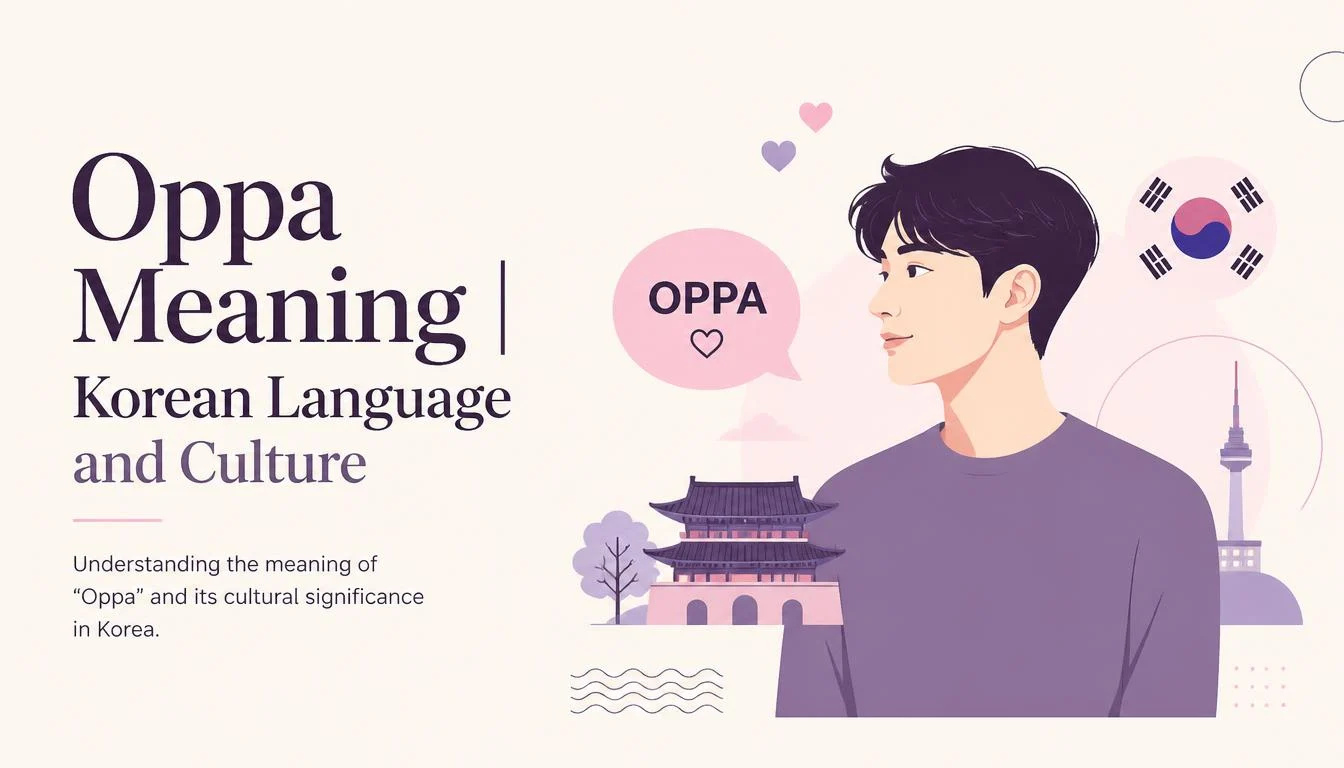
“Oppa” is a Korean honorific used by women to refer to an older male sibling or an older male friend. In modern usage, it can also express closeness, affection, or even mild romantic interest depending on context. The word carries both family-based respect and social warmth.
The term Oppa Meaning comes from the Korean language and is commonly used by girls when speaking to an older male. It is not just a word for “older brother” but also expresses warmth, familiarity, and emotional connection in relationships.
In modern pop culture, especially in K-dramas and K-pop fandoms, Oppa Meaning has become very popular worldwide. Fans often use “oppa” for their favorite male idols or actors, even if they do not know them personally, as a sign of admiration and affection.
Definition and Everyday Use
The term “oppa” comes from the Korean word used by females to address an older male. In Korean society, age and hierarchy shape how people speak to each other, so language reflects respect and familiarity at the same time.
In a family setting, a younger sister calls her older brother “oppa.” Outside the family, women may also use it for slightly older male friends, classmates, or partners.
The National Institute of the Korean Language recognizes such honorifics as part of Korea’s structured speech levels, which help show social relationships clearly.
Over time, the usage expanded beyond family boundaries. Today, it often signals emotional closeness rather than strict blood relation.
Formal vs Informal Usage
The meaning of this term shifts depending on how it is used. Here is a simple breakdown:
| Context Type | Who Uses It | Meaning | Emotional Tone |
|---|---|---|---|
| Family | Younger sister to older brother | Biological sibling term | Respectful, natural |
| Close friendship | Female to older male friend | Familiar address | Warm, friendly |
| Romantic context | Woman to older boyfriend | Affectionate nickname | Flirtatious, intimate |
| Pop culture | Fans to male idols | Express admiration | Emotional attachment |
In real life, tone and relationship matter more than grammar rules. A single word can feel very different depending on how it is said.
Cultural Context in Korea
Korean language reflects hierarchy strongly. Age differences influence speech endings, pronouns, and even emotional expression. Words like “oppa” are part of this system.
In everyday Korean society, younger people rarely call older males by their first name alone. That would sound distant or even disrespectful in many situations.
Instead, terms like “oppa” create balance. They show respect but still allow emotional closeness.
This balance is one reason Korean dramas use it so often. It helps viewers instantly understand relationship dynamics without explanation.
Real-World Examples in Popular Culture
To understand how this term appears in real life, here are some well-known references:
- Lee Min-ho in dramas like Boys Over Flowers is frequently addressed as “oppa” by female characters.
- Park Seo-joon often plays characters who are called “oppa” in romantic comedies such as What’s Wrong with Secretary Kim.
- Kim Soo-hyun, known for My Love from the Star, is also associated with this kind of affectionate address in his roles.
- Gong Yoo in Goblin is another example where female characters naturally use this honorific.
- In BTS, fans often refer to Jin (Kim Seok-jin) as “oppa,” especially in Korean-speaking fan communities.
These examples show how the term moves between fiction, fandom, and real communication.
Deep Dive: Why “Oppa” Feels Emotionally Strong
One interesting aspect of this word is how emotionally loaded it can become.
Unlike simple words like “brother” in English, this term carries layers of social meaning. It blends respect, closeness, and sometimes romantic tension.
In Korean storytelling, when a female character says “oppa,” it often signals a shift in relationship. It may mark trust, emotional dependence, or romantic development.
This emotional depth is one reason K-dramas use it strategically. A single line can change the mood of an entire scene.
It also explains why international fans pick up on it quickly. The sound itself feels soft and familiar, which makes it easy to remember and repeat.
Related Korean Honorifics
To fully understand this term, it helps to compare it with other Korean relationship words:
| Term | Who Uses It | Meaning |
|---|---|---|
| Oppa | Female to older male | Older brother or close older male |
| Noona | Male to older female | Older sister or respected older woman |
| Hyung | Male to older male | Older brother or male senior |
| Unnie | Female to older female | Older sister or close older woman |
These words are part of the same system. Each one reflects both age and emotional distance.
Unlike English, Korean does not rely only on names. It uses relationship-based words to define social interaction.
Common Misunderstandings
Outside Korea, this term is often misunderstood, especially in global fan communities.
One common mistake is assuming it always means romantic interest. In reality, it can simply mean older brother or close senior.
Another misunderstanding is overusing it in casual speech. In Korean culture, using it incorrectly with strangers or much older people can sound awkward.
Some fans also use it jokingly on social media without understanding its cultural weight. While this is common, it can sometimes flatten its original meaning.
Korean speakers usually rely on context to interpret it correctly, not just the word itself.
Why It Became Popular Worldwide
Global interest in Korean dramas and K-pop helped spread this term internationally. Streaming platforms and social media played a major role in this.
Fans started repeating words they heard in songs and shows, and this term quickly became one of the most recognizable Korean expressions.
Its popularity is not just linguistic. It connects to emotional storytelling in Korean entertainment.
Because it is easy to pronounce and emotionally expressive, it travels well across languages.
Practical Usage in Real Life
In Korea, using this term correctly depends on social awareness.
It is typically used when:
- The speaker is female
- The person addressed is slightly older
- There is familiarity or emotional closeness
It is not used:
- With much older strangers
- In formal workplace settings
- Without some level of relationship context
Korean speakers naturally adjust based on situation, which is part of everyday communication culture.
FAQs
1. Can men use this word?
No, men typically use different terms like “hyung” when addressing older males.
2. Is it always romantic?
No. It can be purely familial or friendly depending on context.
3. Why do K-dramas use it so often?
It helps show relationships quickly without extra explanation.
4. Can foreigners use it in Korea?
Yes, but it should be used carefully and only when context is appropriate.
5. Is it still commonly used today?
Yes, it remains widely used in both daily speech and modern media.
Conclusion
This Korean honorific is more than a simple word. It reflects how language and relationships are closely tied in Korean culture. Its meaning shifts depending on context, tone, and personal connection.
From family conversations to global entertainment, it continues to carry emotional weight. That blend of respect and familiarity is what keeps it relevant across generations and cultures.
Read More Related Articles:
- “Sent as Text Message” Means | Explained Simply for iPhone Users In 2026
- “Message Blocking Is Active” Means | What This Error Says About Your Text In 2026
- “Take a Break” Meaning on Facebook | See What Changes After You Use It In 2026

Michael Turner is a U.S.-based content writer and blogger who enjoys uncovering the stories and meanings behind words. Through his work at Meanvora, he delivers well-researched, easy-to-read articles that help readers expand their vocabulary and gain a deeper understanding of language.







1 thought on “Oppa Meaning | Korean Language and Culture In 2026”