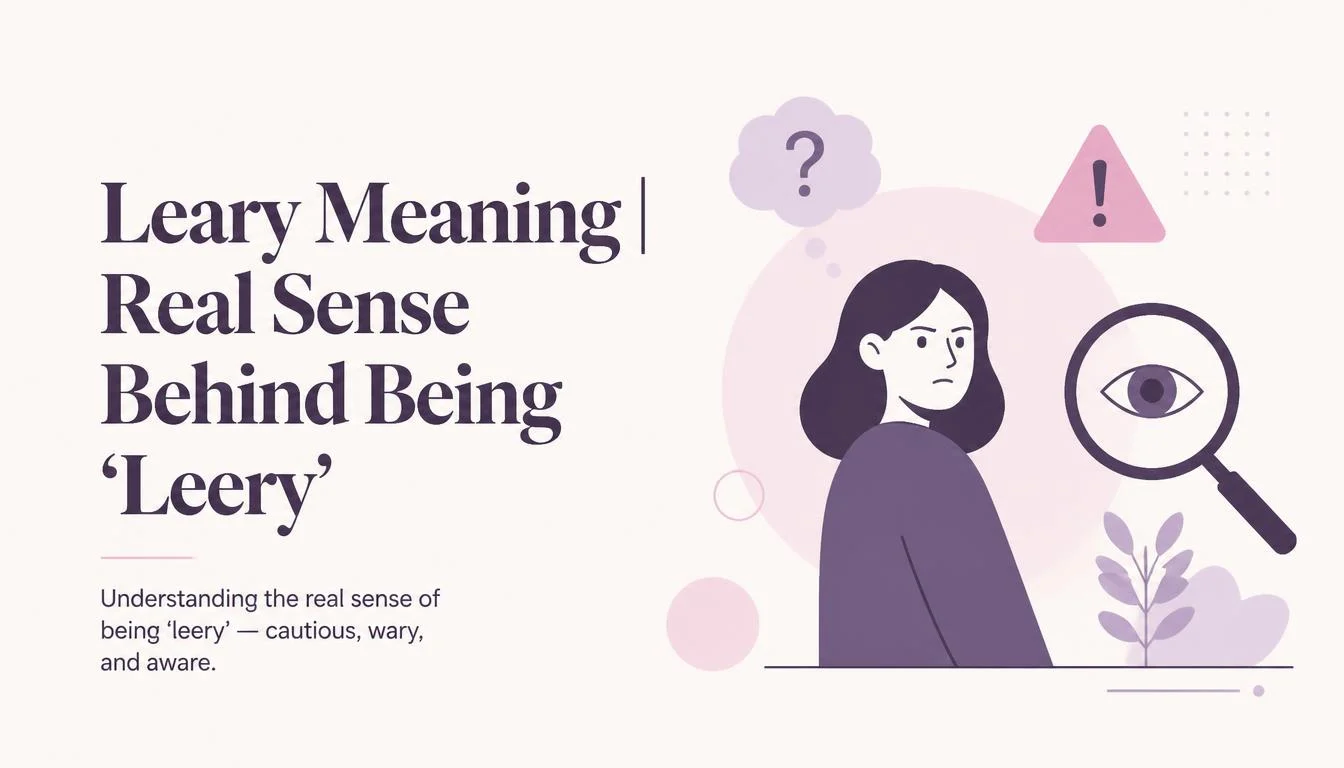
Quick Answer
“Leary” is a common misspelling of the word “leery.” It means feeling cautious, suspicious, or uneasy about something or someone. When a person is leery, they are alert and not fully trusting a situation. The word is often used in everyday speech to describe hesitation or doubt.
The term Leary meaning is commonly used in everyday English to describe a feeling of doubt or mistrust. When someone says they are leary, it means they are not completely comfortable or confident about a person, situation, or offer. It reflects a natural sense of caution that helps people avoid risk or deception.
In simple communication, Leary meaning is closely linked with being skeptical or careful. For example, a person might be leary of a deal that sounds too good to be true. This word is often used in informal speech to express hesitation or alertness in uncertain situations.
What Does Leary Mean?
At its core, “leary” refers to a feeling of caution. However, there is an important detail. The correct spelling of the word is actually “leery.”
When people write “leary,” they usually mean:
- Suspicious
- Careful
- Hesitant
- Uncertain
For example:
- “I’m leary about giving my credit card details online.”
In this sentence, the speaker is expressing doubt and caution. That is the essence of the term.
Is “Leary” a Real Word or a Misspelling?
Here is where things get interesting.
“Leary” is not traditionally recognized as a standard English word in most dictionaries. The correct form is “leery.” However, “leary” appears frequently in informal writing, especially online.
This happens because:
- The pronunciation sounds similar
- Many people learn words by hearing them first
- Spelling errors spread quickly through digital communication
Major dictionaries like Merriam-Webster and Oxford English Dictionary list “leery” as the correct spelling. They define it as wary or suspicious.
So while “leary” is widely used, it is best understood as a common spelling mistake rather than a formal word.
Definition in Everyday vs. Formal Usage
Language often shifts depending on context. The meaning stays the same, but how it is accepted can change.
Everyday Usage
In casual conversation, “leary” is often used without concern for spelling accuracy. People focus more on meaning than form.
Example:
- “She’s leary of strangers.”
Most listeners understand the intent immediately.
Formal Usage
In professional or academic writing, “leery” is the correct and expected spelling. Using “leary” in such settings may appear careless or unpolished.
Example:
- “Consumers are increasingly leery of misleading advertisements.”
The tone is more precise and credible.
Origins and Etymology of the Word
The word “leery” has an interesting background. It dates back to the 18th century and is believed to come from British slang.
Some linguists connect it to the Romani word “leeri,” which means sly or cunning. Others suggest links to older dialect forms in England.
Over time, the meaning shifted slightly. Instead of describing someone sneaky, it began to describe someone cautious or suspicious.
This change reflects how language evolves. Words adapt based on how people use them in real life.
Common Examples in Real Life
Understanding a word becomes easier when you see it in context. Here are some everyday situations where this term applies.
Online Safety
People often feel cautious about sharing personal information.
- “I’m leery of clicking unknown links in emails.”
Meeting New People
Trust takes time.
- “He’s a bit leery when meeting strangers.”
Financial Decisions
Money decisions require care.
- “Investors are leery of unstable markets.”
Travel Situations
Unfamiliar places can create unease.
- “Tourists may feel leery in crowded areas.”
These examples show how the term fits naturally into daily conversations.
Similar Words and Key Differences
English has many words that overlap in meaning. However, subtle differences matter.
| Word | Meaning | Tone/Usage |
|---|---|---|
| Leery | Suspicious or cautious | Informal to neutral |
| Wary | Alert and careful | Slightly more formal |
| Skeptical | Doubtful or questioning | Analytical or critical |
| Suspicious | Distrusting or doubtful | Stronger negative tone |
| Hesitant | Slow to act due to uncertainty | Focus on indecision |
Each word carries a slightly different shade of meaning. “Leery” sits comfortably between casual and neutral tones.
Why People Use “Leary” Instead of “Leery”
Spelling confusion is common in English. The use of “leary” instead of “leery” can be explained by a few simple factors.
Phonetic Spelling
People often write words the way they hear them. Since “leery” sounds like “lee-ree,” many assume the spelling follows that pattern.
Influence of Digital Communication
Social media, texting, and informal writing encourage speed over accuracy. Small spelling variations spread quickly.
Lack of Formal Correction
In spoken language, spelling is invisible. So incorrect forms can persist without being noticed.
Memory Patterns
The brain tends to simplify unfamiliar spellings. “Leary” looks more intuitive to many people than “leery.”
These factors combined make the misspelling very common.
Practical Importance of Being Leery
Caution is not always a bad thing. In fact, being leery can be useful in many real-world situations.
This is where the word connects to behavior, not just language.
Personal Safety
Being cautious helps people avoid risky situations. Whether walking alone at night or dealing with strangers, awareness matters.
Online Protection
Cybersecurity experts often advise users to stay alert. Organizations like the Federal Trade Commission (FTC) regularly warn about scams and phishing attempts.
Financial Decisions
Banks and financial advisors encourage careful thinking before investments. A cautious mindset reduces the chance of loss.
Social Awareness
Trust is important, but blind trust can be harmful. Being slightly skeptical helps people make better judgments.
In short, the feeling described by this word plays a real role in everyday decision-making.
Related Expressions and Usage Tips
Language offers many ways to express similar ideas. Knowing related phrases can improve clarity.
Common Expressions
- “On guard”
- “Second thoughts”
- “Trust issues”
- “Playing it safe”
Each of these carries a sense of caution.
Usage Tips
- Use “leery” in formal writing
- Avoid “leary” in professional contexts
- Pair it with situations involving doubt or risk
- Keep sentences simple for clarity
Example:
- “She remained leery of the offer despite its benefits.”
This keeps the meaning clear and natural.
FAQs
1. Is “leary” correct English?
Not exactly. It is widely used, but it is considered a misspelling of “leery.” Formal writing should use “leery.”
2. How do you pronounce “leery”?
It is pronounced as “lee-ree.” The sound often leads to the incorrect spelling “leary.”
3. Can “leery” have a positive meaning?
Yes, in a way. While it suggests caution, that caution can protect people from harm or poor decisions.
4. Is “leery” the same as “afraid”?
No. Being leery means cautious or suspicious, while being afraid involves fear. The emotions are related but not identical.
5. Why is the spelling confusing?
English spelling does not always match pronunciation. That is why words like “leery” often get simplified into “leary.”
6. Is it okay to use “leary” in casual texting?
Yes, in informal contexts people will understand you. However, it is still technically incorrect.
Conclusion
The term “leary” is a familiar sight in everyday writing, but its true form is “leery.” The meaning remains simple and practical. It describes a natural sense of caution that people experience in uncertain situations.
Understanding both the correct spelling and its usage helps you communicate more clearly. It also sharpens your awareness of how language evolves through real use. Sometimes, a small spelling difference tells a much bigger story about how we speak and write.
Read More Related Articles:
- JSP Meaning | Internet Acronym Everyone Gets Wrong In 2026
- What Does WTM Mean in Text | Common Uses You Should Know In 2026
- What Does ACC Mean | Every Meaning Made Simple In 2026









1 thought on “Leary Meaning | Real Sense Behind Being “Leery” In 2026”