Quick Answer
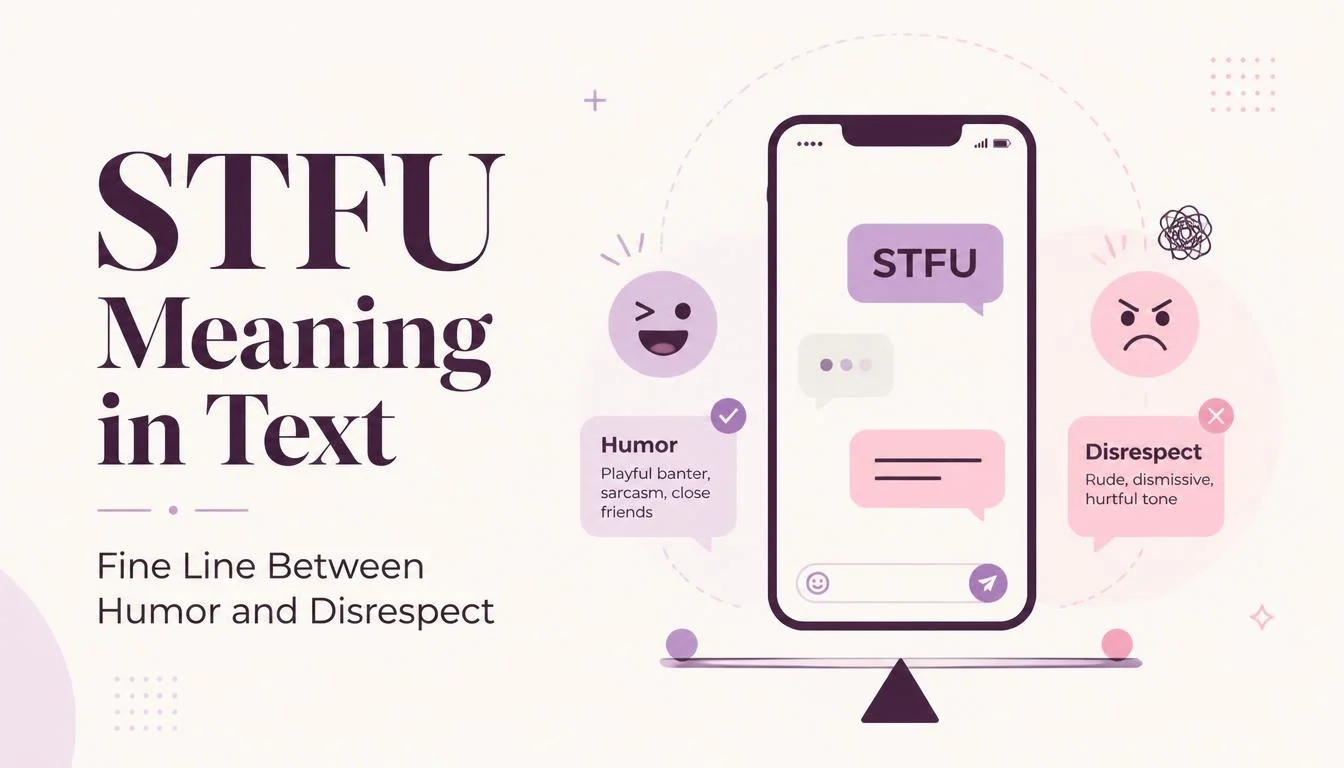
STFU means “Shut the F* Up” in text messages.** It is an informal slang expression used to tell someone to stop talking. Depending on the context, it can sound rude, angry or playful between close friends.
Seeing STFU in a text message can make a conversation feel tense, funny, or surprisingly dramatic. The meaning depends on who sends it, what happened beforehand, and how close the people are.
STFU stands for “shut the fuck up.” It’s a vulgar slang expression used to tell someone to stop talking, express irritation, or react strongly to something unexpected. Friends sometimes use it jokingly, but in an argument, it can sound insulting or aggressive. Collins English Dictionary+1
What Does STFU Mean in Text?
In texting, STFU means “shut the fuck up.” It’s a forceful way to tell someone to be quiet or stop talking. The added profanity makes it much harsher than simply saying “be quiet” or “shut up.”
People use STFU in text messages, social media comments, group chats, and online gaming conversations. Depending on the situation, it can express anger, annoyance, disbelief, playful teasing, or a strong reaction to surprising news.
For example:
- “STFU, you’re lying!” The sender is shocked or has trouble believing what they heard.
- “Bro, STFU 😂” The sender may be joking with a friend, depending on their relationship and the conversation.
- “Just STFU and listen.” The sender sounds angry and wants the other person to stop speaking.
The important detail is tone. STFU is inherently vulgar, even when someone uses it playfully. A laughing emoji or a close friendship may soften its impact, but neither guarantees that the recipient will find it funny.
Why People Use STFU
STFU is short, direct, and emotionally forceful. Those qualities make it common in informal digital conversations, particularly when someone wants to react quickly without typing a complete sentence.
Its meaning can shift with the situation.
To Show Anger or Frustration
Someone might send STFU when they feel interrupted, insulted, annoyed, or tired of an argument.
For example:
Person A: “You’re wrong about everything.”
Person B: “STFU. I’m done arguing with you.”
Here, the sender isn’t being playful. The message communicates frustration and a desire to end the exchange. It may also escalate the disagreement because the wording attacks the other person’s freedom to speak rather than addressing the actual issue.
To Express Shock or Disbelief
STFU can also work as an exaggerated reaction to surprising information. In this context, the sender may not literally want anyone to stop talking.
For example:
Friend: “She got tickets for the concert, and we’re going backstage!”
You: “STFU! No way 😭”
The reply expresses excitement and disbelief. Among friends who understand each other’s humor, this can be a natural informal reaction.
A useful clue is what follows the abbreviation. If the sender continues asking excited questions or uses celebratory emojis, the message may be a playful reaction rather than an insult.
To Tease a Close Friend
Some friends use STFU as part of their normal banter. It might appear after an embarrassing story, an outrageous joke, or an unexpected compliment.
For example:
Friend A: “You practiced that pickup line in the mirror, didn’t you?”
Friend B: “STFU 💀”
The second friend may be embarrassed and laughing rather than genuinely angry. However, this interpretation depends on their established dynamic. The same message sent to a new acquaintance could come across as disrespectful.
To React to an Unbelievable Claim
People may also use STFU when they think someone is exaggerating or making an outrageous statement.
Example: “He said he can finish the entire project in ten minutes. STFU 😭”
Here, the expression signals disbelief or skepticism. The sender may be challenging the claim in a humorous way, not issuing a literal command.
These examples share the same abbreviation, but they communicate different emotions. The surrounding conversation matters more than capitalization alone.
What STFU Means in Different Contexts
The platform can provide clues about the sender’s intention, although no platform gives the abbreviation a completely different standard meaning.
man hands holding phone with app messenger on the screen
STFU can signal annoyance, a joking reaction, or disbelief. A private message between close friends may feel less hostile than the same words sent during a serious disagreement.
Defamation Lawyers in London – Remove viral TikTok video
On Instagram, TikTok, and X
Someone might post STFU in a comment to criticize an opinion, mock a statement, or react dramatically to a video. Public comments can feel harsher because other people may see and respond to them.
Secrets Strategies to Grow a Gaming YouTube Channel Fast
Players may use STFU during competitive matches, heated exchanges, or friendly trash talk. Even if profanity is common in a particular group, the phrase can still be insulting.
The basic definition stays the same across these settings. What changes is the likely intention, the relationship between the people involved, and how much hostility the message conveys.
STFU Text Conversation Examples
The easiest way to understand STFU is to see how people might interpret it in everyday conversations. These are illustrative examples, not quotations from real people.
Example 1: When Someone Is Annoyed
Alex: “I’m going to tell everyone what you did.”
Jordan: “STFU. That’s none of your business.”
Meaning: Jordan is angry and wants Alex to stop talking about the situation. The message sounds confrontational rather than playful.
Example 2: When a Friend Shares Unexpected News
Mia: “Guess what? I got accepted into my dream college!”
Sophie: “STFU OMG ARE YOU SERIOUS?”
Meaning: Sophie is expressing excitement and disbelief. In this situation, STFU is an exaggerated reaction rather than a serious demand for silence.
Example 3: When Friends Are Teasing Each Other
Chris: “You still have that picture of your middle school haircut?”
Sam: “STFU 😭 delete it right now.”
Meaning: Sam is probably embarrassed and joking along, assuming the two friends have a comfortable relationship.
Example 4: During an Online Argument
User A: “You clearly didn’t read the instructions.”
User B: “STFU, you don’t know what you’re talking about.”
Meaning: Both users appear frustrated. STFU adds hostility to the exchange and makes a productive discussion less likely.
Example 5: Reacting to a Huge Surprise
Taylor: “My favorite singer just replied to my comment!”
Morgan: “STFU NO WAY 😭”
Meaning: Morgan is surprised and excited. The capitalization and emotional reaction suggest playful disbelief.
Across all five examples, the surrounding words help reveal the intended tone. Still, if you’re unsure whether someone is joking or being hostile, it’s better to consider the wider conversation than assume a particular meaning from one message.
Is STFU Rude or Playful?
STFU is generally considered rude because it contains profanity and directly tells someone to stop speaking. However, its impact can range from lighthearted teasing to outright hostility. Dictionary.com+1
Three factors can help you interpret it.
- Your relationship: A close friend may use STFU affectionately or jokingly. Someone you barely know is less likely to have that same understanding.
- The conversation: A message following exciting news may communicate disbelief. The same abbreviation in the middle of an argument is more likely to sound aggressive.
- The surrounding language: Laughing emojis, playful exaggeration, and affectionate teasing can suggest humor. Insults, accusations, and angry commands suggest hostility.
None of these clues is conclusive. Emojis can soften a message, but people also use them sarcastically. Likewise, friends sometimes speak bluntly without intending harm, while others may use supposedly playful language to express genuine irritation.
If someone sends you STFU and you’re uncertain how they meant it, consider whether their other messages support a joking interpretation. You can also ask, “Are you joking, or are you actually upset?”
That approach is more reliable than treating every instance as either a harmless joke or a serious insult.
STFU vs. Similar Slang Terms
STFU belongs to a larger group of expressions used to tell someone to stop talking. These alternatives differ in intensity, politeness, and purpose.
| Term | Full meaning | Typical tone |
|---|---|---|
| STFU | Shut the fuck up | Vulgar, forceful, sometimes playful |
| STHU | Shut the hell up | Rude or emphatic, usually less vulgar |
| STFD | Shut the front door | A playful, euphemistic expression that can convey surprise |
| SU | Shut up | Blunt; tone depends on context |
| Hush | Be quiet | Gentle or firm, depending on delivery |
| ZIP IT | Stop talking | Direct and informal |
| Be quiet | Speak less or stop speaking | Neutral to firm |
| Please stop talking | A request to stop speaking | Generally more polite |
These expressions are not interchangeable in every situation. STFD, for example, may be used to express surprise rather than to silence someone. SU is also ambiguous because it can have other meanings in different contexts.
STFU vs. STHU
The main difference is the word used for emphasis. STHU replaces the stronger profanity in STFU with “hell.” It can still sound rude, but many people perceive it as less offensive.
Example:
- “STFU, I’m trying to concentrate.” Strong and vulgar.
- “STHU, I’m trying to concentrate.” Still blunt, but somewhat less explicit.
Neither expression is especially polite when directed at someone who is speaking.
STFU vs. SU
SU is a shorter expression that commonly means “shut up” in informal messages. STFU adds profanity, which usually makes the command more forceful.
For instance, “SU 😂” between close friends might be teasing. “STFU and leave me alone” is more likely to communicate anger, especially without other signs of humor.
The exact meaning of SU can vary with context, so don’t assume every use of those two letters means “shut up.”
STFU vs. STFD
STFD is sometimes used as a cleaner, humorous alternative to STFU. The phrase “shut the front door” can express surprise or disbelief without using the original profanity. Wiktionary, the free dictionary+1
For example:
Friend: “I won the giveaway!”
You: “STFD! That’s amazing!”
Here, the sender isn’t asking the friend to be quiet. The expression is a playful reaction to unexpected news.
When Should You Use STFU?
Whether STFU is appropriate depends on the situation, your relationship with the recipient, and the impression you want to make.
When It May Be Acceptable
STFU may fit a conversation when:
- You’re joking with a close friend who understands your humor.
- You’re reacting dramatically to surprising or unbelievable news.
- Everyone involved is comfortable with profanity and informal banter.
- The context makes your playful intention reasonably clear.
Even in these situations, be mindful of how the other person responds. A joke isn’t automatically harmless just because you intended it that way.
When It’s Better to Avoid It
Avoid STFU when communicating with:
- Teachers, employers, clients, or professional contacts.
- Someone you don’t know well.
- A person who is already upset or emotionally distressed.
- Someone involved in a serious disagreement with you.
- People in public or professional spaces where profanity could damage your reputation.
If your actual goal is to set a boundary, you can do that without insulting the other person.
For example:
- Instead of “STFU,” say “Please let me finish.”
- Instead of “STFU and leave me alone,” say “I need some space right now.”
- Instead of “STFU, you’re annoying,” say “I’d rather not continue this conversation.”
- Instead of “STFU, you’re wrong,” say “I disagree with that.”
These alternatives communicate your needs more clearly and are less likely to escalate a conflict.
FAQs
1. What Does STFU Stand for in Texting?
STFU stands for “shut the fuck up.” It’s a vulgar slang abbreviation used to tell someone to stop talking or to express a strong emotional reaction. Depending on the context, it can be angry, sarcastic, or playful.
2. Does STFU Mean Someone Is Angry With You?
Not necessarily. Someone might use STFU because they’re irritated, but close friends may also use it jokingly or to express disbelief. Look at the conversation, your relationship with the sender, and their usual communication style before drawing a conclusion.
3. What Does STFU Mean From a Guy or a Girl?
The abbreviation has the same basic meaning regardless of who sends it. A guy or a girl may use it to express anger, tease a friend, or react to surprising news. The sender’s gender alone doesn’t establish whether the message is friendly or hostile.
4. Is STFU Stronger Than Shut Up?
Yes, generally. STFU includes an explicit swear word, making it more vulgar and forceful than “shut up.” Both can be rude, but STFU usually carries stronger emphasis.
5. How Should You Reply When Someone Texts STFU?
Your response depends on the situation. If the sender is joking, you might respond with a laughing emoji or a playful comment. If they seem angry, consider asking what upset them or setting a calm boundary, such as “You can disagree with me without speaking to me that way.”
6. Is STFU Appropriate in Professional Messages?
Generally, no. STFU is vulgar and can come across as disrespectful in workplace emails, business chats, or conversations with clients. Use a clearer, more professional phrase such as “Please let me finish” or “Let’s keep the conversation respectful.”
Conclusion
STFU is a blunt, vulgar way to tell someone to stop talking, but it can also serve as an exaggerated reaction among friends. The surrounding conversation and the relationship between the sender and recipient usually provide the strongest clues to its intended tone.
If you encounter it in a message, don’t rely on the abbreviation alone to judge the sender’s feelings. And if you’re thinking of using it yourself, remember that a phrase intended as a joke can easily sound like an insult when the other person doesn’t share your sense of humor.
Read More Related Articles:
- “Sent as Text Message” Means | Explained Simply for iPhone Users In 2026
- “Message Blocking Is Active” Means | What This Error Says About Your Text In 2026
- “Take a Break” Meaning on Facebook | See What Changes After You Use It In 2026









1 thought on “STFU Meaning in Text | Fine Line Between Humor and Disrespect In 2026”