Quick Answer
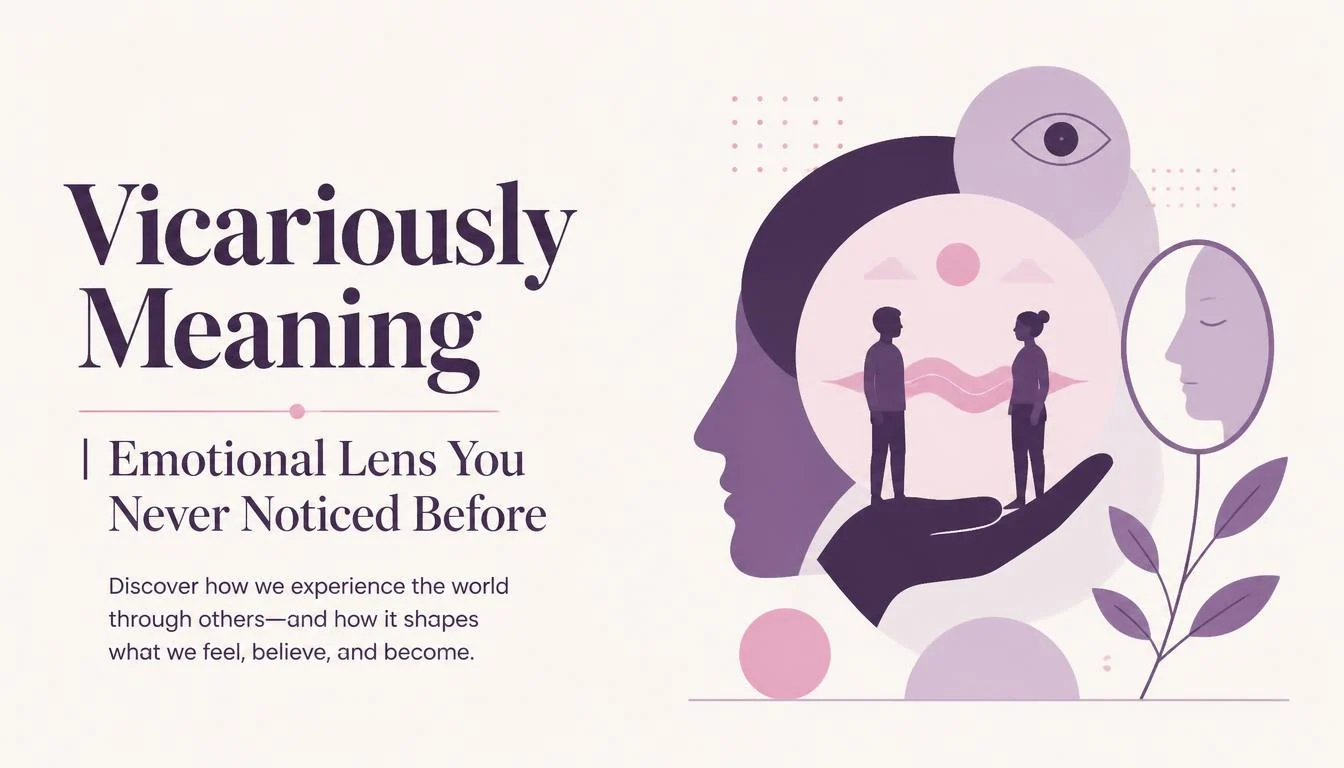
The vicariously meaning refers to experiencing something indirectly through another person instead of doing it yourself. You feel their emotions, success, or failure as if it were your own. This often happens when watching someone else go through an intense or meaningful experience. It is closely tied to empathy and imagination.
“Vicariously” is an adverb that describes experiencing life, emotions, or actions indirectly through someone else. Instead of doing something on your own, you feel it through another person’s experience, imagination, or storytelling. For example, you might feel happy vicariously when your friend achieves success.
In everyday life, people often live vicariously through movies, books, social media, or friends’ experiences. It helps you feel connected to events you are not directly part of but still emotionally involved in.
What Does Vicariously Mean?
At its core, the word “vicariously” describes living through someone else’s experience. You are not directly involved, yet your mind and emotions respond as if you were.
For example, if a parent feels proud watching their child win a competition, that emotion is vicarious. The parent did not compete, but the joy feels personal and real.
The term comes from the Latin word vicarius, meaning substitute. That origin helps explain why the experience is indirect. You are essentially “substituting” yourself into someone else’s situation.
Everyday Usage vs. Deeper Meaning
In everyday conversation, people use this word casually. Someone might say, “I live vicariously through travel vloggers.” It simply means they enjoy watching others do what they cannot do themselves.
But there is a deeper layer. Psychologically, this experience connects to how humans process emotions and relationships. When you feel happy for someone else or nervous while watching a tense movie scene, your brain is actively simulating that experience.
This is not just imagination. It is a real emotional response shaped by how the brain mirrors what it observes.
How Vicarious Experiences Work in the Brain
The brain plays a major role in indirect experiences. Scientists often point to mirror neurons, which are brain cells that respond when we perform an action and also when we observe someone else performing it.
Research involving institutions like the National Institute of Mental Health has shown that observing emotions can activate similar brain regions as experiencing them firsthand.
For instance:
- Watching someone get hurt can trigger discomfort in your own body.
- Seeing someone succeed can produce genuine happiness in you.
- Observing fear can increase your own heart rate.
This process helps explain empathy. It allows people to connect, understand others, and build relationships without directly sharing the same situation.
Common Real-Life Examples
You experience this more often than you might think. It appears in everyday life, media, and relationships.
Watching Movies or TV
When you feel scared during a horror scene or emotional during a dramatic moment, you are responding indirectly. Shows like Breaking Bad or Stranger Things often create strong emotional reactions without real danger.
Parenting
Parents frequently feel their children’s successes and failures deeply. A child’s achievement can feel like a personal victory.
Sports Fans
Fans of teams such as Manchester United or Los Angeles Lakers celebrate wins and feel disappointment in losses, even though they are not playing.
Social Media
Platforms like Instagram or YouTube allow people to experience travel, luxury lifestyles, or achievements through others.
Reading Books
While reading novels like Harry Potter and the Sorcerer’s Stone, readers feel excitement, fear, or joy through fictional characters.
Types of Vicarious Experiences
| Type | Description | Example |
|---|---|---|
| Emotional | Feeling someone else’s emotions | Crying during a sad movie |
| Achievement-based | Sharing someone’s success | Feeling proud of a friend’s promotion |
| Fear-based | Experiencing fear through observation | Feeling tense watching a thriller |
| Learning-based | Gaining knowledge by observing others | Learning skills from tutorials |
| Social | Experiencing social situations indirectly | Following influencers online |
Each type highlights a different way people connect to experiences without direct involvement.
Why Humans Experience Things Vicariously
This ability is not random. It serves important purposes.
First, it helps with learning. According to psychologist Albert Bandura, people often learn behaviors by observing others. His work on social learning theory shows how observation can shape actions.
Second, it strengthens relationships. Feeling what others feel builds empathy and trust. This is essential for social bonding.
Third, it allows safe exploration. You can experience danger, success, or failure without real risk. Watching a risky situation teaches lessons without consequences.
Vicarious vs. Similar Terms
People often confuse this term with related concepts. Here is a clear distinction.
| Term | Meaning |
|---|---|
| Vicariously | Experiencing something indirectly through another person |
| Empathy | Understanding and sharing another person’s feelings |
| Sympathy | Feeling concern for someone without necessarily sharing their emotions |
| Imagination | Creating mental experiences without needing another person |
The key difference is that indirect experience depends on another person’s situation, while imagination can exist independently.
Practical Uses in Daily Life
This concept is more useful than it seems.
Learning Skills
Watching tutorials or observing experts allows people to gain knowledge without direct trial. Many people learn cooking, coding, or design through videos before trying themselves.
Entertainment Industry
Movies, games, and books rely on this effect. Without it, storytelling would feel flat and disconnected.
Marketing and Advertising
Brands often show people enjoying a product so viewers can imagine themselves in that situation. This creates emotional engagement.
Therapy and Behavior Change
Psychologists sometimes use role models or guided imagery to help individuals change behavior. Observing positive outcomes can motivate action.
Risks and Downsides
While indirect experiences can be helpful, they also have limits.
One major issue is over-reliance. Constantly living through others, especially on social media, can lead to dissatisfaction with your own life.
Another concern is emotional overload. Watching distressing content repeatedly can increase anxiety or stress.
There is also the risk of unrealistic expectations. Seeing only highlights of others’ lives can create false comparisons.
Balancing real experiences with indirect ones is important for mental well-being.
FAQs
What does vicariously mean in simple words?
It means experiencing something through another person instead of doing it yourself.
Is vicarious experience real or imagined?
It is both. The situation is not real for you, but the emotional response is genuine.
Can you learn things vicariously?
Yes, people often learn by observing others. This is a key idea in social learning theory.
Is vicarious the same as empathy?
Not exactly. Empathy is about understanding feelings, while this term involves experiencing situations indirectly.
Why do people enjoy watching others succeed?
It triggers emotional satisfaction and connection, even without direct involvement.
Conclusion
The idea behind this term is simple, yet powerful. Humans are wired to connect, observe, and feel beyond their own direct experiences. Whether through stories, relationships, or media, indirect experiences shape how people learn and relate to the world.
Used wisely, it can expand understanding and deepen empathy. But like anything, it works best when balanced with real-life action.
Read More Related Articles:
- “Sent as Text Message” Means | Explained Simply for iPhone Users In 2026
- “Message Blocking Is Active” Means | What This Error Says About Your Text In 2026
- “Take a Break” Meaning on Facebook | See What Changes After You Use It In 2026

Michael Turner is a U.S.-based content writer and blogger who enjoys uncovering the stories and meanings behind words. Through his work at Meanvora, he delivers well-researched, easy-to-read articles that help readers expand their vocabulary and gain a deeper understanding of language.










1 thought on “Vicariously Meaning | Emotional Lens You Never Noticed Before In 2026”