Quick Answer
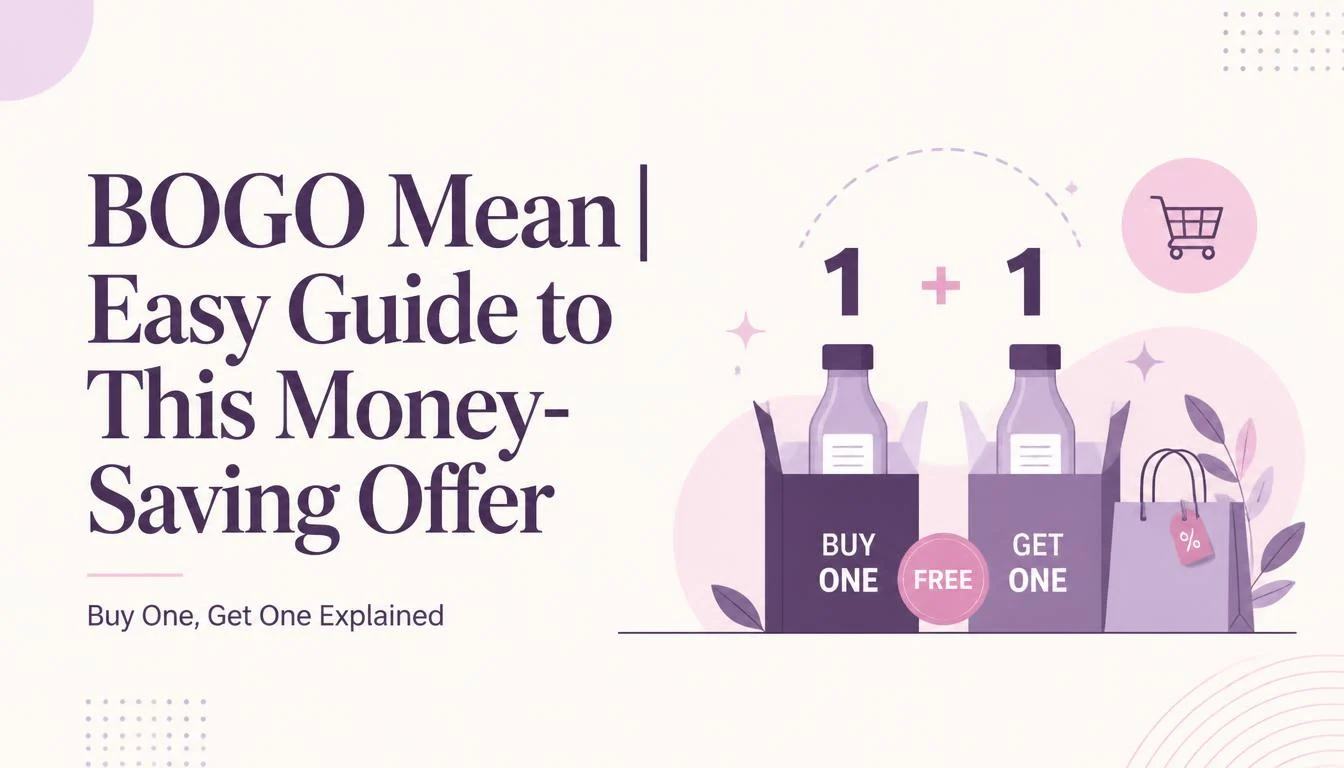
BOGO means “Buy One, Get One.” It’s a popular promotional deal where you receive a second item free or at a discounted price when you purchase the first one.
If you’ve seen BOGO on a store sign, website, or social media ad and wondered what it means, the answer is simple: BOGO stands for “Buy One, Get One.” It’s commonly used for special offers and limited-time sales.
Understanding BOGO can help you quickly recognize deals such as Buy One, Get One Free (BOGOF) or Buy One, Get One 50% Off, so you know exactly what a promotion includes.
Let’s break it all down simply, clearly, and without the confusing marketing jargon.
BOGO Meaning: Quick Definition
BOGO is an acronym that stands for “Buy One, Get One.” It’s a retail and marketing term used to describe a promotional deal where purchasing one item earns the buyer a second item for free, at a discount, or under some other special condition (like “buy one, get one 50% off”).
In short: BOGO = a two-for-the-price-of-(less-than-two) deal.
It’s most commonly seen in retail, restaurants, e-commerce, and advertising, but it has slowly crept into everyday conversation too sometimes literally, sometimes sarcastically.
| Quick Facts | Details |
|---|---|
| Full form | Buy One, Get One |
| Type of term | Acronym / marketing abbreviation |
| Common variations | BOGO Free, BOGO 50% Off, BOGOF |
| Where it’s used | Retail, restaurants, online stores, casual speech |
| Tone | Neutral to enthusiastic (sometimes cheeky in casual use) |
| First popularized | Mid-to-late 20th century U.S. retail advertising |
Where Did BOGO Come From? A Quick Look at Its Origin
BOGO didn’t start out as internet slang it actually has roots in old-school retail advertising. Grocery stores and department stores in the United States began running “buy one, get one free” promotions decades ago as a way to move inventory quickly and reward loyal shoppers.
Over time, marketers realized that spelling out “buy one, get one” on every sign, flyer, and price tag was clunky. So, like most things repeated often enough, it got shortened. BOGO became the go-to abbreviation because it’s short, catchy, and rolls off the tongue almost like a mini jingle.
By the 1990s and 2000s, BOGO had become a retail staple, especially in the U.S. Fashion outlets, pharmacies, supermarkets, and shoe stores plastered it across storefronts. Then came online shopping and BOGO deals migrated straight into email marketing subject lines, banner ads, and app notifications.
Today, BOGO isn’t just a store sign anymore. Thanks to social media and casual texting culture, people use it loosely to describe any situation involving a “two-for-one” vibe even outside of shopping.
How Popular Is BOGO Today?
Extremely. BOGO is one of the most recognized promotional terms in modern retail, especially in North America, but its usage has spread globally as English-language marketing terms often do.
Here’s why it stuck around so well:
- It’s short and punchy easy to fit on a sign, banner, or Instagram story.
- It creates urgency and excitement people love feeling like they’re getting a bonus item.
- It’s flexible works for clothes, food, skincare, electronics, you name it.
- It’s meme-friendly because it sounds fun to say, people started using it playfully in everyday speech.
You’ll find BOGO deals especially heavy during:
- 🛍️ Black Friday and holiday sales
- 🍕 Fast food promotions (“Buy one pizza, get one free!”)
- 💄 Beauty and skincare bundle deals
- 👗 End-of-season clothing clearances
- 📱 App-based flash sales
What Does BOGO Mean in Everyday Use? (Beyond Shopping)
While BOGO started as a retail term, it’s slipped into casual conversation with a slightly different flavor. People now use it jokingly to describe non-shopping situations that feel like a “two-for-one” package sometimes in a lighthearted way, sometimes a bit sarcastically.
Example 1 Friendly / Marketing Tone
“Don’t miss it BOGO on all sneakers this weekend only! 👟👟”
Tone: Upbeat, promotional, exciting. This is BOGO in its natural habitat a store trying to get you hyped about a deal.
Example 2 Neutral / Informational Tone
“The store’s BOGO policy only applies to items of equal or lesser value.”
Tone: Straightforward, factual. No excitement, just explaining how the deal works.
Example 3 Playful / Casual Tone
“My little sister comes as a BOGO deal with my mom’s advice you get both whether you want them or not! 😂”
Tone: Light, teasing, humorous. This shows how BOGO has been adopted into casual banter, far from its retail roots.
Example 4 Slightly Dismissive / Sarcastic Tone
“Oh great, another ‘BOGO’ deal where I have to buy the pricier item just to get a free travel-size sample. Real generous.”
Tone: Sarcastic, a bit skeptical. This reflects how some consumers view BOGO deals as marketing tricks rather than genuine savings.
BOGO vs. Similar Terms: What’s the Difference?
BOGO isn’t the only deal-related acronym floating around. Here’s how it stacks up against similar terms so you don’t mix them up.
| Term | Full Meaning | How It Works | Example |
|---|---|---|---|
| BOGO | Buy One, Get One | Buy 1 item, get a 2nd item free or discounted | Buy one shampoo, get one free |
| BOGOF | Buy One, Get One Free | Same as BOGO, but specifically free (no discount version) | Buy one candle, get one 100% free |
| BOGO 50% | Buy One, Get One 50% Off | Second item is half price, not free | Buy one shirt, get the second 50% off |
| B2G1 | Buy Two, Get One | Buy 2 items to unlock a free 3rd item | Buy 2 lipsticks, get 1 free |
| N-for-$X | “3 for $10,” etc. | Bundle pricing, not a “free item” deal | 3 t-shirts for $20 |
| Discount / Sale | General price reduction | Straightforward percentage off, no “extra item” involved | 20% off all shoes |
The key difference: BOGO always involves getting an extra item, while a regular discount just reduces the price of what you’re already buying.
Common Types of BOGO Deals You’ll See
Not all BOGO deals are created equal. Businesses tweak the format to fit their margins and marketing goals. Here are the most common versions:
- BOGO Free – Buy one, get the second completely free (the most generous version).
- BOGO 50% Off – Buy one, get the second at half price.
- BOGO Half Off – Same as above, just phrased differently.
- Mix & Match BOGO – Buy one item from Category A, get a free/discounted item from Category B.
- Buy More, Save More (B2G1, B3G2, etc.) – A tiered version where buying more unlocks bigger free-item rewards.
💡 Pro tip: Always check the fine print. Some BOGO deals apply the discount to the cheaper item, not the one you’d expect, so read carefully before checkout.
Alternate Meanings of “BOGO” (Yes, There Are a Few)
While “Buy One, Get One” is by far the most common meaning, BOGO has picked up a couple of niche alternate uses depending on context:
- Gaming/Internet slang: In rare cases, especially in gaming communities, “BOGO” has been informally reused as a nickname or inside joke term, though this is not widespread or standardized.
- Brand names: Some businesses have used “Bogo” as part of a product or brand name (like footwear or accessory brands), which is unrelated to the shopping acronym.
- Casual shorthand for “buy one”: Occasionally people shorten conversations by just saying “it’s a BOGO thing” to mean any two-for-one style bonus, even outside retail (like the sibling example earlier).
These alternate uses are far less common, so if someone says “BOGO” without context, 99% of the time they mean the classic retail deal.
Polite & Professional Alternatives to “BOGO”
If you’re writing formal business content, official marketing copy, or professional emails, you might want alternatives to the casual acronym. Here are some options:
- “Buy one, get one free promotion”
- “Two-for-one offer”
- “Complimentary second item with purchase”
- “Buy one, receive a second item at no additional cost”
- “Special bundle promotion”
- “Purchase-and-reward offer”
These phrasings work well in press releases, formal ads, or B2B communication where “BOGO” might feel too casual or ambiguous for the audience.
How to Use BOGO Correctly in a Sentence
Since BOGO functions as an adjective-like term in most sentences, here’s how it naturally fits into writing:
- ✅ “The store is running a BOGO sale on all winter jackets.”
- ✅ “It’s BOGO week at the pharmacy perfect timing to restock vitamins.”
- ✅ “Check if the online cart applies the BOGO discount automatically.”
- ❌ “I BOGO’d my shoes yesterday.” (Awkward BOGO isn’t typically used as a verb, though casual slang sometimes stretches it that way.)
Generally, BOGO works best as a modifier before a noun (BOGO deal, BOGO sale, BOGO offer) rather than as a standalone verb.
Why Businesses Love BOGO Deals
From a marketing psychology standpoint, BOGO promotions are incredibly effective, and here’s why:
- They feel like a “win” Getting something free feels more rewarding than a percentage discount, even if the math is similar.
- They boost inventory turnover Stores clear out excess stock quickly.
- They encourage larger basket sizes Customers often buy more than they planned just to qualify.
- They build loyalty Shoppers associate the brand with “good deals,” increasing repeat visits.
Interestingly, studies in consumer psychology have long shown that people respond more emotionally to “free” than to numerical discounts even when the actual savings are identical. That’s the real magic behind why BOGO works so well.
FAQs
1. What Does BOGO Stand For?
BOGO means “Buy One, Get One.” It’s a common retail promotion where buying one item gets you a second item for free or at a discounted price.
2. Is the Second Item Always Free?
Not necessarily. BOGO may offer a completely free second item, but it can also provide 50% off, a percentage discount, or other promotional conditions.
3. How Is BOGO Different From BOGOF?
BOGO is a broader term that may include free or discounted items, while BOGOF specifically stands for “Buy One, Get One Free.”
4. Can BOGO Offers Be Combined With Coupons?
That depends on the retailer’s policy. Many stores don’t allow BOGO promotions to be combined with additional coupons, so check the offer terms before purchasing.
5. Which Item Gets the BOGO Discount?
In many cases, the discount applies to the lower-priced item, unless the promotion states otherwise. Always review the specific terms of the deal.
6. Is BOGO Used Outside Retail?
Yes. Although it’s mainly a shopping term, people sometimes use BOGO casually or jokingly for situations that feel like a two-for-one bonus.
7. Where Did the Term BOGO Come From?
BOGO developed from U.S. retail advertising as a shortened form of “buy one, get one.” It became widely used in promotions across supermarkets, pharmacies, clothing stores, and other retailers.
8. Are BOGO Promotions Really Worth It?
They can be, but not every BOGO deal offers the best value. Some promotions may adjust the original price to offset the “free” item, so comparing the per-unit price is a smart way to judge the actual savings.
Conclusion
At its core, BOGO simply means “Buy One, Get One” a marketing shorthand that’s become a permanent fixture in retail culture. Whether it shows up as BOGO Free, BOGO 50% Off, or a cheeky, non-shopping joke among friends, the heart of the term stays the same: get more value from a single purchase decision.
Here’s a quick recap of what we covered:
- BOGO stands for “Buy One, Get One”, often extended to BOGO Free or BOGO 50% Off.
- It originated in U.S. retail advertising and has since become a global shopping term.
- It’s used in formal marketing, casual conversation, and even sarcastic commentary.
- BOGO differs from similar terms like BOGOF, B2G1, and standard discounts.
- Always check the fine print the “free” item isn’t always what you’d expect.
- For professional writing, alternatives like “two-for-one offer” work well in place of the casual acronym.
Read More Related Articles
- Hay Meaning in Spanish | “There Is” or “There Are” Simple Examples & Uses In 2026
- Bon Voyage Meaning | Complete Guide to This Popular Travel Expression In 2026
Estar Meaning | Complete Guide to the Spanish Verb and Its Everyday Uses In 2026