Quick Answer:
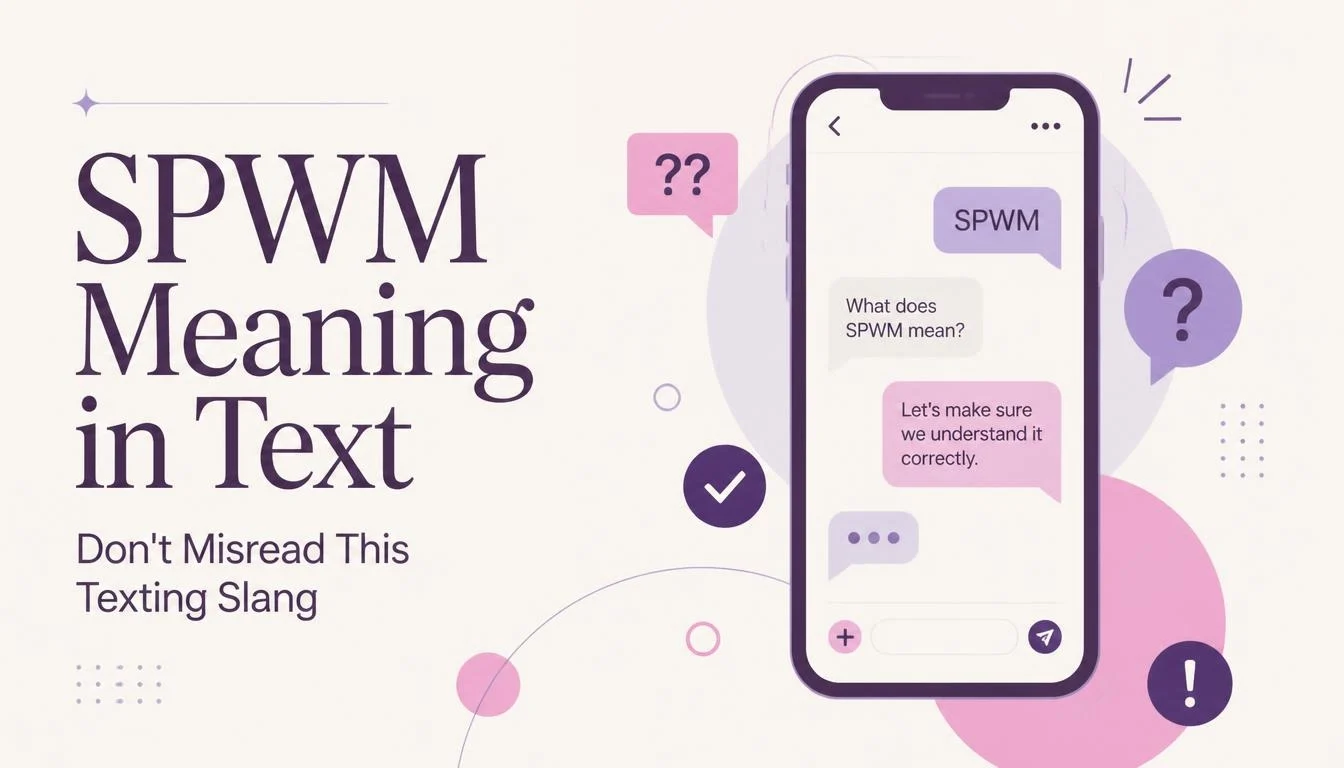
SPWM can have different meanings depending on the conversation, but it is not a widely standardized texting abbreviation. Its intended meaning may depend on the sender, the platform and the surrounding message.
You’re chatting with a friend when they tell you something that sounds almost too good to be true. Maybe they got tickets to your favorite concert or finally heard back from their crush. You reply, “SPWM 😂” because you need to know whether they’re serious.
In texting and social media, SPWM usually means “Stop Playing With Me.” It expresses disbelief, surprise, playful frustration, or a request for someone to stop joking around. The exact tone depends on the conversation, so the same four letters can sound funny between friends or serious during an argument. Dexerto+1
What Does SPWM Mean?
SPWM stands for Stop Playing With Me. It’s an informal abbreviation used in text messages, direct messages, comment sections, and online conversations.
The phrase doesn’t usually refer to playing an actual game. Instead, it tells someone to stop teasing, joking, exaggerating, or messing around. Depending on the situation, it can also mean that you find something hard to believe and want the other person to confirm that they’re telling the truth.
For example:
- “SPWM, you actually met him?” means you’re surprised and want confirmation.
- “Bro, SPWM 😂” suggests that a friend is probably joking.
- “SPWM. I’m asking you a serious question.” communicates frustration and asks the other person to stop avoiding the issue.
The abbreviation is informal rather than suitable for every setting. It works best when the people involved understand casual internet slang.
How SPWM Is Used in Text Messages
SPWM is useful when a short response needs to communicate more than simple agreement or disagreement. It can show that a message has caught you off guard, that you’re suspicious of a claim, or that someone has taken a joke too far.
Three common uses explain most of its meaning.
1. Expressing Disbelief
Someone shares unexpected news, and you aren’t sure whether to believe it.
For example:
Friend: “I just won two tickets to the game.”
You: “SPWM!! Are you serious?”
Here, you’re expressing excitement mixed with disbelief. You aren’t necessarily accusing your friend of lying. You simply want confirmation because the news is surprising.
2. Responding to Teasing
Friends sometimes exaggerate stories or make jokes to get a reaction. SPWM lets you push back without turning the exchange into a serious disagreement.
For example:
Friend: “You were definitely checking your phone every five minutes waiting for their reply.”
You: “SPWM 😂”
The response suggests that your friend is calling you out or teasing you. The laughing emoji makes the message sound lighthearted rather than hostile.
3. Asking Someone to Be Serious
SPWM can also carry a firmer message when someone keeps joking about something important.
For example:
You: “Did you tell anyone what I shared with you?”
Friend: “Maybe I did, maybe I didn’t.”
You: “SPWM. I’m being serious.”
In this exchange, the abbreviation isn’t simply a reaction to surprising news. It signals that the joke has gone far enough and that you expect an honest answer.
The key distinction is that SPWM communicates a reaction to someone’s behavior or statement. It doesn’t automatically tell you whether the sender is amused, upset, or genuinely suspicious.
What SPWM Means in Different Situations
The meaning stays close to “Stop Playing With Me,” but the emotion behind it changes with the situation. Recognizing that difference helps you avoid misreading a playful message as an angry one.
When Someone Is Surprised
Imagine your friend tells you that they got an unexpected promotion or met a celebrity they admire. You might respond with SPWM because the news sounds unbelievable.
In this situation, the abbreviation is closer to “No way!” or “Are you serious?” It expresses surprise without necessarily suggesting that you distrust the person.
When Someone Is Annoyed
If a person keeps making excuses, changing their story, or refusing to answer a direct question, SPWM can sound like a warning.
For instance, “SPWM and tell me what really happened” suggests that the sender has lost patience. The person wants the other party to stop messing around and communicate honestly.
This interpretation is more serious than a message containing laughing emojis. If the conversation already involves conflict, it’s sensible to pay attention to the words surrounding the abbreviation.
When Someone Is Flirting
SPWM can also appear in playful romantic conversations. One person might make a bold compliment, tease the other about having a crush, or suggest that they’re interested.
Consider this exchange:
Person A: “You know you like me.”
Person B: “SPWM 😂 who told you that?”
The response pushes back against the teasing while keeping the conversation playful. Depending on the relationship, it may suggest embarrassment, amusement, or mock disbelief.
However, SPWM doesn’t automatically indicate romantic interest. The surrounding messages and the relationship between the people matter more than the abbreviation itself. Dexerto+1
SPWM on Social Media
You may encounter SPWM in text messages, video comments, captions, and direct messages. The basic meaning remains similar across platforms, although the surrounding content can affect its tone.
Tofu Analytics | 最先端のSNS分析ツールでSNSマーケティングを改善
TikTok
SPWM can appear in comments reacting to surprising claims, dramatic videos, playful challenges, or flirtatious content. A commenter might use it to suggest that a creator is exaggerating or joking. Dexerto
File:Instagram icon.png – Wikimedia Commons
In direct messages and comment threads, it can express disbelief about a story, a compliment, or an unexpected announcement. The meaning is usually clear from the post or message that prompted the reaction.
Snapchat Planning to Launch ‘Internal App Store’ for Games This Fall – MacRumors
Snapchat
Friends may use it when responding to snaps, teasing messages, or surprising updates. Adding a laughing emoji can make the response feel less confrontational.
Elite Villa & Concierge – Elite. Villa & Concierge
WhatsApp and regular text messages
SPWM can serve as a quick reaction when someone shares unbelievable news or keeps joking about something. Because private chats lack facial expressions and vocal cues, the previous messages are especially useful for interpreting the tone.
The abbreviation isn’t exclusive to any one platform. It is casual internet slang, so you can encounter it in different online spaces. Still, not everyone will recognize it immediately, particularly outside communities where this shorthand is familiar.
Examples of SPWM in Everyday Conversations
The easiest way to understand the abbreviation is to see how it works in different exchanges. These are illustrative examples, not quotations from actual users.
Example 1: Unexpected Good News
Friend: “I got front-row tickets for Saturday!”
You: “SPWM 😭 you’re actually serious?”
Meaning: You are excited and surprised, but you want confirmation.
Example 2: A Friend Is Joking
Friend: “I’m telling everyone you cried during that movie.”
You: “SPWM bro 😂”
Meaning: You’re pushing back against the teasing, probably without being genuinely upset.
Example 3: Romantic Teasing
Person A: “Admit it, you were waiting for my text.”
Person B: “SPWM 😭”
Meaning: The sender is reacting to a teasing or potentially flirtatious comment. The response could be playful embarrassment or disbelief.
Example 4: Suspicion About a Story
Friend: “I finished the entire project in ten minutes.”
You: “SPWM. How did you do that so fast?”
Meaning: You suspect the claim may be exaggerated and want an explanation.
Example 5: A Serious Conversation
Person A: “You keep changing your answer. What happened?”
Person B: “SPWM, I’m telling you the truth.”
Meaning: The sender is pushing back against the suggestion that they are being dishonest. Depending on the earlier messages, the response may sound defensive or frustrated.
Example 6: An Unexpected Compliment
Friend: “Honestly, you’re the best person I’ve met this year.”
You: “SPWM 🥹 that’s so sweet.”
Meaning: You’re touched by the compliment and react with a mixture of surprise and emotion.
These examples demonstrate why SPWM doesn’t have a single emotional tone. The words expand to the same phrase, but the situation determines whether the message sounds amused, doubtful, affectionate, or irritated.
How to Reply to SPWM
If someone sends you SPWM, don’t assume they’re angry. First, consider what you said immediately before they used it.
Your response can be simple and natural.
| If they seem… | You could reply… |
|---|---|
| Surprised | “Yes, I’m serious!” |
| Playful | “I’m not even joking 😂” |
| Skeptical | “I promise it’s true.” |
| Flirtatious | “Why, you don’t believe me? 👀” |
| Annoyed | “I’m being serious. Let me explain.” |
| Confused or unsure | “What do you mean?” |
If you were joking and the other person seems amused, there’s no need to turn the exchange into a serious discussion. A playful response may be enough.
On the other hand, if the sender appears frustrated, clarify what you meant rather than responding with another joke. If you’ve genuinely misunderstood one another, a straightforward explanation usually works better than trading more abbreviations.
You can also ask what they mean if the context isn’t clear. A short question such as “Wait, are you serious or joking?” can prevent an unnecessary misunderstanding.
SPWM vs. Similar Texting Abbreviations
SPWM overlaps with several familiar expressions, but each one communicates a slightly different reaction. Choosing the closest alternative can help you understand the tone of a conversation.
| Abbreviation | Full form | Main purpose |
|---|---|---|
| SPWM | Stop Playing With Me | Pushes back against teasing, disbelief, or unserious behavior |
| FR | For Real | Emphasizes sincerity or asks whether something is true |
| SMH | Shaking My Head | Shows disappointment, disbelief, or disapproval |
| NGL | Not Gonna Lie | Introduces an honest opinion or admission |
| JK | Just Kidding | Clarifies that something was intended as a joke |
| BFFR | Be for Real | Tells someone to be realistic or stop acting unseriously |
These abbreviations aren’t interchangeable in every situation.
For example, if a friend says they won a vacation, you might reply “SPWM” to express disbelief. You could write “FR?” to ask whether the news is genuine. If someone makes an unreasonable claim, “BFFR” might fit better because it challenges their statement more directly.
The main difference is that SPWM focuses on someone supposedly messing around with you. It can be a playful reaction, a request for honesty, or an expression of frustration.
Common Misunderstandings About SPWM
A few mistakes can make this abbreviation harder to interpret than it needs to be.
Assuming SPWM Always Means Anger
Although the phrase can sound confrontational, it isn’t necessarily hostile. Friends often use it when they’re surprised, joking, or responding to something unbelievable.
An emoji, an affectionate nickname, or a playful conversation can soften the message. A period after the abbreviation and a serious follow-up may make it sound firmer, although punctuation alone doesn’t prove someone’s emotional state.
Assuming It Always Means Flirting
SPWM can appear in romantic conversations, but it isn’t a romantic abbreviation by definition. A friend, sibling, coworker, or online acquaintance might use it to react to teasing or an unbelievable statement.
Look at the actual conversation rather than assuming that the sender has romantic feelings.
Taking the Phrase Literally
“Stop playing with me” usually refers to someone’s behavior, not an invitation to stop playing a game. The expression can mean “stop joking,” “don’t mislead me,” or “be serious.”
The intended message becomes easier to understand when you consider what the other person said or did immediately beforehand.
Assuming Every Use Has the Same Meaning
SPWM is less universally recognizable than abbreviations such as LOL or BRB. Some people may use it frequently, while others may never have encountered it.
It can also have specialized meanings outside casual conversation. In electrical engineering, for example, SPWM stands for sinusoidal pulse-width modulation, a technique used in power electronics to control switching and approximate a sinusoidal output. grammarship.com+1
That technical definition is relevant in engineering discussions, not normally in a casual exchange between friends. If the context doesn’t fit the usual slang meaning, consider whether the letters refer to something specific to that conversation.
When Should You Use SPWM?
SPWM is generally appropriate for informal communication with people who understand the expression.
Good places to use it include:
- Casual texts with friends.
- Group chats where people regularly use internet slang.
- Social media comments and direct messages.
- Playful exchanges involving teasing or surprising news.
- Informal conversations with someone you’re comfortable joking with.
It’s less suitable for formal emails, professional correspondence, academic writing, or serious conversations where the recipient might misunderstand your intention.
For example, if a colleague shares a surprising update in a casual team chat, SPWM might seem natural if that is how your group communicates. In a formal workplace email, writing “Are you sure this information is correct?” would be clearer and more professional.
The same principle applies to personal disagreements. If you need an honest answer about something important, spelling out what you mean can prevent confusion.
Does Capitalization Matter?
SPWM and spwm generally communicate the same basic phrase. The capitalization is usually a matter of personal typing style.
However, the way you write the abbreviation can influence how it feels:
- “spwm lol” may sound relaxed and casual.
- “SPWM 😂” can emphasize a playful reaction.
- “SPWM??” may convey surprise or disbelief.
- “SPWM. I’m serious.” sounds more direct because of the follow-up.
These are tendencies rather than fixed rules. The sender’s usual texting habits and the context remain more reliable clues than capitalization alone.
FAQs
1. What does SPWM mean from a girl?
When a girl texts SPWM, she usually means “Stop Playing With Me.” She might be reacting to a joke, expressing disbelief, responding to a compliment, or asking you to be serious. It doesn’t automatically mean she is flirting or upset.
2. What does SPWM mean from a guy?
When a guy uses SPWM, it generally carries the same meaning: “Stop Playing With Me.” He might be joking with you, reacting to surprising news, or expressing frustration. The surrounding conversation helps reveal his intention.
3. Is SPWM positive or negative?
It can be either. SPWM may express happy surprise or playful disbelief, but it can also communicate annoyance when someone feels teased or misled. The context and tone determine whether it sounds positive, negative, or neutral.
4. How do you pronounce SPWM?
In texting, people generally recognize SPWM by its letters or understand it through the full phrase, “Stop Playing With Me.” There isn’t a single universally established spoken pronunciation, so saying the full phrase is the clearest option.
5. What does SPWM mean in electronics?
In electrical engineering, SPWM stands for sinusoidal pulse-width modulation. It describes a switching technique used in power electronics, including inverter applications. This technical meaning is different from the informal slang used in everyday messaging.
6. Is SPWM appropriate for professional messages?
Generally, it’s better to avoid SPWM in formal emails, business communications, and other professional writing. The abbreviation may be unfamiliar to the recipient and could make a serious message sound dismissive. Use the full phrase or explain your concern directly instead.
Conclusion
SPWM usually means “Stop Playing With Me” in casual texting. It can express surprise, playful disbelief, teasing, or genuine frustration, depending on the situation.
When you see it in a message, focus on what came before it rather than assuming the sender is angry or flirting. If the meaning still isn’t clear, asking for clarification is the simplest way to avoid misreading the conversation.
Read More Related Articles:
- “Soxer” Mean | Truth Behind This Confusing Term In 2026
- LWK Meaning in Text | Hidden Slang You’re Probably Missing In 2026
- WBU Meaning in Text | Secret Behind This Chat Shortcut In 2026