Quick Answer:
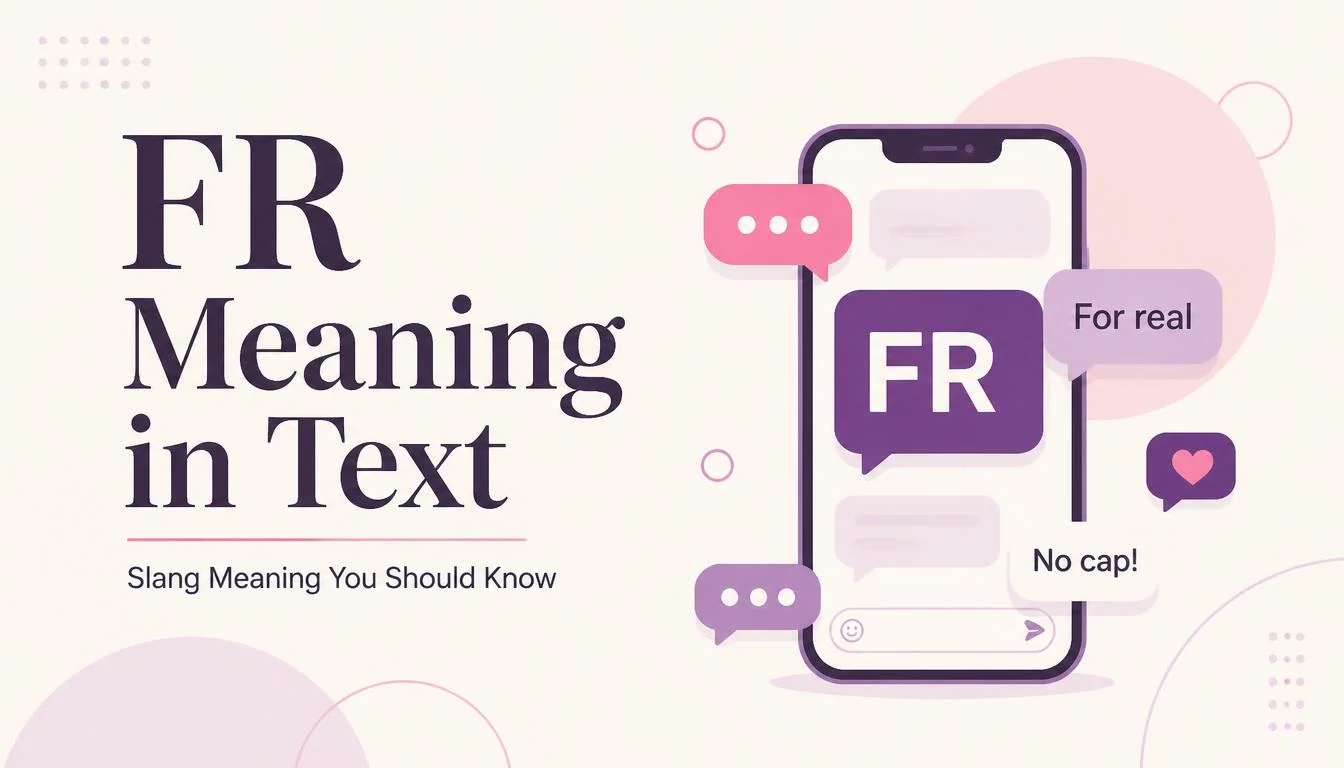
FR means “For Real” in text messages and online conversations. People use it to show that they are serious, agree with someone or want to emphasize that something is true. For example, “That movie was amazing, FR!” means the movie was genuinely amazing.
If someone replies “fr” to your message, they probably mean “for real.” It’s a common abbreviation in texting and online conversations that can express agreement, sincerity, surprise, or disbelief. The exact meaning depends on the message and the tone of the conversation.
You might see FR in a text from a friend, a comment on TikTok, a Snapchat message, or a post on Instagram. It usually keeps the conversation casual and helps people react without typing out a longer response.
What Does FR Mean in Text?
FR means “for real” in text messages and online slang. People use it to show that they genuinely agree with someone, believe something is true, or want to emphasize that they are being serious.
For example:
- “That test was so hard fr.” means the test was genuinely difficult.
- “Fr, I agree with you.” means the person honestly agrees.
- “Are you fr?” means “Are you serious?” or “Are you for real?”
FR can appear in lowercase or uppercase. Both “fr” and “FR” generally communicate the same thing in casual digital conversations.
The abbreviation doesn’t always have one fixed emotional tone. It can sound supportive, amused, surprised, or skeptical depending on the words around it.
How FR Is Used in Text Messages
FR is useful when you want to emphasize a statement without making your message longer. Instead of typing “for real,” you can use two letters to communicate the same basic idea.
Its meaning usually falls into three common categories.
1. Showing Agreement
One of the most common uses of FR is to agree with another person’s opinion or experience.
For example:
Person A: “Mondays are always exhausting.”
Person B: “Fr 😭”
The second person is agreeing that Mondays are tiring. The crying emoji adds a playful or exaggerated sense of frustration.
You can also use FR at the beginning of a sentence:
“Fr, that movie was amazing.”
Here, the abbreviation emphasizes that the speaker genuinely enjoyed the movie.
2. Emphasizing Honesty
FR can signal that someone means what they’re saying. It may appear when a person wants to make a statement sound more sincere or convincing.
For example:
“I fr appreciate everything you’ve done for me.”
This means “I genuinely appreciate everything you’ve done for me.”
In this context, FR adds emphasis rather than changing the basic meaning of the sentence.
3. Expressing Surprise or Disbelief
People also use FR when they find something difficult to believe or want confirmation that another person is serious.
For example:
Person A: “He bought a new car yesterday.”
Person B: “Fr? What kind?”
Here, the question indicates surprise or curiosity. The person wants to know whether the statement is true.
A similar expression is “Are you fr right now?” Depending on the situation, it can communicate genuine disbelief, playful teasing, or frustration.
FR Meaning on Social Media
FR is widely understood in casual online conversations, where short reactions and informal language are common. Its meaning stays close to “for real,” but the context can affect how people interpret it.
FR on TikTok
On TikTok, FR may appear in comments, captions, and replies to videos.
For example:
- “This is the most relatable video fr.”
- “Fr, why does this happen every time?”
- “Bro is fr living my dream.”
These examples use FR to emphasize agreement, relatability, or a reaction to something surprising.
A standalone comment such as “fr” often means the viewer strongly relates to the creator’s point or agrees with another comment.
FR on Instagram
Instagram users may write FR in comments, direct messages, and Stories replies.
For example:
“Your outfit looks amazing fr.”
This communicates genuine admiration.
Someone might also reply “fr tho” to a post about a shared experience. The word “tho,” short for “though,” adds emphasis, roughly conveying “seriously, though.”
FR on Snapchat
On Snapchat, FR can appear in quick messages between friends.
For example:
Friend A: “I can’t believe we have another assignment.”
Friend B: “Fr, we never get a break.”
The abbreviation makes the reply feel relaxed and conversational. It is especially natural when both people already understand the slang.
FR in Gaming Chats
Gamers may use FR in team chats, livestream comments, and online gaming communities.
For example:
“That was the hardest boss fight fr.”
The speaker is emphasizing how difficult the fight was. In a competitive conversation, FR can also reinforce a serious opinion about a player’s performance or a match.
FR is not exclusive to any one platform. It works in many informal digital settings, although individual communities may develop their own shorthand.
Common Examples of FR in Conversations
The easiest way to understand FR is to look at how it changes meaning across different conversations. The abbreviation stays the same, but the speaker’s intention can change.
Example 1: Agreeing With a Friend
Friend: “We seriously need a vacation.”
You: “Fr, I’m exhausted.”
Here, FR means “for real” and shows that you share the same feeling.
Example 2: Reacting to Unexpected News
Friend: “I won two tickets to the concert!”
You: “FR?? That’s amazing!”
The question marks show surprise. You’re asking whether the news is genuine while also reacting enthusiastically.
Example 3: Emphasizing a Complaint
You: “This traffic is terrible fr.”
The abbreviation reinforces your frustration. It means the traffic really is as bad as you’re saying.
Example 4: Giving a Genuine Compliment
Friend: “I don’t think my presentation went well.”
You: “You did great fr. You explained everything clearly.”
FR emphasizes that your compliment is sincere rather than an attempt to be polite.
Example 5: Taking a Conversation Seriously
Friend: “No jokes this time. I’m actually worried about my exam.”
You: “Fr, let’s figure out how you can prepare.”
In this example, FR helps signal a serious response. The rest of the message makes your intention clear.
These examples illustrate an important point: FR doesn’t automatically mean agreement. It can emphasize your own statement, question someone else’s claim, or reinforce the emotional tone of a reply.
Different Meanings of FR
Although “for real” is the usual interpretation in casual texting, FR can stand for other things in specific settings. Reading the surrounding message helps you avoid confusion.
For real
Casual texting and social media
The usual slang meaning. It expresses sincerity, agreement, or disbelief.
Friend request
Social networking and gaming platforms
In some platform-specific conversations, FR may refer to a friend request. The surrounding interface or message usually makes this clear.
France or French
Geography, language settings, and technical contexts
FR is the two-letter country code for France in the ISO 3166-1 alpha-2 standard. It can also appear as a language code for French in some digital systems.
Father
Religious titles and formal writing
“Fr.” with a period is commonly used as a title for a Catholic priest, as in “Fr. Michael.” This is different from casual texting slang.
These meanings are not interchangeable. If a friend sends “fr” after you complain about a long workday, they almost certainly mean “for real.” If you see FR in a country selector or a language menu, it probably has a geographic or linguistic meaning instead. Slang.net+2
What Does FR FR Mean?
FR FR means “for real, for real.” Repeating the abbreviation adds emphasis, making the statement sound stronger or more sincere.
For example:
- “That was the best meal I’ve had all year fr fr.”
- “I’m proud of you fr fr.”
- “You think he’s going to cancel again? Fr fr?”
In the first two examples, the doubled expression strengthens the speaker’s statement. In the third, the punctuation and conversational context determine whether the sender is asking for confirmation or emphasizing a reaction.
You may see it written as “frfr,” “FR FR,” or “fr fr.” The formatting varies, but the underlying idea is the same. Know Your Meme+1
FR vs. Other Texting Abbreviations
FR overlaps with several other slang expressions, but each one has a slightly different use. Knowing those differences can help you choose the right expression.
| Expression | Meaning | Main purpose |
|---|---|---|
| FR | For real | Agreement, sincerity, or disbelief |
| FR FR | For real, for real | Stronger emphasis |
| NGL | Not gonna lie | Introducing an honest opinion or admission |
| TBH | To be honest | Signaling an opinion or candid statement |
| No cap | No lie; not exaggerating | Emphasizing that something is true |
| ONG | On God | Strong emphasis or an oath-like assertion |
These expressions sometimes communicate similar feelings, but they don’t always fit the same sentence. SlangDecoded+1
For example:
- FR: “That restaurant is expensive fr.” The speaker emphasizes the restaurant’s high prices.
- NGL: “Ngl, I didn’t enjoy the food.” The speaker introduces an honest opinion.
- TBH: “Tbh, I’d rather stay home.” The speaker presents a candid preference.
- No cap: “That was the best game I’ve ever watched, no cap.” The speaker insists the statement isn’t exaggerated.
- ONG: “Ong, I didn’t tell anyone.” The speaker strongly emphasizes the claim.
FR is especially flexible because it can agree with someone else’s statement or emphasize your own. NGL and TBH more often introduce an opinion, while no cap specifically stresses truthfulness.
Is FR the Same as “For Real”?
Yes. FR is simply a shortened written form of “for real.” The difference is mostly about style and convenience.
In a casual text, you might write:
- “Are you for real?”
- “Are you fr?”
Both can express surprise or ask whether someone is serious. The full phrase may sound more natural in spoken conversation, while the abbreviation is convenient for quick digital replies.
How to Reply to FR
Your response depends on what the other person means. Before replying, check whether they’re agreeing with you, emphasizing their own point, or asking if something is true.
Here are a few natural ways to respond.
| If someone says… | You could reply… | Why it works |
|---|---|---|
| “This week has been exhausting fr.” | “Tell me about it.” | You acknowledge their frustration. |
| “FR?” | “Yeah, seriously!” | You confirm what you said. |
| “That movie was incredible fr.” | “Right? I loved it.” | You share their enthusiasm. |
| “I’m proud of you fr.” | “Thank you, that means a lot.” | You acknowledge their sincerity. |
| “FR FR, you need some rest.” | “You’re probably right.” | You respond to their concern. |
You don’t have to use slang just because someone else does. A simple “yeah,” “seriously,” or “I agree” works just as well.
Is FR Rude or Appropriate?
FR is generally harmless slang in casual conversations. It isn’t inherently rude, offensive, or disrespectful.
However, the tone can change depending on the situation.
FR usually sounds friendly when:
- You’re agreeing with a friend.
- You’re reacting to a funny or relatable post.
- You’re emphasizing a sincere compliment.
- You’re chatting casually in a group message.
FR can sound dismissive or confrontational when:
- You send “fr?” in response to something personal or serious.
- You use it sarcastically to challenge someone’s claim.
- You respond with just “fr” when someone needs a thoughtful answer.
For example, if a friend tells you they’re struggling, replying only “fr” might come across as indifferent because it doesn’t clearly acknowledge their feelings.
In professional emails, job applications, academic assignments, and formal communication, it’s usually better to write the complete phrase or choose a clearer expression. “I agree,” “seriously,” or “I genuinely mean that” will often communicate your point more appropriately.
The abbreviation itself isn’t the problem. What matters is whether your response fits the conversation.
FAQs
1. What does FR mean from a girl or a guy?
FR means “for real” regardless of who sends it. A girl or a guy might use it to agree with you, emphasize a statement, or ask whether you’re serious. The abbreviation alone doesn’t indicate romantic interest or reveal someone’s feelings.
2. Does FR mean “for real” or “friend request”?
It can mean either, depending on context. In a casual conversation, FR usually means “for real.” In a social media notification or a discussion about adding friends, it may mean “friend request.”
3. What does FR mean with a question mark?
“FR?” usually means “For real?” or “Are you serious?” It often expresses surprise or asks for confirmation. For example, if someone says they won a competition and you reply “FR?”, you’re asking whether the news is true.
4. What does FRFR mean in texting?
FRFR means “for real, for real.” It intensifies the original expression and can show strong agreement, sincerity, or emphasis. For example, “You’re the best frfr” communicates a particularly emphatic compliment.
5. How do you pronounce FR?
When people read the abbreviation aloud, they generally say the letter names “eff-ar.” In ordinary conversation, someone might simply say “for real” instead. The written abbreviation is mainly useful for informal digital communication.
6. Is FR appropriate in professional messages?
FR is usually too informal for professional emails and formal documents. In workplace communication, use expressions such as “I agree,” “seriously,” or “to be honest,” depending on the intended meaning.
Conclusion
FR is a simple texting abbreviation that stands for “for real.” It can express agreement, emphasize sincerity, or show surprise when someone shares unexpected news.
The key is to read it in context. A standalone “fr” usually signals agreement, while “fr?” often asks whether something is true. Once you recognize those patterns, understanding FR in everyday messages becomes straightforward.
Read More Related Articles:
- Guthrie Meaning | Scottish Name With Deep Historical Roots In 2026
- Maui Wowie Meaning | Hidden Cannabis Culture Term In 2026
- Oppa Meaning | Korean Language and Culture In 2026