Quick Answer
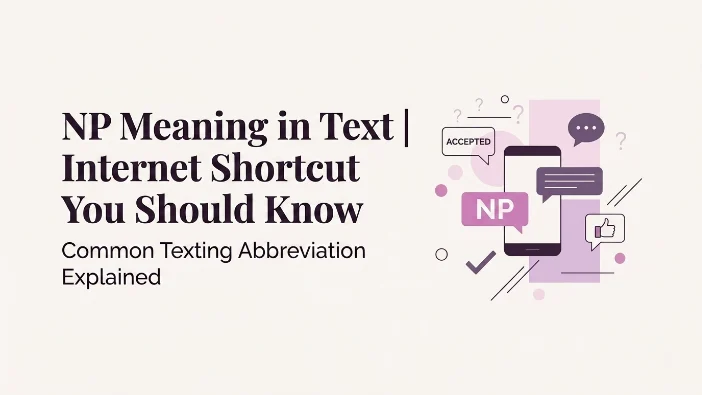
“NP” in text usually means “No Problem.” It is commonly used in chats and social media to respond politely when someone says thanks or apologizes. It shows a casual, friendly, and relaxed tone in conversation.
In everyday digital communication, NP Meaning in Text is commonly used to simplify quick replies and keep conversations flowing smoothly. Most often, “NP” stands for “No Problem,” and it’s widely recognized across texting apps, social media platforms, and casual online chats. It’s a short, friendly way to show that something is not an issue.
From an EEAT perspective, understanding NP Meaning in Text helps users interpret intent correctly and avoid confusion in informal conversations. While “No Problem” is the standard meaning, context still matters because tone and usage can slightly vary depending on the situation or platform.
| Element | Details |
|---|---|
| Meaning | No Problem |
| Context | A casual, positive response to thanks, an apology, or a request |
| Usage | Text messaging, social media (Instagram, Snapchat, TikTok), online gaming, and informal chat apps (WhatsApp, iMessage) |
| Example | Person A: “Thanks for the ride!” Person B: “np!” |
| Tone | Friendly, humble, laid-back, and efficient |
What Does NP Mean?
NP stands for “No problem.” This abbreviation is a staple of modern digital communication, serving as a quick and humble way to acknowledge thanks, accept an apology, or agree to a request.
Unlike more formal responses like “You’re welcome,” NP carries a tone that downplays the effort involved. When someone uses NP, they are essentially saying, “What I did for you was not a burden, so no thanks are necessary.” It is the digital equivalent of a friendly shrug and a smile.
The Psychology Behind Using NP
Understanding why people choose NP over other responses reveals interesting insights into modern communication psychology. When someone uses NP, they are engaging in a subtle form of relationship management. By downplaying their effort, they signal that the relationship is more important than keeping score of favors. This psychological mechanism, known as “minimization,” helps maintain social harmony and reduces the perceived debt between individuals.
Research in sociolinguistics suggests that younger generations prefer NP because it aligns with values of egalitarianism and mutual support. Unlike “You’re welcome,” which can sometimes sound formal or even presumptuous, NP communicates that helping someone is a natural part of social interaction rather than a transaction requiring formal acknowledgment.
The Evolution of NP in Digital Communication
The abbreviation NP didn’t emerge overnight. Its journey reflects broader changes in how we communicate online. Early internet users in the 1990s began shortening common phrases to save time and keystrokes. As text messaging gained popularity in the early 2000s, abbreviations like NP became essential for staying within character limits and typing quickly on physical keypads.
The rise of smartphones and unlimited messaging plans didn’t kill these abbreviations instead, they became ingrained in digital culture. Today, NP is used not because we need to save characters, but because it has become a recognized social signal. Using “no problem” spelled out can sometimes feel overly formal or even aggressive in certain contexts, while “np” feels appropriately casual and friendly.
Context & Usage
NP is versatile and used in several specific social and conversational contexts. Understanding these nuances is key to using it naturally.
Responding to Thanks
This is the most common use of NP. It acts as a direct substitute for “You’re welcome.” By using NP, the speaker signals humility and that the favor or task was not a significant inconvenience.
When someone thanks you for something small like holding a door, sharing a link, or answering a quick question NP is the perfect response. It communicates that their gratitude is appreciated but unnecessary. This is particularly valuable in fast-paced group chats where formal gratitude would feel out of place.
Accepting an Apology
NP is frequently used to acknowledge an apology. If someone is running late or makes a minor mistake, replying with “NP” is a quick way to say, “It’s okay, don’t worry about it.” It helps to de-escalate tension and keep the conversation light.
In this context, NP serves a crucial emotional function. By immediately dismissing the need for apology, it prevents the conversation from becoming awkward or drawn out. The brevity of NP communicates confidence and ease there is no need for lengthy reassurances because the relationship is solid enough to handle minor hiccups.
Agreeing to a Request
The abbreviation can also be used to say “yes” or “I can do that” when asked for a favor. In this case, NP confirms that the request is manageable and will not cause any issues. For instance, if a colleague asks, “Can you cover my shift?”, replying “NP” means “Yes, that’s fine.
Using NP as agreement is particularly common in workplace chat environments. It signals competence and a can-do attitude without sounding overly enthusiastic or insincere. When a manager asks if you can handle an additional task, “np” communicates confidence in your ability to manage the workload.
Downplaying Effort
Often, people use NP to downplay something they did, even if it required significant effort. This is a social cue meant to show humility. For example, if you spent hours helping a friend move, you might still say “NP” to make it seem like it was no big deal. It signals that you do not need excessive praise or gratitude.
This usage is particularly interesting from a social psychology perspective. By minimizing their effort, the person using NP is actually maximizing the perceived strength of their friendship. The underlying message is: “I care about you so much that even major efforts on your behalf feel effortless.” This dynamic strengthens relationships and builds trust.
Cultural Variations in Usage
While NP is widely understood across English-speaking digital spaces, its usage frequency varies by culture. American English speakers tend to use NP very frequently, while British English speakers often prefer “no worries.” Australian speakers might use either interchangeably.
In multicultural digital communities, NP has become a neutral, widely accepted abbreviation that transcends regional differences. This universality contributes to its staying power anyone who speaks English online can understand and use NP regardless of their specific cultural background.
The Rise of Emoji Alternatives
Interestingly, emojis have begun competing with textual abbreviations like NP. A simple thumbs-up emoji (👍) or smiley face (😊) can now serve the same function as NP in many contexts. However, NP remains popular because it offers more nuance than a single emoji. It communicates not just agreement but also humility and warmth.
Some users combine NP with emojis for added effect: “np 😊” or “np! 🙌” This hybrid approach allows for even more precise emotional expression while maintaining the efficiency that makes abbreviations valuable.
Real-Life Examples
Here are some realistic chat scenarios to illustrate the use of NP.
1: Responding to Thanks
- Person A: Hey, thanks a ton for helping me with that report last night.
- Person B: NP! Glad I could help.
- Person A: I really appreciate it.
- Person B: No worries that’s what teammates are for!
2: Accepting an Apology
- Person A: I’m so sorry I’m running late! Traffic is wild.
- Person B: NP, take your time. We haven’t ordered yet.
- Person A: I’ll be there in 10.
- Person B: Perfect, see you soon.
3: Agreeing to a Request
- Person A: Could you pick up my coffee on your way to the office?
- Person B: Sure, NP.
- Person A: You’re a lifesaver!
- Person B: Haha, it’s just coffee. No big deal.
4: Casual Agreement
- Person A: Can you finish this by 5 PM?
- Person B: NP.
- Person A: Awesome, thanks!
- Person B: NP, I’ll send it over when it’s done.
5: Online Gaming
- Player 1: I need backup at the base.
- Player 2: OMW (On My Way).
- Player 1: Thanks!
- Player 2: NP.
- Player 1: We got this.
- Player 2: For sure!
6: Group Chat
- Person A: Can someone check if the restaurant is still open?
- Person B: I’ll call them.
- Person A: Thanks!
- Person B: NP, they’re open until 10.
Example 7: Late-Night Study Session
- Person A: I need help with this calculus problem.
- Person B: Send it over.
- Person A: Thank you so much!
- Person B: NP, happy to help.
8: Social Media Comment
- Commenter: Love this content!
- Creator: Thanks!
- Commenter: NP, keep up the good work!
9: Work Collaboration
- Colleague: Can you review my presentation before the meeting?
- You: NP, send it over.
- Colleague: You’re the best!
- You: Haha, just doing my job.
10: Personal Favor
- Friend: Can you feed my cat while I’m away?
- You: NP, happy to.
- Friend: I owe you one.
- You: You owe me nothing that’s what friends are for!
Platform-Specific Meaning
NP is used across almost all digital platforms, but its prevalence can vary slightly.
NP is extremely common in WhatsApp, used in both individual and group chats. It keeps conversations flowing quickly, especially in busy groups. WhatsApp’s massive global user base means NP is understood across cultures and languages. The app’s status as a primary communication tool in many countries has helped normalize abbreviations like NP in everyday conversation.
In WhatsApp groups, NP often appears as a quick response to multiple thanks or announcements. When someone shares useful information or coordinates an event, the flurry of “thanks” messages is often met with a single “np” from the organizer, acknowledging everyone’s gratitude efficiently.
Snapchat
On Snapchat, teens often use NP to reply to snaps or messages where someone has thanked them or apologized. It helps maintain the app’s signature casual and quick communication style. Snapchat’s ephemeral nature makes efficiency even more important users send quick responses that match the temporary, in-the-moment feel of the platform.
Snapchat users often pair NP with visual elements. A quick video reply might include “np” displayed in text, or a photo response might show a thumbs-up along with the abbreviation. This multimedia approach adds personality to the abbreviation.
TikTok
NP appears frequently in comments and direct messages on TikTok. It can be used to respond to a creator who thanked viewers for support or to agree with someone in a comment thread. TikTok’s comment culture moves quickly, and NP is efficient enough to keep up with the rapid pace of the platform.
In TikTok live streams, NP serves as a way for creators to acknowledge viewer support without taking too much attention away from the content. When viewers send gifts or praise, a quick “np” in the chat acknowledges their contribution without disrupting the stream’s flow.
Instagram DMs
In Instagram direct messages, NP is a popular way to respond to friends, family, or colleagues. It is a brief and pleasant way to say “you’re welcome.” Instagram’s visual nature sometimes makes text responses feel secondary, but NP is short enough that it doesn’t distract from the visual content being shared.
Instagram Stories often feature NP in text overlays when creators respond to questions or requests. Someone who answers a question in their Story might add “np” at the end, signaling that they were happy to help.
Twitter/X
On Twitter, NP frequently appears in replies to thank-you tweets. The platform’s character limit (which was historically 140 characters and remains relatively constrained) makes abbreviations like NP particularly valuable. Even in conversations without character pressure, the platform’s culture of brevity has made NP a natural fit.
Twitter users also use NP when agreeing to participate in threads or follow requests. It’s a quick way to say “yes” to an invitation or request without cluttering the conversation.
Discord and Gaming Platforms
In Discord servers and gaming platforms, NP is part of the standard vocabulary. Gaming communities value efficiency, and NP serves as a quick acknowledgment in high-paced multiplayer environments. When a teammate saves you or provides support, typing “np” is much faster than a longer response.
Discord’s integration with gaming has helped spread NP to other gaming-focused platforms like Twitch. Streamers use NP to respond to viewer donations, cheers, and support messages, maintaining a humble persona while engaging with their audience.
LinkedIn and Professional Platforms
Interestingly, NP occasionally appears on LinkedIn and other professional platforms, though its usage is more limited. In informal professional networking contexts, NP can serve as a friendly acknowledgment. However, LinkedIn’s professional orientation means many users still prefer “You’re welcome” or “My pleasure.
The appearance of NP on LinkedIn reflects a broader cultural shift toward casual professionalism. As younger generations enter the workforce, they bring their digital communication habits with them, gradually normalizing abbreviations like NP in professional contexts.
Email Communication
In email, NP is generally reserved for informal exchanges between colleagues who have established a casual relationship. It rarely appears in formal business emails or client communications. However, in internal company emails where everyone is on a first-name basis, NP can be perfectly appropriate.
The tone of email communication often determines whether NP is acceptable. Casual, brief emails are more likely to include NP, while longer, more formal emails typically use standard English.
Alternative Meanings
While “No problem” is the primary definition, NP can mean other things depending on the context. For a vast majority of general texting, however, it means “No problem.
Nurse Practitioner
In healthcare settings, NP refers to a Nurse Practitioner. This is a medical professional with advanced training who can diagnose conditions and prescribe medications. In hospital charts, medical discussions, or when discussing healthcare careers, NP carries this meaning rather than “no problem.
The healthcare context is important to recognize. If you see NP in a medical chart or health-related discussion, it almost certainly refers to a Nurse Practitioner. Conversely, in a text message between friends, NP almost certainly means “no problem.” This semantic differentiation is a great example of how context shapes meaning.
Non-deterministic Polynomial Time
In computer science, NP is a complexity class in computational theory. It stands for “Non-deterministic Polynomial time.” This is a fundamental concept in computer science that relates to how difficult certain problems are to solve.
The famous “P vs NP” problem is one of the most important unsolved questions in computer science. When computer scientists discuss this problem, NP has a very different meaning from the casual abbreviation used in text messaging. This dual usage demonstrates how language evolves differently in specialized communities.
National Park
In travel and geographical contexts, NP often stands for National Park. Yosemite NP, Yellowstone NP, and Zion NP are common abbreviations on maps, travel itineraries, and road signs. When planning a road trip or discussing outdoor recreation, NP likely refers to a national park.
This meaning is particularly common on social media travel content. Travel bloggers and Instagrammers often use NP when describing their adventures, leading to potential confusion for readers who expect the “no problem” interpretation.
Not Provided
In digital analytics, NP stands for “Not Provided.” This term appears in Google Analytics reports when keyword data is withheld due to privacy policies. When search analytics professionals see NP in their reports, they know it represents missing keyword information rather than “no problem.”
This usage is particularly common in SEO (Search Engine Optimization) contexts. SEO professionals frequently encounter NP in analytics dashboards and need to interpret it correctly to understand their traffic data.
Non-Primary Partner
In polyamory and non-monogamous communities, NP can refer to a “Non-Primary Partner.” This term helps people in polyamorous relationships distinguish between different types of relationships. The abbreviation is used within specific communities where this distinction is relevant.
This specialized usage demonstrates how abbreviations can take on completely different meanings in different subcultures. What means “no problem” to a teenager might mean something entirely different to someone in the polyamory community.
Neutral Particle
In physics, NP stands for “Neutral Particle.” This term appears in particle physics discussions when referring to particles with no electrical charge. Physicists and physics students use this abbreviation in academic contexts.
This is a classic example of how academic disciplines develop their own specialized language, sometimes borrowing common abbreviations and giving them entirely different meanings.
Naval Postgraduate School
In military and academic contexts, NP can refer to the Naval Postgraduate School located in Monterey, California. Alumni, students, and military personnel often use this abbreviation when discussing military education.
This usage is relatively niche but important for those who work in or study military affairs. For everyone else, NP remains “no problem.”
Related Terms
NP is part of a family of abbreviations and phrases used to acknowledge thanks or agreement.
YW (You’re Welcome)
YW stands for “You’re welcome.” While NP downplays effort, YW is a more formal acknowledgment of thanks. The choice between NP and YW often depends on the user’s personal preference and the context of the conversation. Some people use both interchangeably, while others have strong preferences.
YW is more common among older generations who remember the “You’re welcome” phrase being taught as the standard polite response. NP is more common among younger people who prefer the casual, humility-focused approach.
No Prob
No Prob” is a slightly less common but similar abbreviation for “No problem.” It offers a middle ground between spelling out the full phrase and using the two-letter abbreviation. Some people prefer “No Prob” because it’s slightly more understandable to those who might not recognize “np.”
No Prob” is particularly popular in spoken communication where abbreviations like NP don’t work. People often say “No prob” in real-life conversations to achieve the same effect as typing NP.
NBD (No Big Deal)
NBD stands for “No big deal.” This is used to similarly downplay an action. While NP focuses on the absence of a problem, NBD focuses on the insignificance of the effort. Both convey humility and reduce the perceived burden of a favor.
NBD is often used in contexts where the speaker wants to explicitly state that something was not a big deal. This can be particularly useful when someone is overly grateful and the speaker wants to reassure them.
No Worries
“No worries” is a synonym for NP commonly used in British and Australian English. This phrase has gained popularity globally through media and cultural exchange. It carries the same casual, reassuring tone as NP but is more commonly used in spoken conversation.
No worries is often considered slightly more formal than NP but less formal than “You’re welcome.” It serves as a versatile middle ground in many contexts.
My Pleasure
“My pleasure” is a more formal or enthusiastic response to thanks. This phrase is particularly popular in customer service contexts, where companies train employees to use it to convey genuine enthusiasm for serving customers.
My pleasure differs from NP in that it actively welcomes the opportunity to help, rather than downplaying the effort. In some contexts, “my pleasure” is considered more polite because it emphasizes positive feelings about helping.
You Bet
“You bet” is an informal, friendly response to thanks that suggests the speaker is enthusiastic about helping. It’s more common in American English and carries a warm, confident tone. You bet is often used in casual workplace contexts or among friends.
This response communicates both agreement and positive feeling. The speaker isn’t just saying that helping was no problem they’re saying they enjoyed helping.
Sure Thing
“Sure thing” is another casual alternative that communicates enthusiasm and willingness. It’s particularly common as a response to requests rather than thanks. When someone asks for a favor and you reply “sure thing,” you’re communicating both agreement and positive feeling.
Sure thing is versatile enough to work in both casual and slightly professional contexts. It feels more engaged than a simple “OK” but less formal than “Certainly.”
How to Respond to NP
When someone replies to you with “NP,” it is a sign that the conversation has concluded on a positive note. You can choose to:
Say Nothing
Often, no response is needed. NP serves as a conversation ender, and responding can sometimes draw out the conversation unnecessarily. If the interaction was simple and straightforward, letting NP be the final message is perfectly acceptable.
Digital etiquette experts often recommend allowing NP to conclude a conversation. The person who sent NP has signaled that they don’t need further acknowledgment, so continuing the exchange can sometimes feel forced.
Send a Simple Acknowledgment
Something like “ty” (thank you) or “thanks again!” can serve as a brief acknowledgment. This is particularly appropriate if you feel that your original thanks was brief or if you want to emphasize your gratitude. A quick acknowledgment shows that you appreciate their help without extending the conversation.
This response is common in contexts where the conversation needs to continue for other reasons. You might thank someone, receive NP, and then follow up with “thanks again” before moving on to a new topic.
Use an Emoji
A smiley face or thumbs up can be a great response. Emojis add emotional context without requiring words. A simple thumbs-up (👍) or smiley face (😊) conveys appreciation and ends the conversation on a warm note.
Emojis are particularly effective in visual-first platforms like Instagram and Snapchat, where they complement the visual nature of the medium.
Offer a Brief Follow-Up
If the conversation naturally continues, you might follow up NP with additional information. For example, if someone says NP about helping with a report, you might respond with “Great, I’ll have the final version ready soon.” This keeps the conversation moving forward while acknowledging their help.
This approach is common in workplace chats where thank-yous and acknowledgments are woven into larger conversations about projects and tasks.
The “No Response” Response
In many situations, the most appropriate response to NP is silence. The abbreviation is designed to be a conversation ender, and adding additional messages can sometimes feel excessive or awkward. Trust that the person who said NP meant it, and move on with your day.
This is particularly true in fast-paced chat environments where conversations are naturally brief. In WhatsApp groups, for example, a flurry of thanks followed by a single NP from the organizer often ends the exchange efficiently.
Misinterpretations
Because NP is usually a humble response, it is rarely misinterpreted. However, there are some contexts where it might cause confusion.
Formal Contexts
In highly formal contexts, NP might be considered too informal. For example, responding to a thank you from a senior executive with “NP” could be seen as a bit too casual or flippant. In professional emails or client communications, “You’re welcome” is often a better choice.
This is less a misinterpretation and more a recognition that the abbreviation is context-inappropriate. The meaning is clear, but the tone might be wrong for the situation.
Tone Mismatches
Sometimes, NP can come across as dismissive if the person you’re responding to was particularly expressive in their thanks. If someone sends you a heartfelt, detailed thank-you message, responding with a brief “np” might seem underwhelming. In such cases, matching their emotional tone with a more substantial response is appropriate.
The key is reading the room. If someone seems genuinely moved by your help, taking an extra moment to say “I was happy to help” or “It was really my pleasure” shows that you appreciate their gratitude.
Cultural Confusion
While NP is widely understood, some people particularly older generations or those less familiar with digital abbreviations might not immediately recognize it. In these cases, the recipient might wonder what NP means, temporarily interrupting their understanding of the conversation.
To avoid this, consider your audience. If you’re messaging someone who might not be familiar with internet abbreviations, spelling out “no problem” might be the better choice.
Accidental Offense
In rare cases, NP might be interpreted as suggesting that something was a potential problem that simply wasn’t. For example, if someone thanks you for attending their event, responding with NP might accidentally suggest that attending was a potential burden. This is a subtle distinction and rarely causes actual offense.
If you’re concerned about this interpretation, “I was happy to be there” or “My pleasure” might be better choices.
Generational Differences
Younger generations are more comfortable with NP than older generations. A Baby Boomer might interpret NP as overly casual or dismissive, while a Gen Zer would see it as perfectly polite. Understanding these generational differences helps in choosing the right response.
This is particularly important in workplace communication where generational differences can create friction. Being aware of how different generations interpret abbreviations helps avoid misunderstandings.
When NOT to Use It
Avoid using NP in formal or respectful situations. If you are responding to a boss, a client, an elder, or in any official correspondence, it is better to use “You’re welcome,” “It was my pleasure,” or “Of course.” The abbreviation is reserved for friends, family, and casual colleagues.
Professional Settings
In professional settings, NP is generally acceptable among peers but should be avoided when communicating with superiors or external clients. Senior executives often expect more formal communication, and using abbreviations like NP might be perceived as unprofessional.
This doesn’t mean you can never use NP at work it means you need to read the room and understand your company’s culture. In tech startups, NP might be perfectly acceptable at all levels, while in law firms or banks, it would be inappropriate.
Client Communication
When communicating with clients, avoid NP entirely. Client relationships benefit from formal professionalism, and using abbreviations can undermine trust. Clients expect polished, professional communication, and NP might seem lazy or disrespectful.
Instead, use phrases like “You’re welcome,” “It was my pleasure,” or “I’m happy to help.” These convey professionalism and respect while maintaining a friendly tone.
Formal Written Correspondence
In formal written correspondence including emails to people you don’t know well, cover letters, business proposals, and official communications avoid NP. Formal writing requires complete sentences and standard English.
This is particularly important in international business communication, where abbreviations like NP might confuse non-native English speakers.
Customer Service
Customer service interactions generally require more formal language. While some customer service contexts have become more casual, NP is generally too informal for representing a business. Companies prefer consistent, professional communication that builds customer trust.
Exceptions exist in companies with intentionally casual brands, but even then, spelling out “no problem” is usually preferred over the abbreviation.
Academic Communication
In academic contexts, NP is inappropriate. Professors, academic administrators, and graduate students are generally expected to communicate in formal English. Using NP in email to a professor would likely be seen as disrespectful.
The only exception might be informal group chats among graduate students who have established casual relationships, but even then, standard English is often preferred in academic contexts.
Usage Tips
Keep It Casual
NP is meant for informal chats. Reserve it for conversations with friends, family, and colleagues you have a casual relationship with. If the conversation is professional or formal, choose a more complete response.
Use Lowercase
“np” is more common and feels friendlier than “NP” in personal messages. The lowercase version suggests informality and warmth, while uppercase can sometimes feel cold or official. Stick with “np” for best results.
Match the Tone
If someone thanks you enthusiastically, replying with a simple “np” can bring the tone down. Consider using “My pleasure” or “Happy to help” if you want to match their energy. The goal is to make the other person feel heard and appreciated.
Know Your Audience
NP is usually safe to use with peers but avoid it in formal settings. Consider who you’re talking to and what the context is. When in doubt, err on the side of formality you can always be more casual later.
Context is Everything
The same abbreviation might be perfectly appropriate in one context and entirely wrong in another. A quick “np” to a friend thanking you for coffee is perfect, but the same response to a job interviewer thanking you for your time would be inappropriate.
Pay Attention to Response Patterns
If you notice that people don’t respond well when you use NP, consider switching to alternatives. Some people prefer formal responses regardless of context, and adapting to their preferences is part of good communication.
Consider Adding Emojis
Sometimes, adding an emoji to NP can soften the response and add emotional context. A smiling face or thumbs-up can make the abbreviation feel warmer and more thoughtful.
FAQs
1. What does NP mean in text?
NP stands for “No problem.” It is an abbreviation used in text messaging and online chatting as a positive response to thanks, an apology, or a request. It’s one of the most common internet abbreviations in English-speaking digital communication.
2. Is NP used in formal settings?
Generally no. NP is considered informal slang and should be avoided in formal emails, professional presentations, or when speaking to a superior in a strict environment. “You’re welcome” is a more appropriate response in those cases. Exceptions exist in casual workplace cultures, but it’s better to err on the side of caution.
3. What is the difference between NP and YW?
Both mean “You’re welcome.” However, YW is a direct abbreviation of “You’re welcome,” while NP means “No problem.” NP implies that the task was not a burden, while YW is a more straightforward acknowledgment of thanks. The choice between them often reflects personal preference and context.
4. Can NP be used to accept an apology?
Yes, absolutely. Responding with NP to an apology is a friendly way to say “It’s fine” or “Don’t worry about it.” It de-escalates tension and communicates that no further reassurance is needed. This is one of NP’s most important social functions.
5. Is it “NP” or “np”?
Both are technically correct, but “np” (lowercase) is more common in personal, casual text messages. “NP” is often seen in more neutral or public online posts. The lowercase version feels friendlier and more natural in conversation.
6. Does NP mean something else on social media?
In the context of text and social media, it almost always means “No problem.” However, in other contexts like medicine (Nurse Practitioner) or computer science (Non-deterministic Polynomial time), it has different meanings. Always consider the context when interpreting abbreviations.
7. Is “No Problem” better than “You’re Welcome”?
It depends on the context. “No problem” downplays your effort and is humble, making it popular in casual settings. “You’re welcome” is more formal and acknowledges the gratitude directly. The best choice depends on the situation and audience. Neither is inherently better they serve different purposes.
8. Can I use NP in a professional chat?
It is acceptable in many professional chat environments (like Slack or Teams) with close colleagues, but it is best to use “You’re welcome” or “Of course” in more formal or client-facing conversations. Professional communication requires sensitivity to context and relationships.
9. Are there other similar abbreviations?
Yes, common alternatives include “No Prob,” “NBD” (No Big Deal), “No Worries,” and “YW” (You’re Welcome). Each has slightly different connotations and may be more appropriate in different contexts. Having a variety of responses at your disposal helps you communicate effectively.
10. How do you pronounce NP?
NP is pronounced by saying its individual letters: “En-Pee.” This is typical for abbreviations that are pronounced as initialisms rather than as words. You would never pronounce it as a single word like “nip” unless you’re making a joke.
Conclusion
In the fast-paced world of digital communication, NP is a simple yet powerful tool for maintaining polite, humble, and efficient conversations. Whether you are responding to a thank you, accepting an apology, or agreeing to a request, NP gets the job done with a friendly tone. While it shines in casual settings on platforms like WhatsApp, Snapchat, and Instagram, remember to save it for informal chats and use “You’re welcome” or “My pleasure” in professional or formal contexts.
NP has earned its place as a fundamental part of the digital communication toolkit. Its versatility, clarity, and warmth make it invaluable for maintaining positive relationships in the fast-paced world of text messaging. By understanding when and how to use NP, you demonstrate not just linguistic proficiency but also social intelligence you know how to match your communication style to the situation and the person you’re talking to.
The next time you type “np” in response to someone’s thanks, you’ll know you’re participating in a rich tradition of digital communication that balances efficiency with human connection. That’s no small thing in a world where so much of our communication happens through screens. So go ahead embrace NP, use it wisely, and enjoy the warmth and efficiency it brings to your digital conversations.
Read More Related Articles:
- DPMO Meaning in Text | Viral Slang You Keep Seeing Online In 2026
- What Does WTM Mean in Text | Common Uses You Should Know In 2026
- What Does ACC Mean | Every Meaning Made Simple In 2026









1 thought on “NP Meaning in Text | Internet Shortcut You Should Know In 2026”